4 reasons why bitcoin is slogging through an epic plunge
December 2, 2025
STR/NurPhoto
- Bitcoin fell 6% on Monday, extending its loss from all-time highs to more than 30%.
- The king crypto has been nailed by a difficult mix of headwinds.
- One key factor is that retail investors aren’t as readily buying the dip anymore.
November wasn’t kind to some of the market’s high-flying risk-on investments.
The Nasdaq 100 — dominated by the tech elite driving the AI trade — posted its first monthly decline since March.
Bitcoin, meanwhile, fared even worse, plunging 17%. It’s been in a bear market since mid-November, and currently sits about 32% below record highs reached in early October. Based on where things stand now, that peak feels like a distant memory.
Selling pressure accelerated on Monday, with the king crypto tumbling as much as 8% to below $84,000.
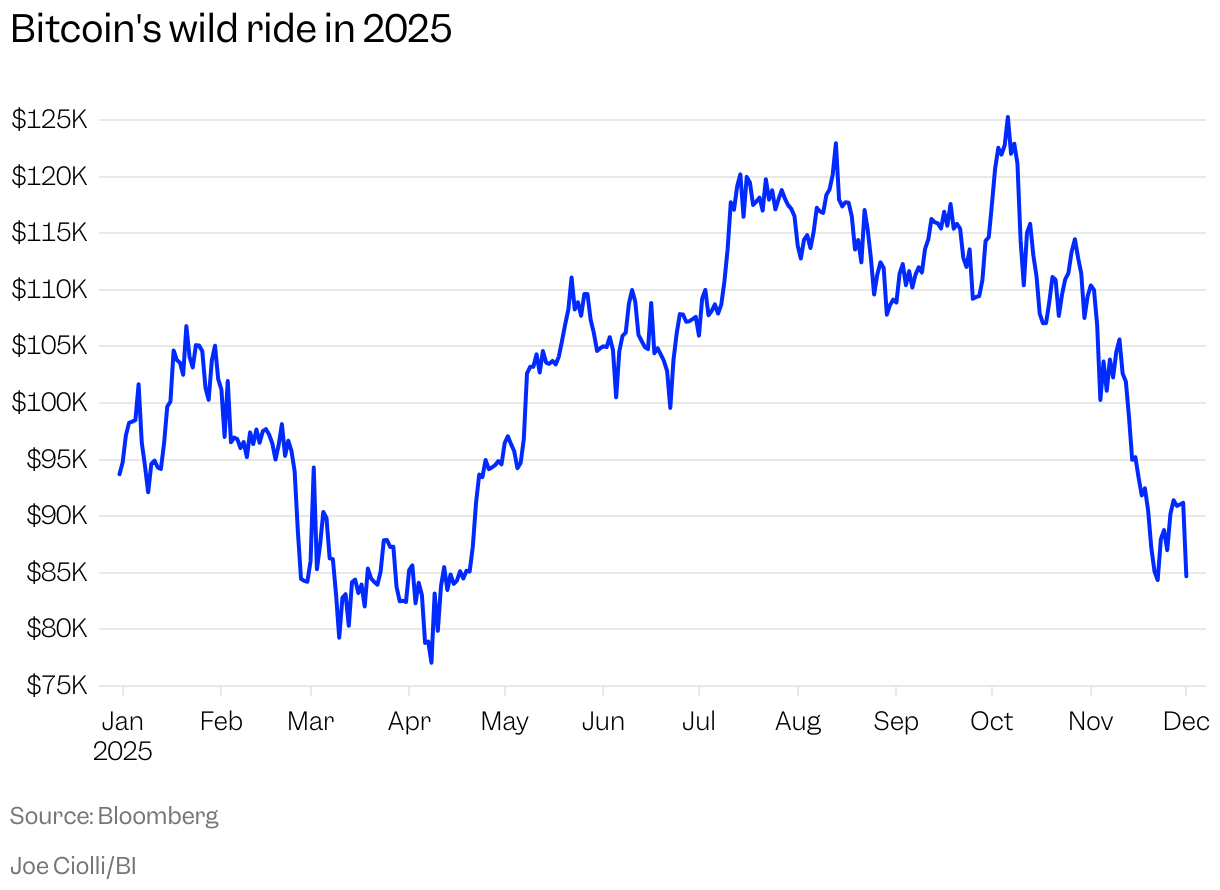
What makes this particular bout of selling so concerning is that there’s no single reason for the weakness. Bitcoin is instead suffering from a ruthless cocktail of headwinds all at once. They include:
Click here to sign up for First Trade, Business Insider’s markets newsletter
A general risk-off mood
The crypto market is facing the same concerns around overvaluation that tech stocks are, as investors balk at the eye-watering runs up in risk assets. Traders are also grappling with the residual effect of a record-setting $19 billion deleveraging event that started in early October and caused a weeks-long sell-off.
What’s more, the selling pressure in bitcoin and stocks is seen as linked. Investors forced to liquidate bitcoin holdings sold stocks in order to do so. And negative sentiment in equities has bled into crypto. It’s a feedback loop of continued selling.
Concerns about the yen carry trade
What happens in Japan rarely impacts US investors — at least as directly as it has during the ongoing crypto sell-off. On Monday, after the Bank of Japan signaled that it will raise interest rates this month, sovereign bond yields spiked to multiyear highs.
This is notable because — as part of a so-called carry trade — global investors often borrow at near-zero rates to fund purchases in the US. Raising that rate throws a wrench into this plan and the willingness of traders to continue making risky bets in assets like crypto.
Dip buyers in hiding
Previously, dip-buyers could be relied upon to scoop up bitcoin at discounted prices following a sell-off. But based on inflows to bitcoin-linked funds, retail investors haven’t exactly been smashing the buy button after recent weakness. JPMorgan’s team that monitors retail-investing trends also recently pointed out a reluctance to buy the dip.
Strategy worries
I’m talking about Strategy, the OG bitcoin treasury company, and the largest corporate buyer of bitcoin. Last week, the company’s CEO said that the firm may be forced to sell some of its holdings if a measure called “mNAV” — which compares Strategy’s stock price to the value of its bitcoin holdings per share — dips below 1.
Don’t look now, but that ratio is currently at 1.2. The prospect of forced selling by the top bitcoin treasury is giving other investors pause.
These forces are all combining to create a situation where the snap-back recovery normally enjoyed by bitcoin after periods of weakness is looking less and less likely. It’s a view shared by Deutsche Bank, which argues that as bitcoin’s legitimacy has increased, its fundamental reasons for declining have evolved. They offer a quote that sums it all up:
“Unlike prior crashes, driven primarily by retail speculation, this year’s downturn has occurred amid substantial institutional participation, policy developments, and global macro trends,” said analyst Marion Laboure.
Search
RECENT PRESS RELEASES
Related Post