Someone Built an Electric Honda CRX Decades Before Tesla. It Ended Up in a Junkyard
May 24, 2026
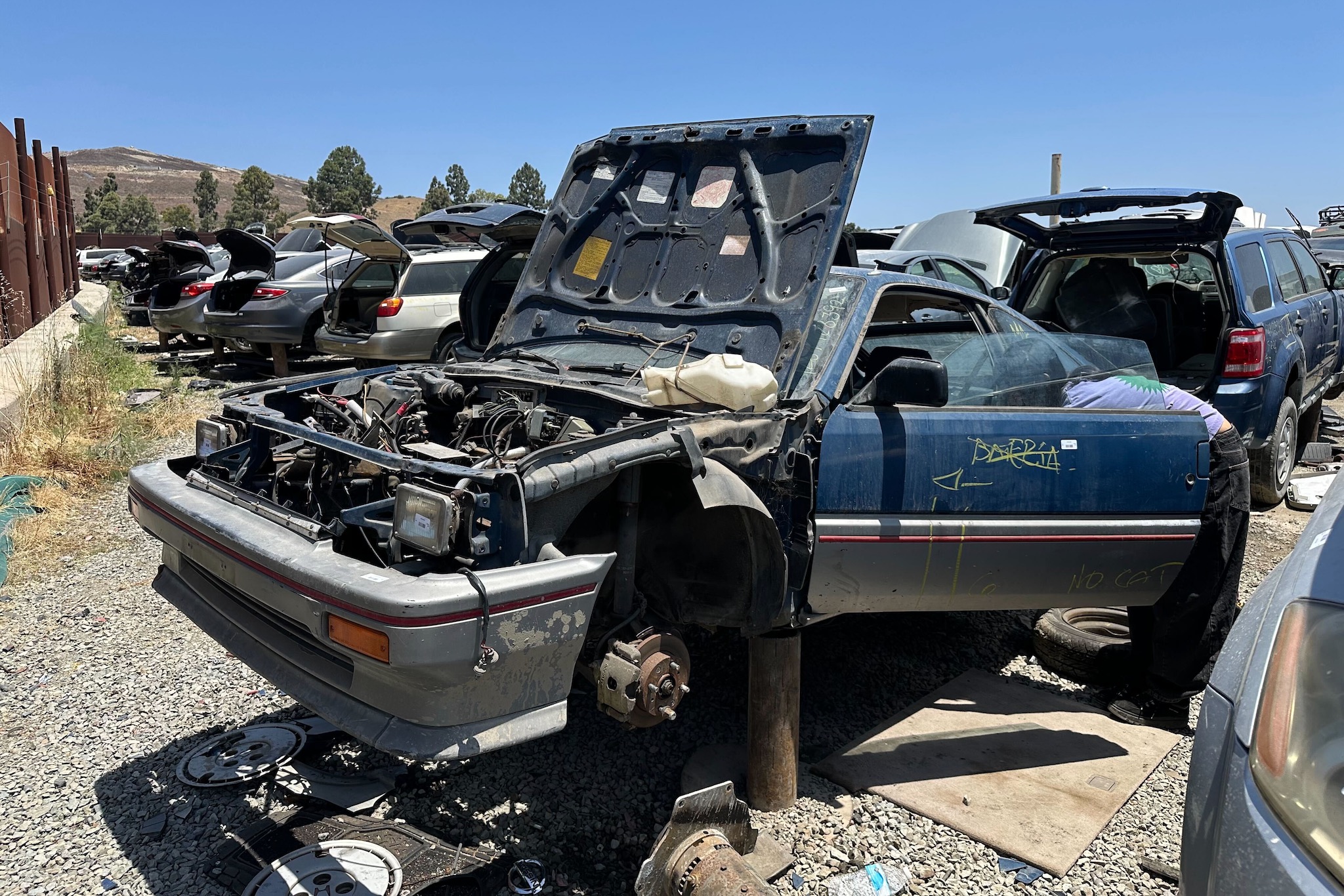
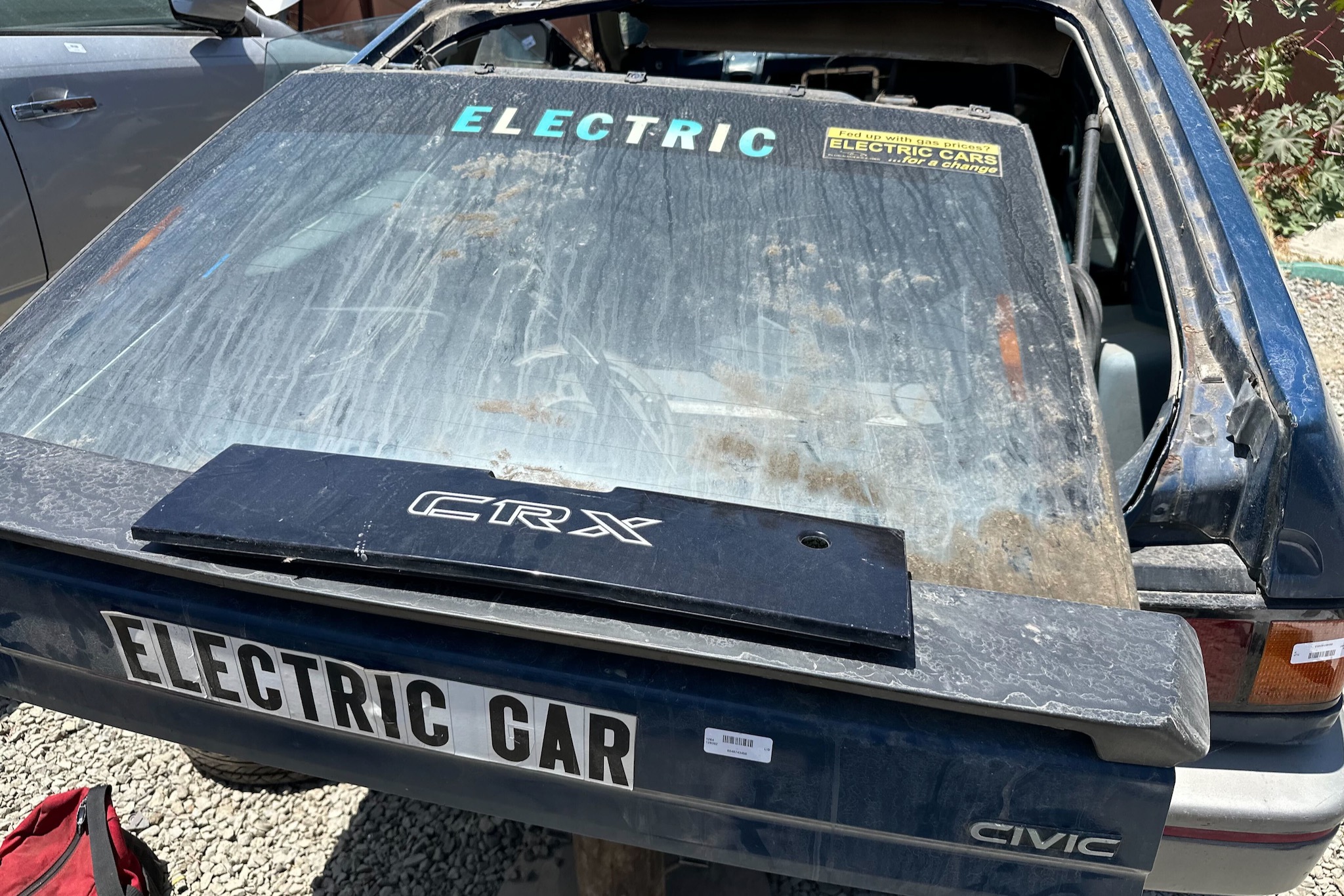
Electric cars didn’t start with Tesla. A century ago, electric motors competed with internal combustion and steam to become the dominant automotive powertrain. They lost, but that didn’t mean motors and batteries went away. Some people just used available parts to build their own EVs, which appears to be the story behind this first-generation Honda CRX spotted by a friend of The Drive at a Pick Your Part in Chula Vista, California.
Now rusting in pieces, the CRX wears conspicuous EV decals (including a sadly relevant call-out of high gas prices) on the outside and what looks like a lot of DIY fabrication inside. The battery pack is mounted behind the seats with control electronics crammed into every available space. Mounted just ahead of the driver’s side rear wheel well, the onboard charger is a K&W BC-20 that, according to a quick forum search, appears popular with DIY conversions, further indicating that this isn’t a factory or aftermarket-corporate build.
Several companies did specialize in EV conversions before the 21st century brought renewed interest from automakers. Electric Vehicle Association (EVA) sold converted Ford Fairmonts to the federal government. A Sears XDH-1—an electric-converted Fiat 128 sold through Sears department stores—was the first EV to tackle Pikes Peak. But we haven’t heard of a commercially-available CRX conversion.
According to a history posted on the company’s global website, Honda did build an EV prototype based on the second-generation CRX. It was essentially a familiarization project for the automaker’s first EV development team, formed in 1988. That car’s single electric motor produced just 26 horsepower, along with an aluminum body and acrylic windows to minimize weight. The lessons learned helped form the basis for the Honda EV Plus, the tiny hatchback Honda produced in the 1990s to comply with California’s zero-emission vehicle mandate.
Honda was more interested in other powertrain technologies. Instead of developing a second-generation EV, it used leftover EV Plus chassis to make its first run of FCX fuel-cell vehicles. Hydrogen and hybrids remained the focus even as the Tesla Model S and Nissan Leaf showed that a modern battery-electric vehicle was possible at a meaningful scale.
The EV resistance seemed to finally be waning with the planned introduction of the Honda 0 Series, but that potentially revolutionary family of EVs has been canceled for the U.S. Honda has been quick to point out that, policy wise, now isn’t the best time to be selling electric cars in the land of the “free.” But this CRX—a relic from before public chargers and lithium-ion batteries—shows that there will always be dedicated EV enthusiasts.
See something? Say something! Drop us a line at tips@thedrive.com
Search
RECENT PRESS RELEASES
Related Post