Elon Musk Reveals Insane Plan to Double American Chip Production in a Single Plant
June 9, 2026
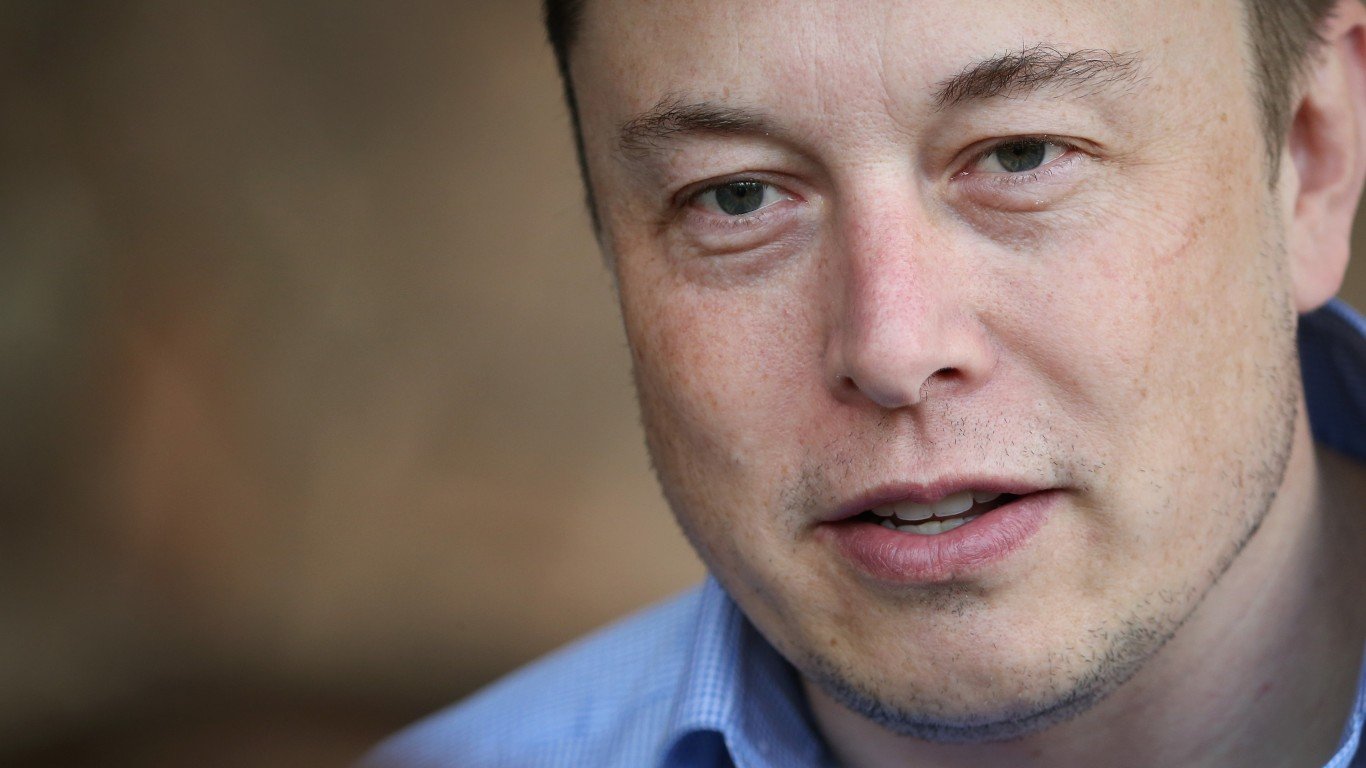
Tesla (NASDAQ:TSLA | TSLA Price Prediction) CEO Elon Musk is once again pitching a project that sounds engineered to break Excel spreadsheets. According to an X post from Sawyer Merritt circulating this week, Musk described Terafab as a roughly 100 million square foot facility, about 10 times larger than Tesla’s Giga Texas factory, with a long-term output target of one terawatt (1 TW) of compute hardware per year.
The framing matters here. Current annual U.S. chip consumption sits near 0.5 TW, so Musk’s vision is for a single plant whose output could rival, and potentially exceed, what the entire country uses today.
Musk’s own line, per the post: “Fundamentally, Terafab is about scale.” The plan, if executed, could reshape how investors think about Tesla, Intel (NASDAQ:INTC), and the broader semiconductor supply chain.
Inside the Terafab Plan and Tesla’s Role
According to SpaceX’s S-1 filing, the collaboration with Tesla on Terafab was announced in March, with Intel joining in April. The S-1 filing describes Terafab as a vertically integrated closed-loop single plant spanning lithography mask design, fabrication of logic and memory chips, and advanced packaging.
Tesla’s Q1 2026 results showed why captive silicon matters. The company posted revenue of $22.39 billion, up 16% year over year, with automotive gross margin expanding to 21% from 16%, per its Q1 2026 update. AI5/AI6 inference chips, Dojo silicon, Optimus, and Full Self-Driving all need leading-edge wafers.
Reported county filings relayed by local press suggest SpaceX plans to invest up to $122 billion in Terafab. The valuation case for Tesla stock now partly hinges on whether vertical integration can actually deliver speed and cost advantages, similar to how SpaceX manufactures roughly 80% of Starship in-house.
Intel’s Foundry Lifeline
Intel is contributing expertise in designing, fabricating, and packaging ultra-high-performance chips at scale. CEO Lip-Bu Tan has been steering Intel’s foundry pivot, and Q1 2026 revenue reached $13.58 billion, with Intel Foundry up 16% year over year to $5.42 billion.
Intel stock has been the standout, sitting at $112.03 after a 438% one-year run. However, the forward P/E ratio of 123x assumes flawless execution.
The valuation also embeds the assumption that Terafab anchor commitments could fill Intel’s expensive fab capacity. Investors evaluating their exposure may want to size positions modestly given the execution risk.
Ripple Effects for TSMC, NVIDIA, and ASML
Taiwan Semiconductor Manufacturing (NYSE:TSM) sits at the center of any sovereignty discussion. TSM stock trades at $430 and change, and the Arizona investment tax credit was raised from 25% to 35%. Terafab is framed in the S-1 primarily as in-house supply, so commercial foundry competition is a possible implication rather than the stated goal.
NVIDIA (NASDAQ:NVDA) remains the demand engine. CEO Jensen Huang stated, “The buildout of AI factories, the largest infrastructure expansion in human history, is accelerating at extraordinary speed.” NVIDIA stock trades at a forward P/E ratio of 23x.
ASML (NASDAQ:ASML) is the quiet winner. Any fab at Terafab’s scale needs High NA EUV tools, and ASML stock has surged 69% year-to-date to $1,811.
What Investors Should Watch Now
Reddit reaction has been bifurcated. WallStreetBets enthusiasm pushed Tesla stock sentiment to 90 (very bullish) on June 9, while r/stockmarket hosted a critical thread that drew 1,351 up-votes arguing the SpaceX-Tesla integration story loses money from day one.
Prudent investors in Tesla stock may want to treat Terafab as optionality rather than a near-term catalyst. The S-1 filing itself states specific projects, timelines, milestones, and capital expenditures have not yet been determined. That’s a long runway between announcement and ribbon cutting.
The takeaway: Terafab could reshape U.S. semiconductor capacity if achieved, with Intel and ASML potentially benefiting most directly, while Tesla shareholders take on the execution risk. Watch for whether SpaceX’s eventual IPO filings disclose firm capex schedules, and whether Intel secures a formal anchor commitment that would justify its current valuation.
Search
RECENT PRESS RELEASES
Related Post