2 Reasons I Wouldn’t Buy the SpaceX IPO With Free Money
April 7, 2026
SpaceX is getting ready to go public, and it could be the biggest IPO in history.
After the company filed confidentially to go public last week, Bloomberg reported that it’s seeking a valuation of up to $2 trillion, though CEO Elon Musk has pushed back on that report.
SpaceX was valued at $1.25 trillion, based on estimates from the board of directors and investment bankers, in February when it combined with xAI, Elon Musk’s AI company that owns the X social media site and the chatbot Grok. Based on that number, $2 trillion would clearly be a big step up from that, but it could also be achievable, as SpaceX is a unique company.
It dominates the market for commercial orbital space launches, thanks to its reusable rockets like Falcon 9, and its Starlink unit is also the world’s largest satellite operator, leading the satellite-based broadband market with more than 9 million customers.
However, while there’s likely to be strong demand for the SpaceX IPO, I’m content to sit on the sidelines while it plays out. Here are two reasons why.
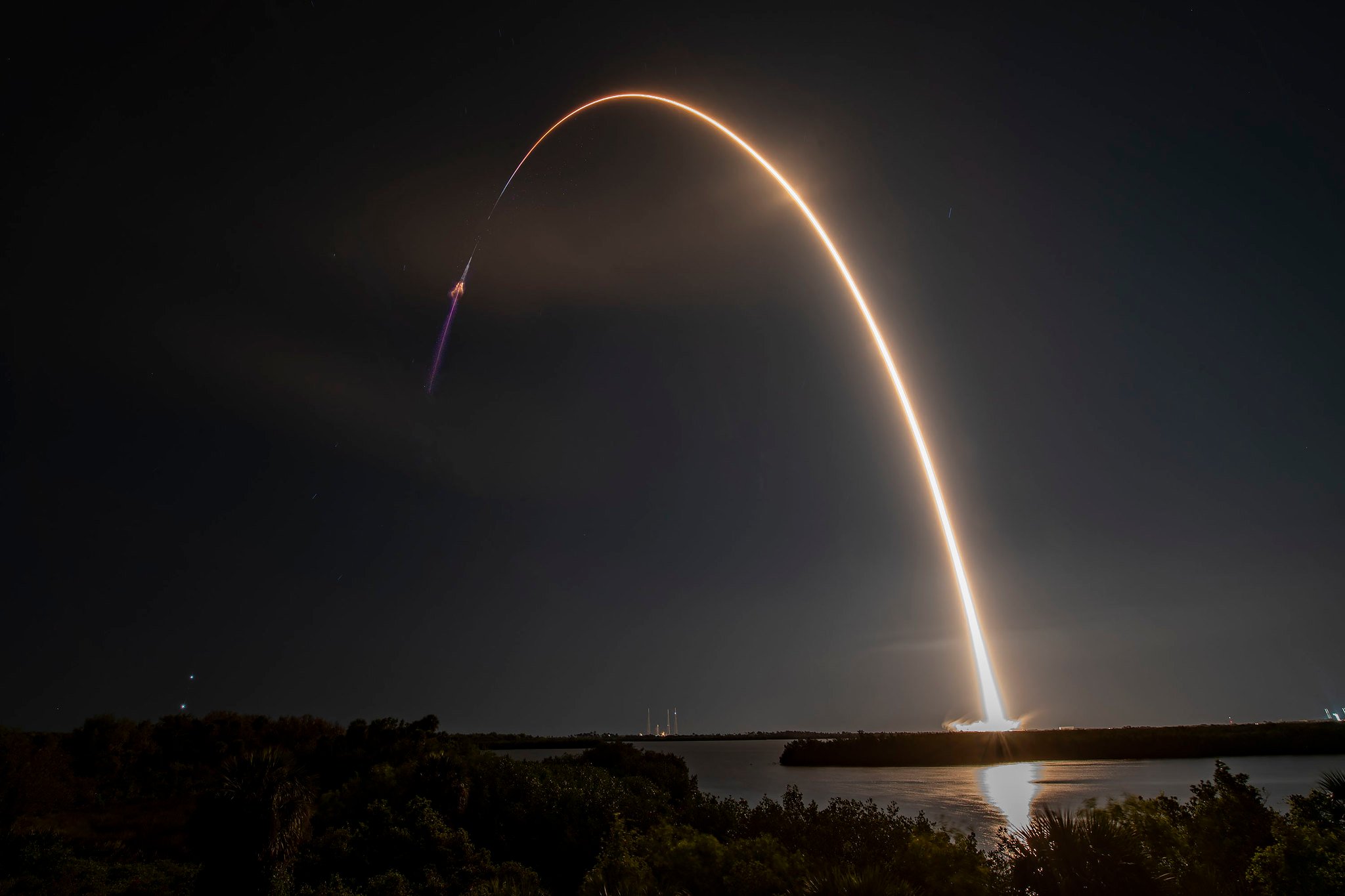
Image source: Getty Images.
1. The valuation creates a huge risk
SpaceX hasn’t yet filed its S-1 prospectus, so we don’t have the full financial picture of the company, but there are some basic numbers circulating.
In 2025, the company brought in $15 billion-$16 billion in revenue, according to Reuters, up from $13.1 billion in 2024, and it generated earnings before interest, taxes, depreciation, and amortization (EBITDA) of around $8 billion.
Based on the $2 trillion valuation that the company is reportedly seeking, it would have a price-to-sales valuation of approximately 130, which is higher than any S&P 500 stock, and more than three times higher than any S&P 500 stock except for Palantir.
At a valuation like that, there are already sky-high expectations priced into the stock, and at $2 trillion, the upside potential is limited as well. Nvidia, by comparison, is worth just around $4.3 trillion and is the most valuable company in the world.
SpaceX, at the valuation it’s targeting, would be at the same echelon as the “Magnificent Seven” companies that dominate their industries and have much more revenue and profit than SpaceX.
That seems hard to justify, and it means that the stock could easily plunge if it disappoints the market or sentiment changes.
2. Elon Musk is too much of a risk for me
There’s no question that Musk has been a visionary and brilliant business leader at companies like Tesla (TSLA 1.85%), SpaceX, and others, and his companies have earned a “Musk premium,” or a higher valuation for his ability to sell his vision of the future, which, for SpaceX includes sending data centers into space and eventually putting a man on Mars.
However, Musk also carries a number of risk factors with him, not just keyman risk. He has a tendency to overpromise innovations and then move investor attention elsewhere when those promises are delayed or unfulfilled.
He’s done this several times at Tesla. In 2021, he said that the company’s vehicle sales volume would grow at a compound annual rate of 50% for several years, though Tesla only achieved two years of that growth rate, and vehicle sales have now declined for the last two years. When asked about weakness in EV sales, Musk tends to deflect to Tesla’s future ambitions like robotaxis or its Optimus autonomous robot, and make some other promise about the future. That strategy has been successful at pumping the stock as Tesla is worth nearly $1.5 trillion and is much more expensive than any of its Magnificent Seven peers.
SpaceX seems likely to follow a similar playbook, as Bloomberg reported that the IPO pitch will be based on Musk’s ability to sell his vision for what the company could be, which is likely to include space travel, orbital data centers, and other bold, but possibly unworkable, ideas.
Musk certainly has his fan base, and those investors are likely to be attracted to the SpaceX IPO. However, at this point, he’s too untrustworthy for me, and it doesn’t help that he’s become a political lightning rod.
Even if I had free money, I still wouldn’t invest it in SpaceX. Free money is still money, after all, and there are plenty of things I’d rather spend it on than a hot stock debut that looks primed to burn investors.
Search
RECENT PRESS RELEASES
Related Post