Seven Good News Stories You Missed This Year
December 26, 2025
Most Americans find keeping up with the news quite depressing. In fact, only 7% say the news makes them feel happy or empowered, compared with approximately four in ten who say it makes them feel angry or sad, according to a Pew Research Center report.
But it wasn’t all doom and gloom in 2025. There were positive developments in the science and climate sectors, in particular, that show progress is still possible, even if it does not always make the headlines.
Here are seven good news stories you may have missed this year.
Antarctic Ozone hole shrinks
The ozone hole over Antarctica has shrunk to its fifth-smallest size in more than three decades, according to NASA and the National Oceanic and Atmospheric Administration (NOAA).
The reduction has been made possible by regulations on “ozone-depleting” substances outlined under the Montreal Protocol—an international environmental treaty intended to protect the ozone layer. A weaker polar vortex, a low-pressure system of cold air, also contributed to the reduction.
The ozone layer functions as a global shield against harmful levels of ultraviolet solar radiation. A weakened ozone layer can increase rates of skin cancer, cataracts, and significantly affect crops.
“Since peaking around the year 2000, levels of ozone-depleting substances in the Antarctic stratosphere have declined by about a third relative to pre-ozone-hole levels,” said Stephen Montzka, senior scientist with NOAA’s Global Monitoring Laboratory.
Advertisement
Advances in the search for an HIV cure
Melbourne researchers are moving closer towards an HIV cure after scientists discovered a way to force the virus—which has the ability to conceal itself in white blood cells—out of hiding, according to a June paper published in the journal Nature Communications.
The new discovery could help the estimated 40.8 million people living with HIV, according to the most recent World Health Organization data. The disease is manageable for many, as nearly eight in ten people globally receive antiretroviral therapy as treatment. Life expectancy rates have also improved significantly. However, HIV remains incurable because of the virus’s high mutation rate and ability to infect immune cells.
Researchers used mRNA technologies to encase HIV in a “fat bubble” that instructs cells to show the presence of the virus. “Our hope is that this new nanoparticle design could be a new pathway to an HIV cure,” Dr Paula Cevaal, research fellow at the Doherty Institute and first co-author of the paper, told the Guardian.
Advertisement
More than 33 million people have died from HIV, though the number of deaths per year has fallen sharply since its 2004 peak.
The medical advancement is just one step among many before an official cure is found. Cevaal cautioned that many breakthroughs do not reach the clinical trial stage. Still, she said, “In terms of specifically the field of HIV cure, we have never seen anything close to as good as what we are seeing, in terms of how well we are able to reveal this virus.”
“So from that point of view, we’re very hopeful that we are also able to see this type of response in an animal, and that we could eventually do this in humans.”
ICJ issues landmark climate decision
The International Court of Justice (ICJ), the main judicial body of the United Nations, declared that countries have an obligation to provide a “clean, healthy, and sustainable environment” under international human rights law.
Advertisement
In its landmark July ruling, which characterized climate change as an “urgent and existential threat,” the court established that countries have a legal responsibility to address climate change.
“This opinion is not just about what countries have to do in the future,” Nikki Reisch, climate and energy program director at the Center for International Environmental Law, previously told TIME. “It is about the past, present, and future of climate action, and crucially, it’s about recognizing that we can’t solve this mounting climate crisis without confronting its roots, that past emissions matter, and that loss and damage already endured must be recognized and repaired.”
The court called on countries to engage in global cooperation to counter climate change and said states must regulate private actors that may interfere with such obligations.
Green Sea Turtles are no longer endangered
Advertisement
Green sea turtles have rebounded from their endangered status, with a nearly 30 % increase in population since the ‘70s, the International Union for Conservation of Nature (IUCN) announced in October.
More than four decades after the species was first designated as endangered, the largest hard-shelled sea turtle has been moved to a “least concern” conservation status, meaning that it is “pervasive and abundant.”
For years, green sea turtles were sought after for their meat, eggs, and even shells due to the wildlife trafficking trade. But even as some subpopulations continue to face threats, conservation efforts in Ascension Island, Brazil, Mexico, and Hawaii, in particular, have proven fruitful.
“Conservation efforts have focused on protecting nesting females and their eggs on beaches, expanding community-based initiatives to reduce unsustainable harvest of turtles and their eggs for human consumption, curtailing trade, and using Turtle Excluder Devices and other measures to reduce the accidental capture of turtles in fishing gear,” the IUCN said. Climate change remains a serious threat to the homes of sea turtles, particularly in Australia, which is home to the world’s largest nestle rookery for the marine animal.
Advertisement
“The ongoing global recovery of the green turtle is a powerful example of what coordinated global conservation over decades can achieve to stabilise and even restore populations of long-lived marine species,” said Roderic Mast, co-chair of IUCN’s Species Survival Commission Marine Turtle Specialist Group. “Sea turtles cannot survive without healthy oceans and coasts, and humans can’t either. Sustained conservation efforts are key to assuring that this recovery lasts.”
Researcher finds a way to help babies with a rare brain cancer
A doctor working with the Institute of Cancer Research in London has discovered a way to help treat cancer tumors in children under the age of one.
The discovery was made by Dr. Matt Clarke, who found that existing medicines could help treat high-grade gliomas—a type of tumor found in the brain or spinal cord that can quickly spread—for children under a year old.
Advertisement
“To be able to identify a group of tumours that previously would’ve sadly had a terminal prognosis, where we can now have a treatment that can actually make a difference and ensure these children can survive is a massive step forwards,” Clarke told the BBC.
The breakthrough means that doctors no longer have to rely on chemotherapy or radiotherapy, which can be especially harmful for young children, to treat that specific type of cancer.
“We’re making steps forward already in the right direction,” said Clark. “Hopefully, we can continue to build on that in the years to come.”
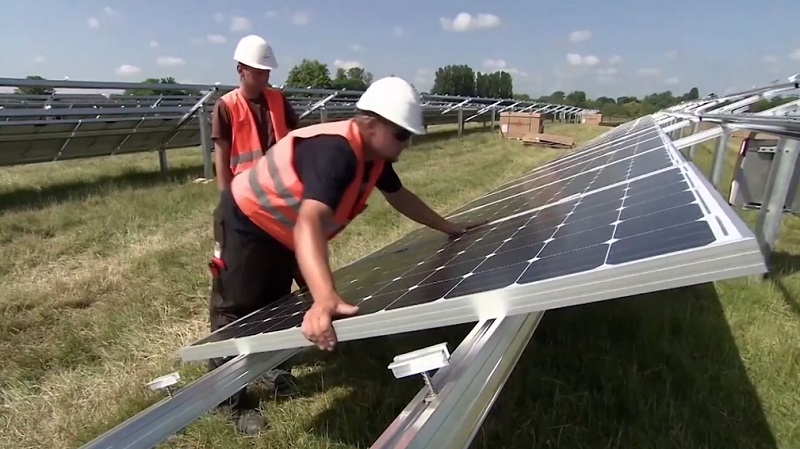
Renewable energy will grow faster than fossil fuels
The world is rapidly moving towards the use of predominantly renewable energy.
A report by the International Energy Agency (IEA) found that renewables will grow at a faster rate than other energy sources over the next decade, making the transition to this form of energy “inevitable.”
Advertisement
A separate study by energy think tank Ember found that renewable energy contributed 34.3% of global electricity generation in the first half of 2025, while coal accounted for 33.1%. It marked the first time renewable energy has outperformed coal.
The growth of this sector is happening despite calls from U.S. President Donald Trump for increased domestic oil and gas production, and his rollback of federal funding for renewable energy projects.
Opening of an Egyptian cultural treasury
Boasting more than 100,000 artifacts, including the tomb of King Tutankhamun, the Grand Egyptian Museum (GEM) officially opened to the public this November.
The 117-acre cultural treasury, just 1.2 miles from the pyramids of Giza, is home to thousands of years of history, ranging from ancient Egyptian civilization to the end of the Greco-Roman period.
Egypt is hopeful that the opening of the “world’s largest archaeological museum” will boost the country’s tourism sector through displays such as the complete contents of King Tut’s tomb—the young ruler who became well-known after the 1922 discovery of his nearly intact ancient tomb, remarkable given the widespread looting of others. It marks the first time the entire collection has been displayed together since its discovery.
Search
RECENT PRESS RELEASES
Related Post