Thai year of environmental upheaval
December 26, 2025
In 2025, Thailand faced a convergence of challenges that had laid bare its vulnerability to environmental degradation, natural disasters, and complex regional dynamics.
From polluted rivers and hazardous air quality to seismic disturbances, destructive floods, and sensitive diplomatic disputes, these developments have tested the nation’s preparedness, governance, and capacity for cross-border cooperation. Together, they underscore mounting pressures on ecosystems, public safety, and national values amid an increasingly volatile regional landscape.
Toxic rivers shock
Northern Thailand is grappling with rising fears of cross-border pollution after high levels of arsenic and other heavy metals were detected this year in the Kok, Sai, and Mekong rivers, critical waterways that support millions of people in the region.
The alarm first sounded in March when residents along the Kok River noticed unusual discolouration in the water.
Tests conducted by the Department of Pollution Control (DPC) confirmed that arsenic levels had exceeded safe limits.
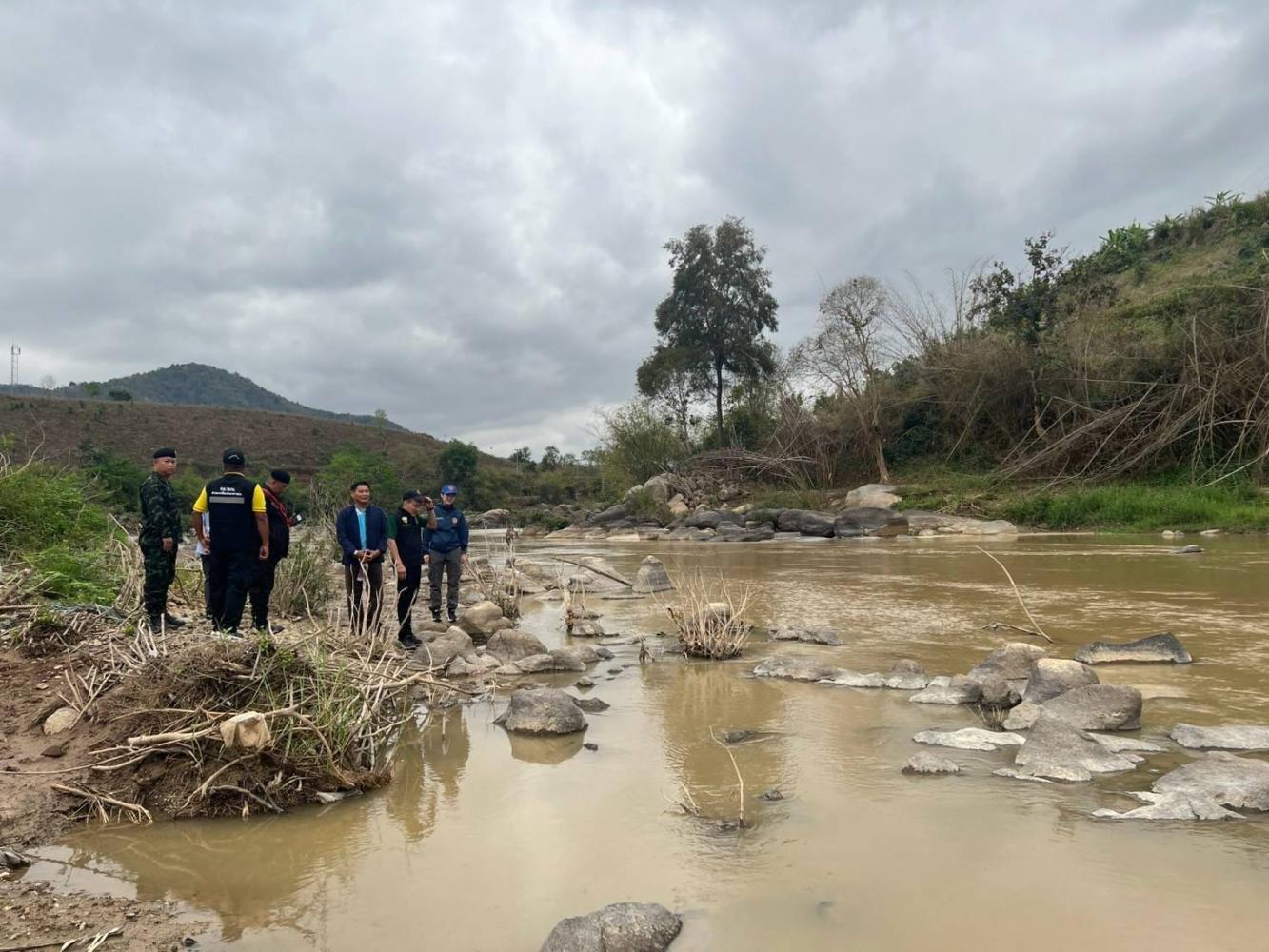
Chiang Mai Public Health Office and Chiang Mai Environmental and Pollution Control Office officials collect Kok River water samples for testing which revealed excessive levels of arsenic and lead in April. (Photo: Panumet Tanraksa)
Additional samples taken from the Sai River and parts of the Mekong revealed similar patterns of contamination, prompting broader concern over water safety, agriculture, and fisheries that depend heavily on these rivers.
Environmental data points to the rapid growth of unregulated mining activities in Myanmar’s Shan State, an area known for rare-earth and gold extraction.
With weak oversight in the semi-autonomous region, waste from mining sites is believed to be leaching into upstream tributaries that flow into Thailand.
Although Thai authorities previously pledged to raise the issue with Myanmar, no concrete progress has been reported, leaving affected communities frustrated and vulnerable.
The Mekong River Commission (MRC) Secretariat has classified the situation as “moderately serious.”
In July, its water-quality assessments detected elevated arsenic concentrations at four out of five sampling sites along the Mekong. The most affected stretch lies between a point north of the Golden Triangle at the Myanmar–Laos border and Chiang Khong district in Chiang Rai.
Thai testing in May showed average arsenic levels of around 0.025 mg/L — more than double the standard limit.
With contamination already detected in multiple northern rivers, experts warn that the region faces escalating ecological and public health risks unless effective cross-border controls on mining waste are urgently implemented.
March mega-quake
Bangkok was rattled on March 28 when tremors from a powerful earthquake in central Myanmar jolted high-rise towers across the capital, leaving residents stunned by one of the most intense shaking episodes ever recorded in the city.
The 7.7-magnitude strike-slip quake struck Myanmar’s Sagaing Region near Mandalay, more than 1,000 kilometres from Bangkok.
Yet its supershear rupture, which caused seismic waves to travel faster than the speed of sound through the fault, combined with the capital’s deep layer of soft clay soil, to significantly amplify ground motion.
Although most structures withstood the shaking, a major tragedy occurred at a 30-storey building under construction for the State Audit Office (SAO) in Chatuchak district.
The tower collapsed catastrophically, killing about 100 workers inside.
Investigators have not ruled out corruption, poor-quality materials, or design flaws, though no official conclusion has been reached.
The building’s incomplete state, lacking stabilising walls and key structural components, left it particularly vulnerable to long-period shaking, according to experts involved in the probe.
In the days that followed, the Department of Public Works and Town & Country Planning inspected more than 10,000 buildings across Bangkok and reported that the vast majority remained structurally sound.
Most damage was non-structural, such as cracked walls, damaged facades, and fallen ceiling elements.
Seismologists warn, however, that the event underscores Bangkok’s long-recognised vulnerability to distant earthquakes.
Professor Pennung Warnitchai of the Asian Institute of Technology explained that the capital’s basin-like geography and soft soil can amplify ground motion by up to four times, allowing tremors from far-off faults to be felt strongly in tall buildings.
As the investigation into the SAO building collapse continues, experts say the tragedy serves as a stark reminder that preparedness and stringent construction standards remain essential in a city sitting atop soil that magnifies the power of distant quakes.
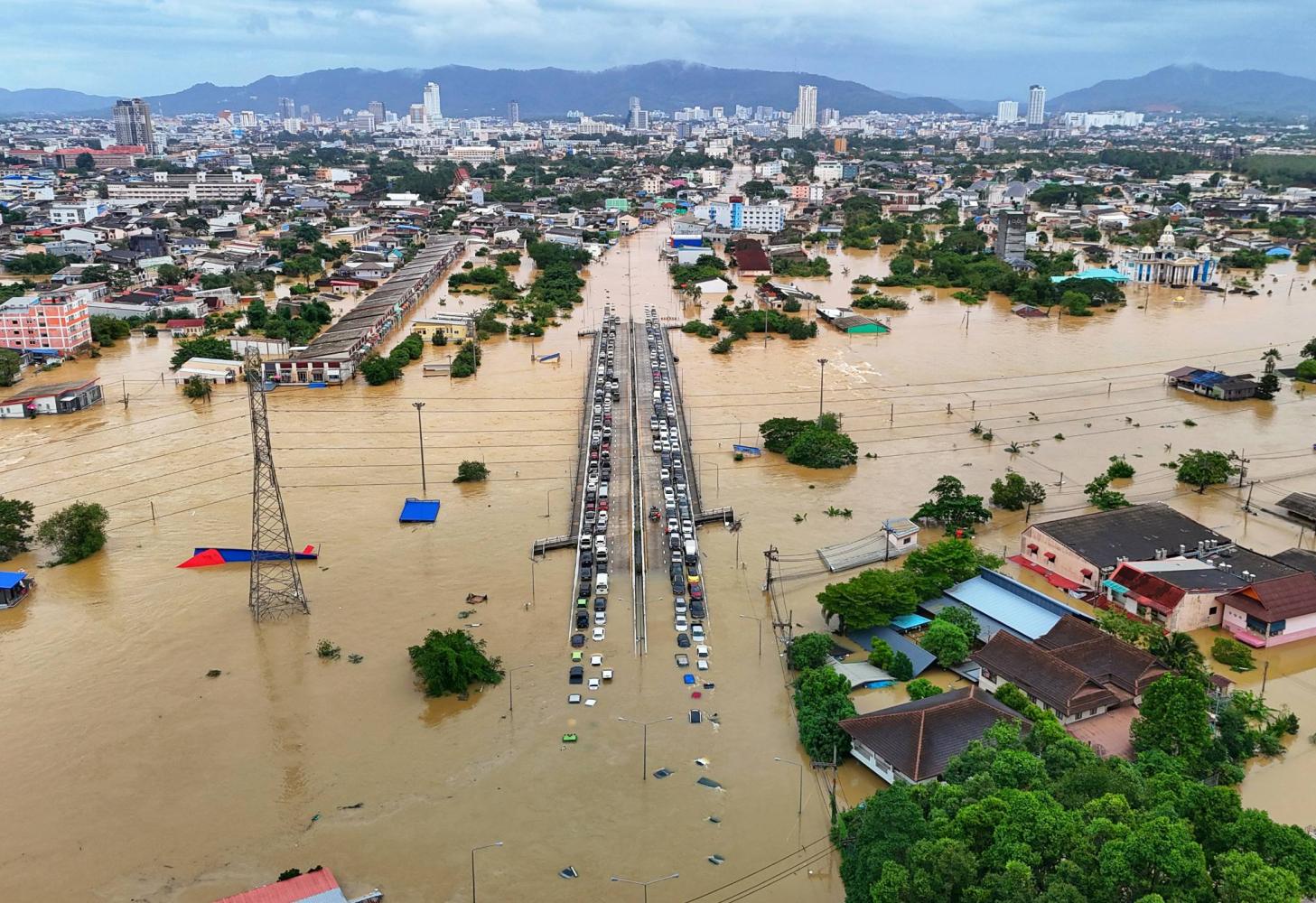
A week’s worth of flooding in Hat Yai municipality, Songkhla, last month will require a months-long rehabilitation project to get the city and its inhabitants back on their feet, experts say. (Photo: Weerapong Narongkul)
Historic floods hit
The 2025 Asian flood disaster has severely impacted Thailand, with more than 3.5 million people affected and over 100 fatalities nationwide.
The southern region has been hardest hit. As of Dec 1, the Department of Disaster Prevention and Mitigation (DDPM) reported ongoing flooding in nine provinces, Surat Thani, Nakhon Si Thammarat, Trang, Phatthalung, Satun, Songkhla, Pattani, Yala, and Narathiwat, covering 79 districts and affecting more than 1 million households.
A historic late-November deluge inundated communities across the lower South, with Hat Yai suffering its most severe flooding in years.
The commercial hub of Songkhla recorded economic losses in the hundreds of billions of baht, and more than 100,000 families were displaced.
Recovery is expected to take at least two months, including the removal of over one million tonnes of debris.
The disaster exposed weaknesses in flood-management systems and delayed response efforts, intensifying damage alongside the effects of climate change.
Authorities now plan to strengthen early-warning systems and implement new short- and long-term resilience measures.
Critical infrastructure was also affected. Hat Yai Hospital incurred nearly one billion baht in damage, prompting the evacuation of hundreds of patients after power outages and shortages of food and oxygen. Civil society groups, volunteers, and nationwide donations provided essential support during the emergency.
Flooding extended beyond the South. In the Central region, satellite imagery from GISTDA on Nov 12 showed 1.29 million rai (about 2,070 sq km) of inundated land across ten provinces, including Ayutthaya, Suphan Buri, Lop Buri, and Pathum Thani, particularly in low-lying areas along the Chao Phraya River Basin.
In the North, prolonged heavy rainfall during July and August triggered floods and landslides in Sukhothai, Tak, Chiang Rai, Nan, and Phayao.
In Chiang Rai, the rising Kok River reached alert levels at several monitoring points, climbing 5–8 cm per hour, prompting early evacuations along vulnerable riverbanks.
Choking on smog
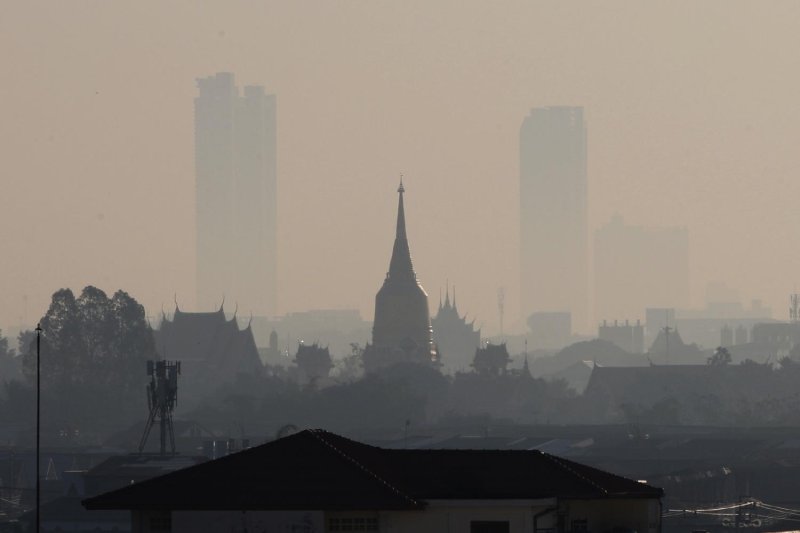
Thailand faced another severe air pollution crisis early this year, as hazardous levels of fine particulate matter (PM2.5) blanketed Bangkok and much of the country from January through March.
Authorities have struggled to control pollution, which is driven by traffic emissions, industrial activity, and agricultural burning.
Bangkok’s air quality has steadily worsened since 2019, with transportation responsible for an estimated 60% of pollution in the capital, followed by industrial emissions and seasonal crop burning in nearby provinces.
Conditions deteriorated sharply in 2025, with PM2.5 levels in Bangkok in January reaching 108 microgrammes per cubic metre, nearly three times the national safety threshold.
Pollution fluctuated with weather conditions but surged repeatedly through February and March, affecting all Bangkok districts and up to 64 provinces nationwide. By late March, Bangkok ranked among the world’s ten most polluted cities, with an air quality index of 141.
Authorities introduced emergency measures to limit exposure. These included cloud seeding operations, voluntary work-from-home policies, free public transportation, vehicle-emissions checkpoints, and widespread school closures.
At the peak of the crisis, more than 350 Bangkok schools were temporarily shut. The government also imposed nationwide crop-burning bans and expanded public-health response centres.
Environmental experts questioned the effectiveness of free public transport subsidies, arguing that funds would be better spent on long-term solutions such as air purifiers and stricter emissions enforcement.
Bangkok authorities announced expanded long-term strategies, including a citywide Low Emission Zone, stricter vehicle smoke limits, tighter controls on construction and industry, and an expanded work-from-home programme targeting 300,000 participants.
Jumbos on jumbos
Beyond natural disasters, 2025 also saw a sensitive diplomatic debate over Thailand’s proposal to repatriate two Thai elephants from Sri Lanka.
The initiative, launched in October by the Ministry of Natural Resources and Environment, followed renewed pressure from conservationists calling for the return of Pratu Pha and Sri Narong, two elderly male elephants that were gifted to Sri Lanka decades ago as symbols of friendship.
Natural Resources and Environment Minister Suchart Chomklin said the proposal was driven by long-standing concerns over the animals’ welfare.
Pratu Pha, sent in 1980, and Sri Narong, sent in 2001, have long featured in religious ceremonies and processions. Now advanced in age, both are considered vulnerable, prompting Thailand to seek their return for retirement and specialised care.
Sri Lankan authorities insist the elephants are well treated and cherished by local communities, arguing that repatriation could undermine cultural ties and diminish their role as emblems of bilateral cooperation.
The debate intensified after last year’s successful repatriation of Sak Surin, an ailing elephant rehabilitated in Thailand. However, officials acknowledge that Pratu Pha, 51, and Sri Narong, 29, differ from that case: both are healthy, and recent assessments by Thai veterinarians found no signs of illness.
In response, the Sri Lankan temple that cares for the elephants has pledged to upgrade its facilities. As talks continue, conservationists note that the issue has expanded beyond animal welfare, touching on national pride, cultural diplomacy, and the enduring symbolism of Thailand’s elephants.
Search
RECENT PRESS RELEASES
Related Post