Maine schools tackle food waste
January 12, 2026

SEBAGO — When students show up for lunch at Sebago Elementary School, they start at a salad bar stocked with cucumbers, bell peppers, cherry tomatoes, carrots, peaches and bananas. The students serve themselves, ideally taking only what they plan to eat.
“We give them the choice of saying no and taking what they want,” explained Morgan Therriault, the school’s food service director, who has made waste reduction central to cafeteria operations. If they just served every student a helping of green beans, she said, a lot more of them would get thrown away.
Maine’s K-12 students discard an estimated 8.4 million pounds of food annually, according to Susanne Lee, a faculty fellow at the University of Maine’s Mitchell Center for Sustainability Solutions. While that represents just 1% of the state’s annual food waste, Lee said it creates a “triple bottom line” of economic, environmental and social damage.
“Food is the single largest component of school solid waste, ending up in landfills where it generates harmful greenhouse gases,” she said at a November conference on green school policies. “But it also wastes money to produce the food, prepare and serve it and then to cart it away. More importantly, that wasted food represents nutrition that our students badly need.”
Two years ago Sebago was part of a pilot program, run by Lee and the Mitchell Center, to reduce cafeteria food waste. Inside the school last week, many of those efforts were on display.
At the end of lunch, a rotating pair of apron-clad “helper scrapers” armed with red rubber spatulas cleared their classmates’ leftover food from the trays into the trash. Students who ate the majority of what they took are rewarded with a sticker. Some said they’re motivated to finish their carrots for the prize, but others have taken Therriault’s sustainability message to heart.
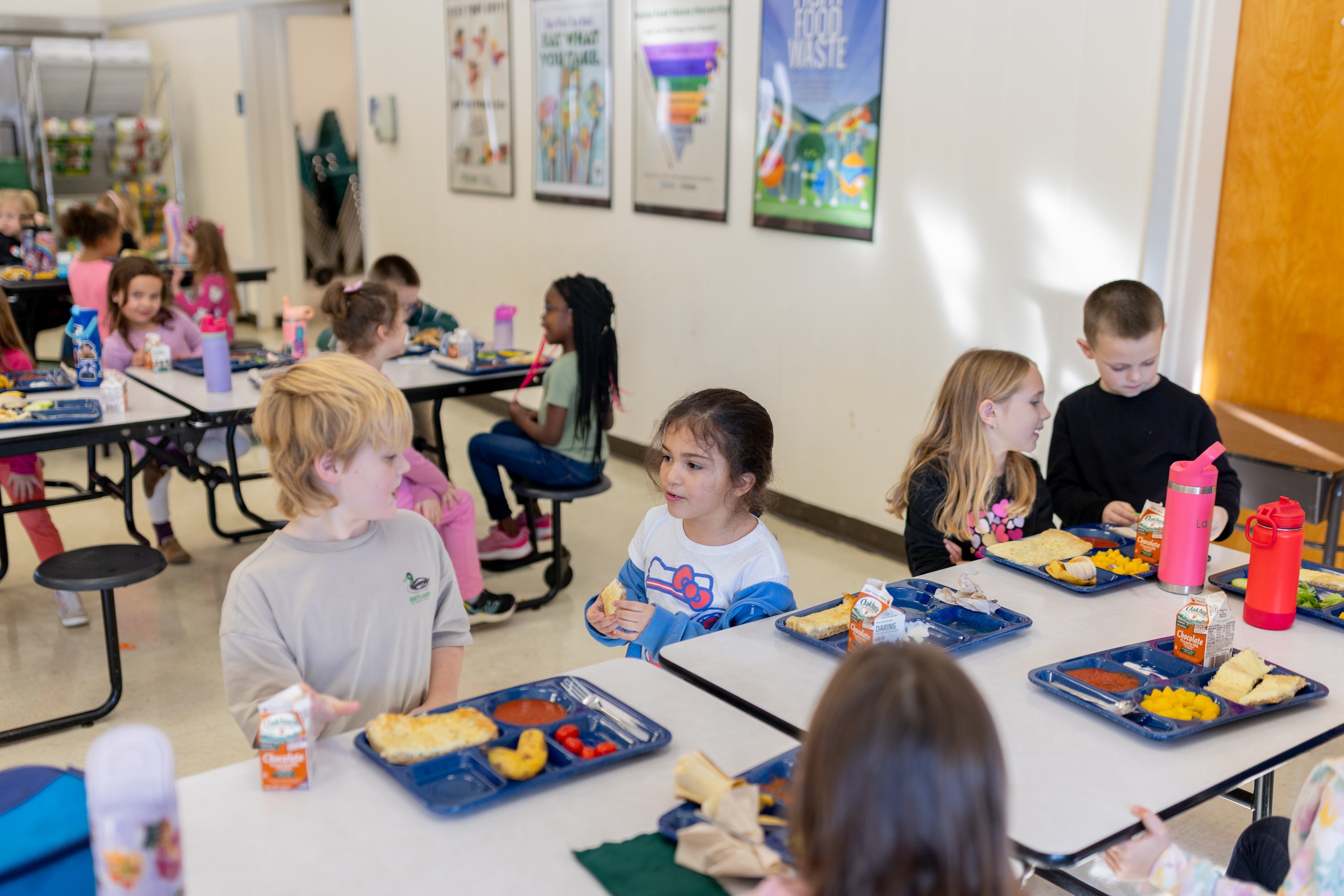
Seven-year-old Finn Barker, over a lunch of a banana, tomatoes and cheesy pazzo bread, said he thinks about food waste a lot.
“I was watching a YouTube video this morning about how some good food gets wasted, and it doesn’t get used, so I make sure to take enough that I need,” the first grader said. He also volunteers at a food pantry in Naples in his free time. “I really like helping.”
The results of the pilot at Sebago and the other schools were encouraging, Lee said, and now a toolkit has been developed for any and all K-12 schools. It could be an important resource as Maine tackles statewide food waste reduction goals set by legislation that passed last year.
School meals are the healthiest meals the majority of American children eat, but only if students eat them, Lee said. She noted a 2014 Harvard University School of Public Health study that showed students consistently threw away 60% of their vegetables and 40% of their fruit.
Lee said that is unacceptable in Maine where one in five children are food insecure, according to Feeding America, and are worried about their next meal, skipping meals due to cost, or trading healthy foods for cheaper ones.
One teacher told Lee his third-grade class conducted a waste audit that showed their school was tossing 62 pounds of food a day. Over a full school year, that adds up to 12,000 pounds from just one building. Lee said that level of waste was not unusual based on audits done at Maine schools that have been participating in a “No More Wasted Food” pilot program.
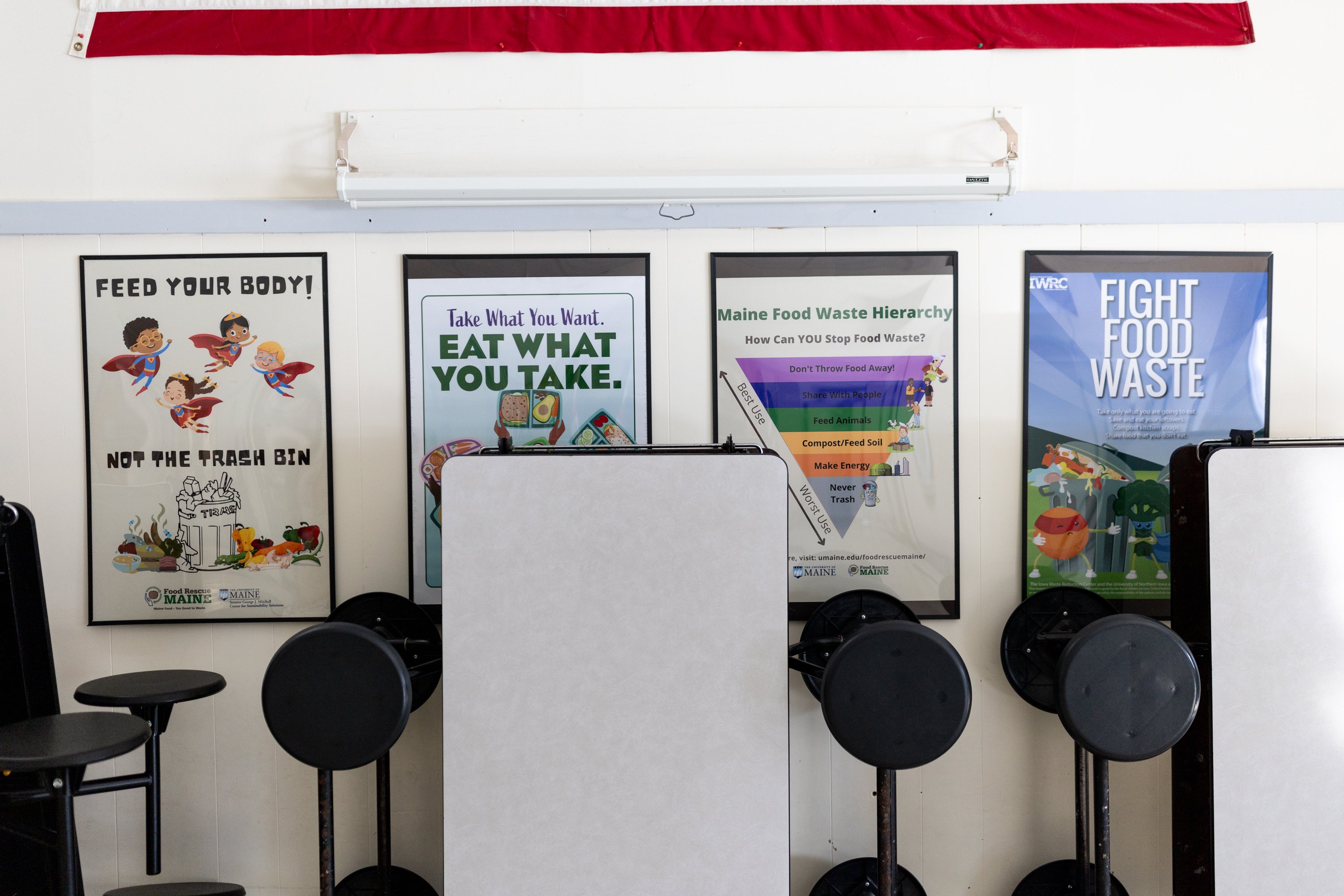
The Mitchell Center partnered with the Maine Department of Education and the Department of Environmental Protection to launch the DIY toolkit based on a pilot program tracking food waste and potential solutions in seven Maine school districts: Sebago, Auburn, Bonny Eagle, Easton, Lisbon, Orono and South Portland.
The pilot schools saw overall food waste drop by 25%, with fruit and vegetable waste decreasing by as much as 64%. Reducing food from the school waste stream has saved some of the pilot schools up to 30% in disposal costs.
The toolkit focuses on educating the school community about why eliminating food waste is important, trying out best practices that worked in the pilot schools and tracking progress. Some recommendations include setting up sorting stations and “share carts” for unopened items, switching to reusable silverware, empowering student “Food Rescue Hero” teams and keeping track of data.
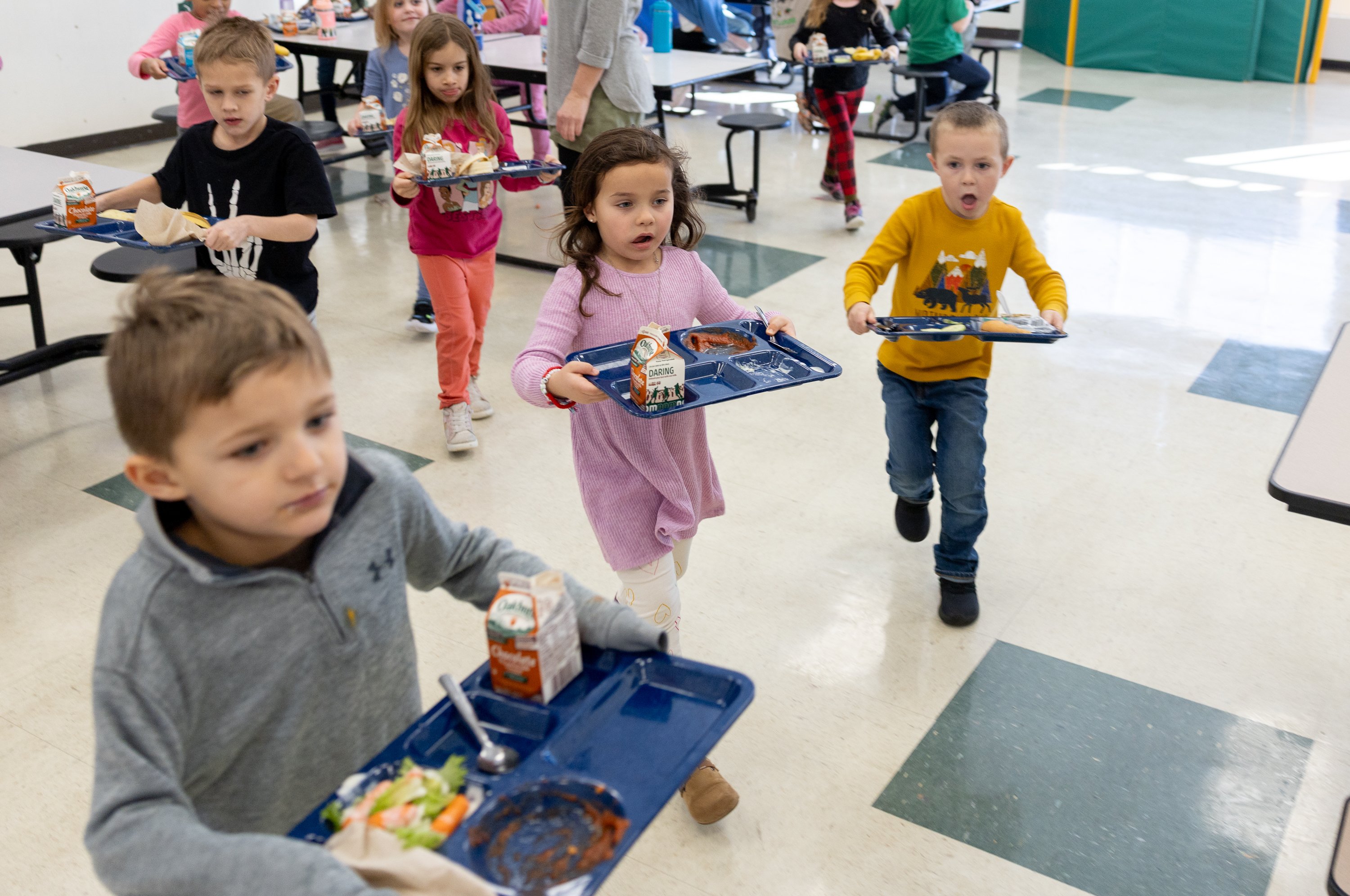
It was released in alignment with a statewide goal of reducing food waste 50% by 2030 and a new food waste ban passed by the Legislature in June. Beginning in 2030, that law prohibits all large facilities that generate food waste, like school cafeterias, from throwing it away in landfills.
The toolkit became widely available in October, and Lee said her team is now focused on supporting districts interested in implementing it, with an eye on helping schools prepare for that 2030 deadline. They’re also doing some new research on its application for middle and high school (the pilots were mostly focused on elementary schools) and how to coordinate with school facilities directors.
Therriault, in Sebago, said her school had already implemented many sustainability initiatives, like diverting organic waste to a local pig farmer and the self-serve salad bar, when she got involved in the pilot back in 2022.
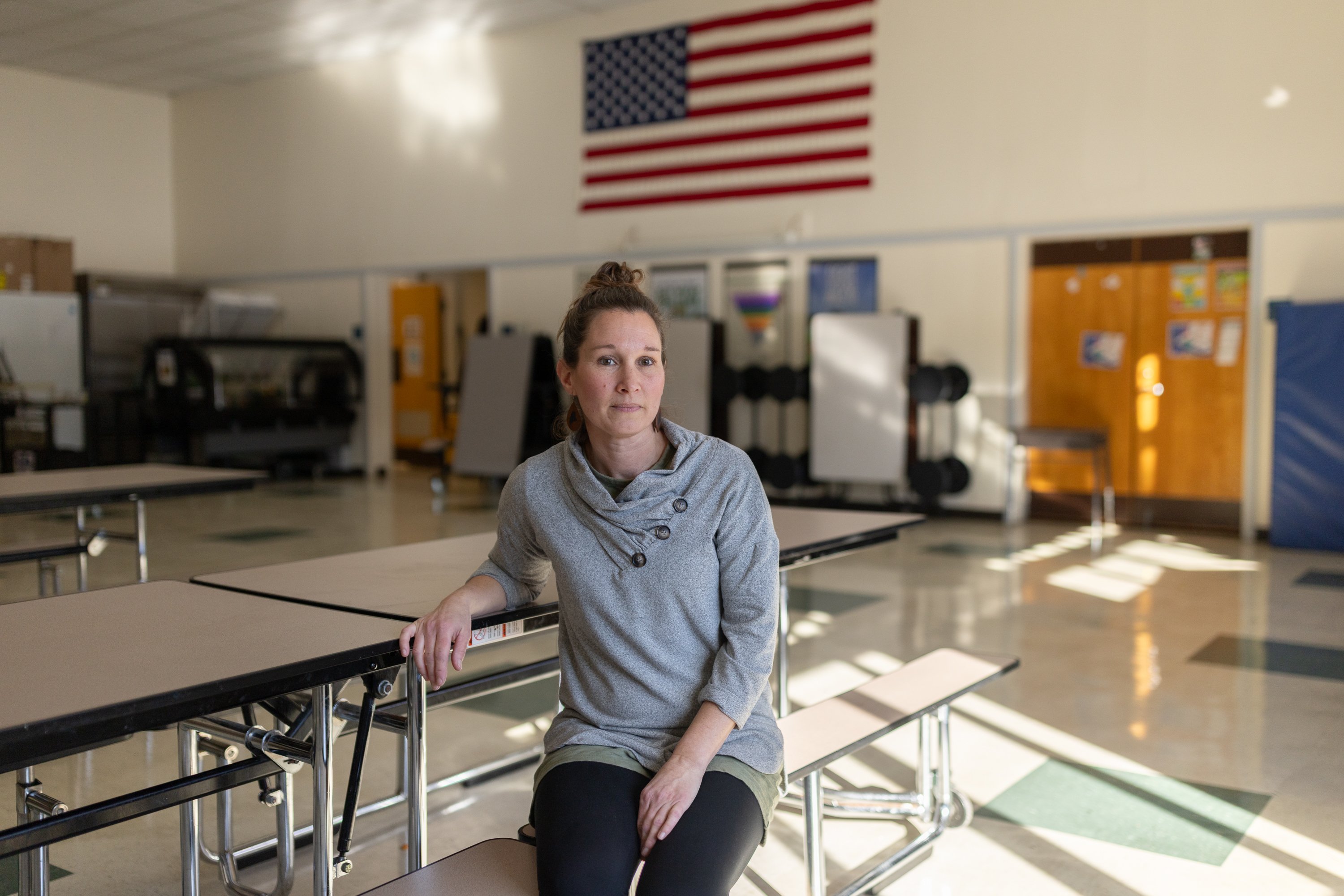
But over the course of the 9-week study — which required the school to weigh their scraps and report those numbers every day — waste did reduce, by about 40 pounds over the district’s baseline, and Therriault picked up a couple of practices that she still uses today, like rewarding cleared trays with stickers and the share bin.
She said her biggest takeaway was how impactful education about the ecological impacts of food waste can be.
Allison Leavitt, the nutrition director for the Lisbon School Department, ran the pilot at her district’s 600-student elementary school. They reduced waste by 233 pounds during the pilot study.
At Lisbon’s salad bars, she said, students who aren’t interested in any of the options are encouraged to grab an apple or bag of cranberries they can put in the share bin (the USDA requires students to take a serving of fruit for their meal to be eligible for funding) which their classmates can take.
Leavitt said students are definitely more mindful about food waste, and have become better at recognizing the time and labor that goes into making their lunches.
“We’re doing this because it’s good for the environment, but it’s also a good training for students to know where their food goes, and the environmental impact of food in a dumpster versus food in a compost,” she said.
Mike Flynn, director of student nutrition at Regional School Unit 12 in the Sheepscot Valley, said over time he has learned to add healthy food choices for students, like plant-based menu items or local fish, strawberries and spinach, rather than simply taking away unhealthy things, like chocolate milk.
After cutting chocolate milk at his first school district, Flynn said he practically needed security to go to his car.
“It’s only nutritious, it’s only affordable, it’s only sustainable if the kids are eating it,” Flynn said.
Search
RECENT PRESS RELEASES
Related Post