G20 benchmark: India’s journey from clean energy pledges to real impact
January 19, 2026
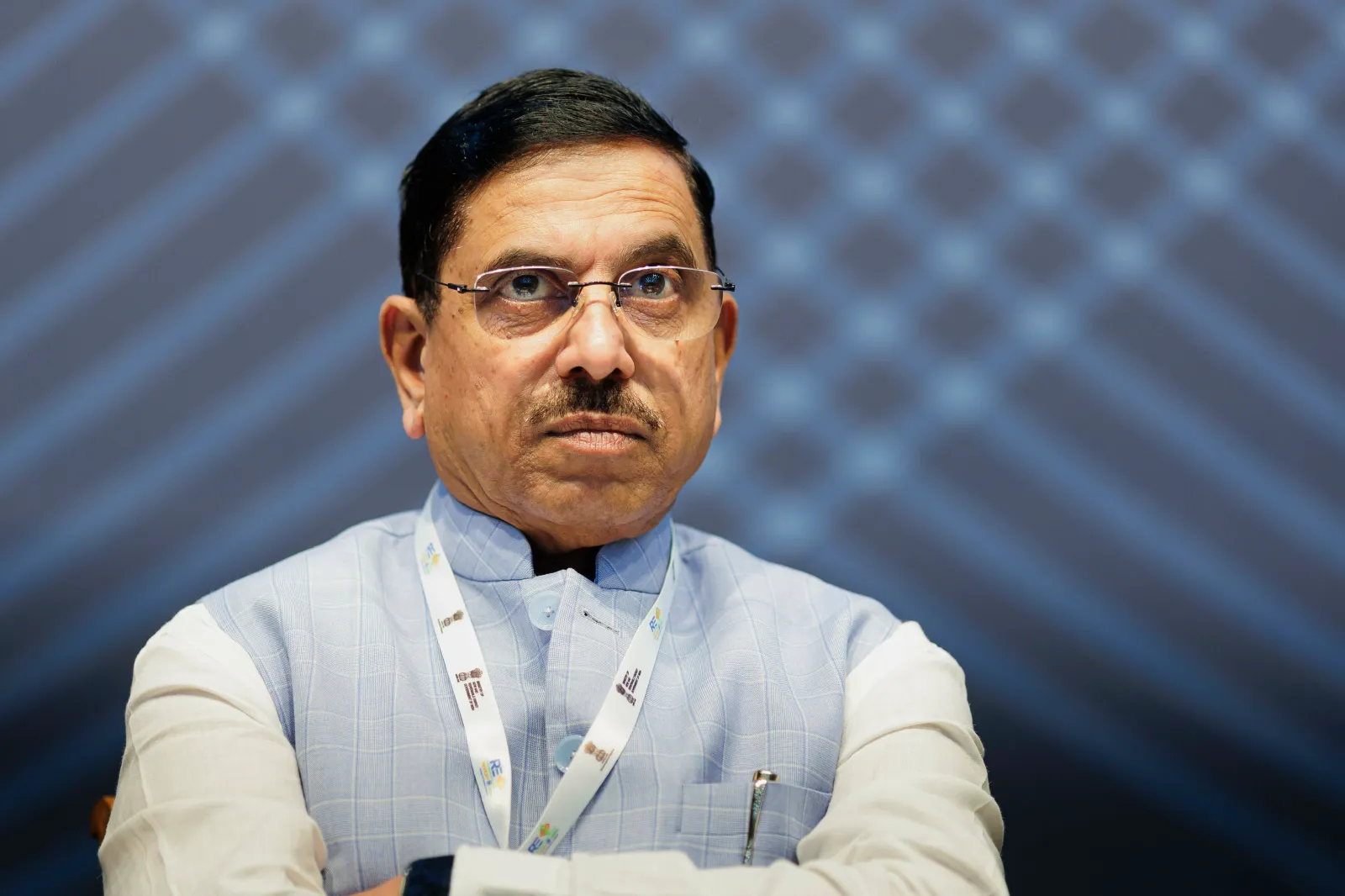
Pralhad Joshi, president of the ISA Assembly & Union Minister for New and Renewable Energy, India
2025 was a defining year for India’s clean energy transition with India now being the sole G20 country to achieve its 2030 target, under Nationally Determined Contributions, five years ahead of the defined timeline. Non-fossil fuels now account for 50% of the total installed power capacity of 484 GW. India’s clean energy progress witnessed the addition of 44.5 GW of renewable energy capacity. This represents the largest annual increase on record, almost doubling the previous year’s figures. Solar power capacity climbed to 135 GW, and wind capacity neared 54 GW. These milestones become even more critical in today’s world, where extreme weather events, including floods and droughts, are being observed across countries, amid concerns about missing global targets agreed upon at the Paris COP. Hon’ble Prime Minister of India, Shri Narendra Modi, called this achievement a reflection of “India’s deepening commitment towards a green and sustainable future.”
India’s success in renewable energy reflects a strong political will to create an ecosystem of policy and regulatory support, integrated planning of the power system, transmission strengthening to absorb variable renewable energy, institutional mechanisms like Solar Energy Corporation of India for derisking, strengthening private sector capacity and enabling capital markets for local currency financing. Auctions and reverse-auction mechanisms, along with technological advancements, have led to a reduction of almost 80% in solar project tariffs over the last decade. At the same time, schemes such as the Approved List of Models and Manufacturers (ALMM) and the Production Linked Incentive (PLI) stimulated domestic solar module production, increasing solar module manufacturing capacity to 144 GW, with 81 GW added alone in 2025.
The impact of India’s achievements has helped the country save INR 4 lakh crore in pollution-related costs (more than $46 billion), which can be invested in other developmental areas. This includes $14.9 billion in fossil fuel savings, 410.9 million tonnes of CO₂ emissions avoided, and $31.7 billion in health and air pollution benefits. As this velocity progresses towards the 500 GW target by 2030, focus is on expanding renewables and emerging technologies through dedicated interventions. The PM Surya Ghar Muft Bijli Yojana is expanding rooftop solar access for households, with 18 lakh+ houses already powered; the PM Kusum is empowering farmers to solarise their energy needs, with plans to solarise 4 million pumps; and the National Green Hydrogen Mission is facilitating the development of a green hydrogen ecosystem with India’s production prices being among the lowest globally. These initiatives reveal a critical insight: energy transformation is not just about building infrastructure—it’s about an integrated ecosystem approach across the solar value chain to create inclusive growth and jobs.
Many countries in the Global South continue to face challenges like those India grappled with a decade ago. India’s efforts to expand energy access were hindered by several factors which included limited public funds, lack of strong policy goals, and weaknesses in private and local financial institutions that are crucial for investment. India’s experience offers not only a blueprint for affordable, reliable, and resilient renewable energy but also the potential for digital leapfrogging in the Global South, ensuring that developing countries are not left behind in adopting the rapidly evolving digital and AI transformation of the energy sector, which would lead to the optimal utilisation of renewables. However, the deciding factor will be how these countries can turn the blueprint into action.
As President of the International Solar Alliance (ISA) Assembly, India is playing a central role in translating its domestic clean energy experience into global action. Headquartered in India, the ISA reflects to amplifying the voice of the Global South and 125 member countries in shaping the global energy transition. ISA’s vision, staunchly embedded in the premise ‘From Ambition to Action’, as was also echoed by the COP30 Presidency as the need of the hour, is built around four strategic pillars—mobilising catalytic finance for facilitating private sector investment, building capability and institutions especially through digitisation, aggregating demand for countries and connecting the world through One Sun One World One Grid—aligns closely with India’s journey. India’s experience exhibits what effective scale looks like – from rooftop rollouts to solar parks, to rural mini grids supported by an ecosystem built on innovative financing models and robust institutional frameworks. ISA is actively facilitating this transfer of knowledge and experience — particularly in Africa and Small Island Developing States (SIDS)—across areas such as energy access, capacity building, energy transition planning, digital infrastructure, and new distributed renewable energy models.
India’s clean energy leadership was recently spotlighted at the COP, sixth IRENA Assembly, and the Abu Dhabi Sustainability Week where it influenced global conversations and further paved way for international collaboration. India’s achievements offer both inspiration and a roadmap for the world, demonstrating a model that can be tailored to different local contexts, available resources, and specific goals.
Search
RECENT PRESS RELEASES
Related Post