Washington Bill To Let Seriously Ill Patients Use Medical Cannabis In Hospitals Advances
January 22, 2026
Washington State lawmakers on Wednesday approved a bill that would allow terminally ill patients to use medical cannabis in healthcare facilities such as hospitals, nursing homes and hospices.
The House Health Care & Wellness Committee advanced the legislation, sponsored by Rep. Shelley Kloba (D), in a 17-1 vote.
“This bill here builds on what we have as a decades-long experience with medical cannabis, in very controlled kind of environment,” Kloba said at a hearing before the panel last week. “I believe that with this bill we have struck a balance between a process that works for hospitals and gives them the kind of safeguards that they want and meets the needs of terminal patients who would like to try something maybe a little different than the standard care for a palliative situation.”
If enacted into law, HB 2152 would mandate that hospitals and other specified healthcare facilities allow terminally ill patients to use medical marijuana on the premises beginning on January 1, 2027, subject to certain rules and restrictions.
“The medical use of cannabis may support improved quality of life for a qualifying patient…with a terminal condition,” the bill’s text says. “It is the intent of the legislature to promote dignity and comfort for terminally ill patients while maintaining the integrity and safety of health care environments.”
Patients and their caregivers would be responsible for acquiring and administering medical marijuana, and it would need to be stored securely at all times in a locked container.
Smoking or vaping of cannabis would be prohibited, so patients would need to consume it via other methods.
Marijuana could not be shared between patients and visitors, and the right to use medical cannabis under the bill would not apply to patients who are in the emergency department.
Healthcare facility officials would need to see a copy of patients’ authorization to use medical cannabis, and they would be required to note their use of the drug in medical records. They would also need to establish a formal policy “allowing for the medical use of cannabis” on the premises.
Facilities would also be able to suspend permission to use cannabis under the bill if a federal agency such as the U.S. Department of Justice or Centers for Medicare and Medicaid Services takes an enforcement action against such use or “issues a rule or other notification that expressly prohibits the medical use of cannabis in health care facilities.”
The panel adopted an amendment to exempt nursing homes operated by a residential habilitation center from the requirement to allow the medical use of cannabis, to clarify that the bill doesn’t apply to patients who haven’t been formally admitted to a hospital and to specify that patients and their caregivers are responsible for retrieving the medical cannabis (in addition to their responsibilities related to acquiring, administering, and removing the medical cannabis).
The committee also approved an amendment to add a prohibition on healthcare professionals and staff from retrieving a patient’s medical cannabis from storage.
Another amendment that would have exempted facilities certified by the federal Centers for Medicare and Medicaid Services as critical access hospitals from the requirement to allow the medical use of cannabis was withdrawn by its sponsor.
—
Marijuana Moment is tracking hundreds of cannabis, psychedelics and drug policy bills in state legislatures and Congress this year. Patreon supporters pledging at least $25/month get access to our interactive maps, charts and hearing calendar so they don’t miss any developments.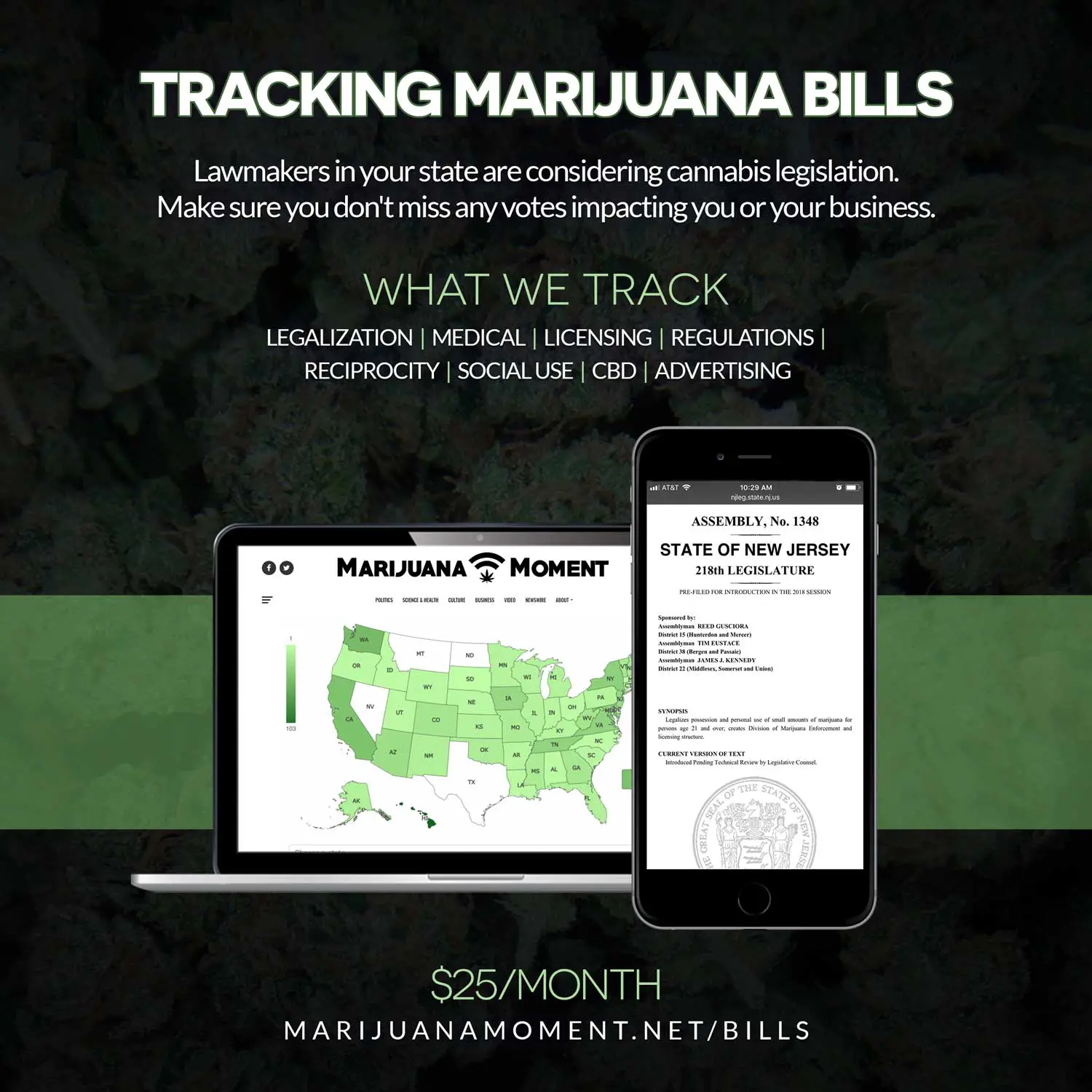
Learn more about our marijuana bill tracker and become a supporter on Patreon to get access.
—
California and a handful of other states already have laws allowing terminally ill patients to use medical cannabis in healthcare facilities. Known as “Ryan’s Law,” the legislation is partly inspired by the experience of Jim Bartell, whose son died from cancer and was initially denied access to cannabis at a California hospital.
The Bartells did eventually find a facility that agreed to allow the treatment, and Jim said Ryan’s quality of life improved dramatically in his final days.
“In the invaluable last days as Ryan fought stage 4 pancreatic cancer, I first-handedly experienced the positive impact medical cannabis had on my son’s well-being, as opposed to the harsh effects of opiates,” Bartell said in 2021 when California’s governor signed Ryan’s Law. “Medical cannabis is an excellent option for relieving pain and suffering in those who are terminally-ill, but most importantly it serves to provide compassion, support, and dignity to patients and their families, during their loved-ones’ final days.”
“Looking at each other, holding Ryan’s hand and telling him how much I loved him during his final moments would not have been possible without the medical cannabis,” he said.
Marijuana Moment is made possible with support from readers. If you rely on our cannabis advocacy journalism to stay informed, please consider a monthly Patreon pledge.

Search
RECENT PRESS RELEASES
Related Post