VW Chattanooga ends ID.4 production to boost Atlas SUV output amid shifting US EV demand
April 13, 2026
When Volkswagen opened its Chattanooga assembly facility in 2011, the ambition behind it extended well beyond building SUVs. The Tennessee plant, representing a $4.2 billion investment accumulated over more than a decade of continuous expansion, was conceived as the German carmaker’s most direct engagement with American consumer preferences, producing vehicles designed specifically for US tastes on US soil. Over the years, that ambition was tested repeatedly by forces far beyond the plant’s gates. It is being tested again.
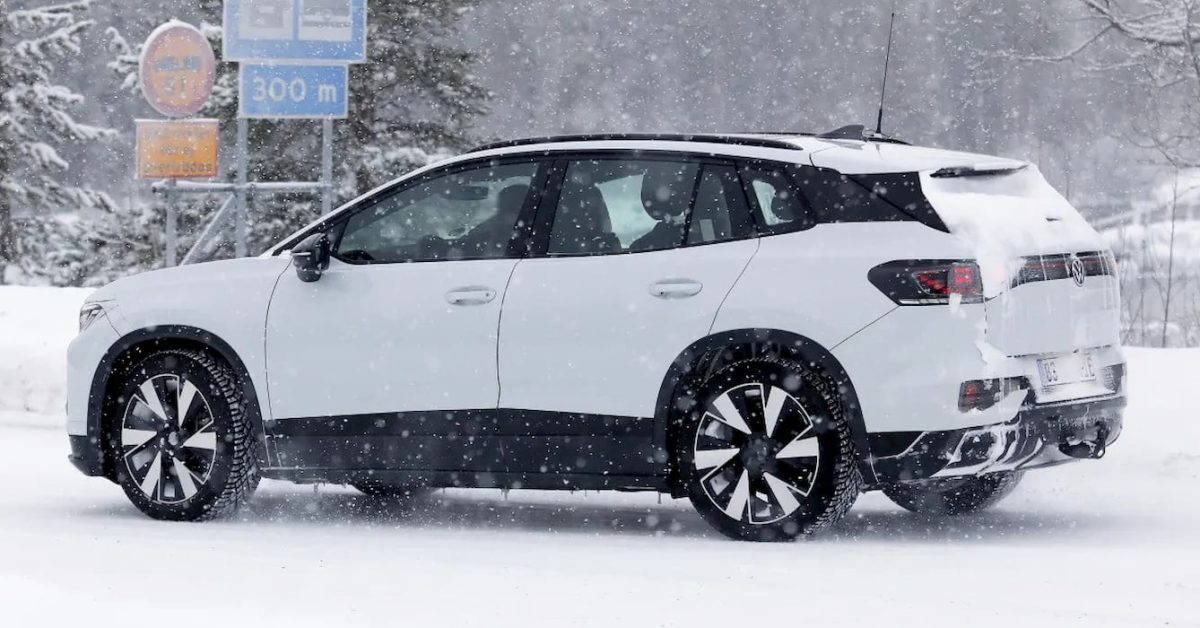
On 9 April 2026, Volkswagen Group of America announced that its Chattanooga facility would cease ID.4 electric vehicle assembly from mid-April, pivoting instead to the forthcoming second-generation Atlas as the plant’s primary production mandate. The announcement was delivered in the measured language of corporate forward momentum, but its implications are considerably sharper. For a facility that became one of the most visible symbols of Volkswagen’s commitment to localised electrification in North America, it represents a significant recalibration of where the brand believes its near-term fortunes lie.
Atlas takes centre stage at Chattanooga
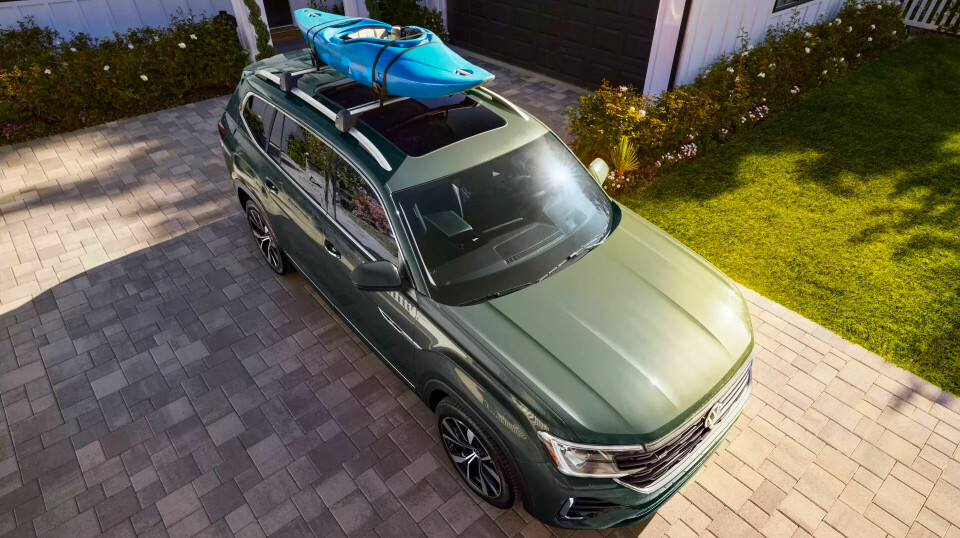
The Atlas has, for several years, been the load-bearing pillar of Volkswagen’s North American sales operation. Ranked as the brand’s second-best-selling model in the United States for three consecutive years, it has delivered the kind of reliable volume that is difficult to overstate in importance for a European brand attempting to maintain meaningful commercial relevance in a market dominated by domestic giants and formidably efficient Japanese rivals.
Advertisement
The newly announced second-generation Atlas, designated for the 2027 model year, will begin production at Chattanooga this summer, with vehicles reaching dealerships in the autumn.
The timing is not incidental. With consumer demand for combustion-powered SUVs proving far more durable than many analysts had forecast even two years ago, reordering Chattanooga’s production around the Atlas provides Volkswagen with something it urgently requires in the United States: volume, predictability, and a product with an established and loyal following. The second-generation Atlas is intended to deepen that following, arriving at a moment when Volkswagen needs its most commercially reliable North American asset to perform.
From a manufacturing standpoint, the transition does not require a wholesale reconception of the plant’s infrastructure. Chattanooga was, as AMS has previously documented in detail, among the first Volkswagen facilities anywhere in the world to run two architecturally distinct vehicle platforms on a single production line, building Atlas models on the MQB platform in parallel with the ID.4 on the electric MEB architecture. That investment in inherent production flexibility, long championed by former EVP Christopher Glover as the facility’s most strategically durable asset, now allows Volkswagen to consolidate the line without dismantling what came before it.
The EV market continues to challenge the industry, requiring measured decisions throughout the last few years to navigate this unpredictability
The uncomfortable arithmetic of EV demand
The decision to suspend ID.4 assembly in Tennessee cannot be properly understood in isolation from the broader electric vehicle climate across North America. Volkswagen’s announcement was candid on this point, acknowledging plainly that “the EV market continues to challenge the industry, requiring measured decisions throughout the last few years to navigate this unpredictability.”
The data has been consistent in its message. Whilst EV registrations in the United States have continued to grow in absolute terms, the rate of that growth slowed materially after the peaks of 2022 and 2023. Consumer caution surrounding charging infrastructure availability, insurance costs, and residual value uncertainty has dampened demand, particularly for non-Tesla brands attempting to build market share from a lower base. The competitive environment has simultaneously intensified, with Chinese manufacturers pressing into global markets at aggressive price points and domestic rivals sharpening their own EV programmes.
As AMS has reported, OEMs across the industry are pulling back EV battery investment in response to demand that has stubbornly refused to materialise on the timelines originally anticipated, a trend that Volkswagen’s Chattanooga announcement reinforces with considerable directness.
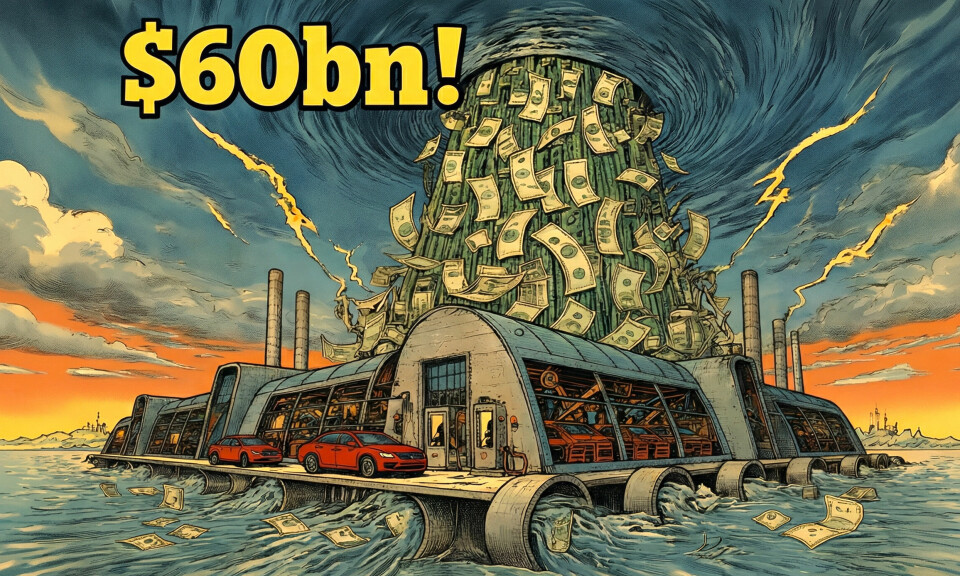
For Volkswagen specifically, the North American EV endeavour has faced compounding headwinds. The ID.4, whilst critically well regarded, never broke through into the upper tiers of US EV sales. Establishing it as a genuine volume product in a market commanded by Tesla and increasingly contested by Ford, General Motors, and a growing roster of Korean manufacturers proved a far more difficult undertaking than the optimism that surrounded local production launch in 2022 might have implied.
Advertisement
That launch followed significant investment in robotics and automation at the Chattanooga facility, representing a genuine and substantial commitment to building an American EV presence. The four-year experiment is now being paused, at least in its present form.
What becomes of the ID.4
Volkswagen has been at some pains to present the suspension of Chattanooga ID.4 assembly not as a retreat from electrification but as a resequencing of it. Model year 2026 vehicles remain available to US customers through existing inventory, and the company has indicated it expects that stock to support customer demand into 2027. More notably, Volkswagen has confirmed that a future version of the ID.4 is planned for the North American market, with details to be shared at a later date.
That ambiguity will attract scrutiny, and reasonably so. The phrase “currently planned for” carries limited formal commitment, and observers will be aware that Volkswagen’s broader EV trajectory has been subject to repeated revision in recent years. The group has delayed or scaled back EV investment programmes across multiple markets, undertaken painful restructuring at its German plants to address structural cost pressures, and publicly acknowledged the need for a fundamental rethink of its electrification pace.
Whether the next-generation ID.4 arrives in North America as a locally assembled model, as an imported product, or on a timeline subject to further revision remains an open question.
What is clear is that ending Chattanooga ID.4 production does not constitute an abandonment of electrification as a strategic destination. It signals, rather, that the path towards that destination is being rerouted around the realities of present-day consumer behaviour and commercial practicality. Whether this constitutes a pragmatic recalibration or a meaningful retreat is a question that will take several years to answer.
A new model waits in the wings
The most forward-looking element of Volkswagen’s announcement is also the most thinly detailed. The company confirmed that it is “exploring pathways to introduce potential new product intended specifically to meet U.S. consumer needs and in line with the new focus on high-volume vehicles,” with specifics to be shared as decisions are reached.
Advertisement
The inclusion of this passage is deliberate. Volkswagen is signalling to investors, to the Chattanooga workforce, and to the American market more broadly that the plant’s long-term purpose is not in question. A $4.2 billion investment was never going to be allowed to idle, and the Atlas alone, commercially vital as it is, does not represent the full measure of what a facility of Chattanooga’s scale and strategic importance can or should produce.
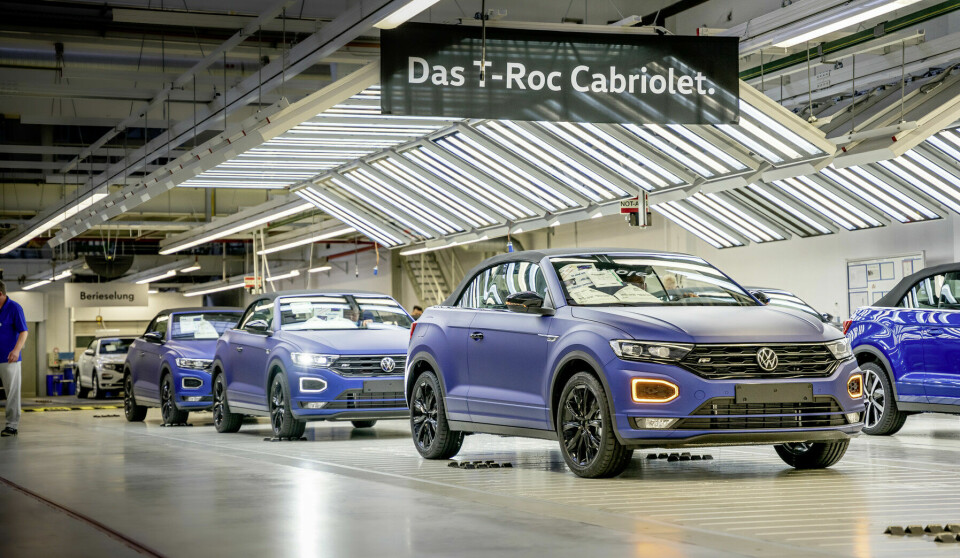
What that new model might be remains a matter of informed speculation. A larger three-row SUV positioned above the Atlas in the range, a pickup truck derivative capitalising on the segment’s enduring American appeal, or a crossover targeting the fiercely competitive compact space would all be consistent with the stated focus on high-volume, high-demand products. A more accessibly priced EV for the US market has also been discussed within the group, though the current commercial environment makes that proposition harder to execute than it appeared before demand growth began to disappoint.
There is a geopolitical dimension to this announcement worth noting. At a time when Volkswagen is drawing renewed confidence from its rapidly maturing operations at Hefei in China whilst simultaneously grappling with competitive pressure across Europe, cementing a visible manufacturing presence on American soil carries significance that extends beyond factory economics. In a trade environment where local production has become as much a matter of political signalling as commercial logic, Volkswagen’s continued commitment to Tennessee conveys messages that reach well beyond the plant gates.
The Chattanooga plant has been, and will continue to be, a cornerstone of Volkswagen’s strategy in the United States. This strategic shift underscores the company’s commitment to Chattanooga and its workforce as we position the plant for long-term success and future product opportunities
The workforce in transition
For the more than 5,500 workers who operate the Chattanooga facility, the announcement carries immediate and personal consequences. Volkswagen has confirmed that hourly team members in ID.4-specific production roles will be transferred to other positions within the plant, based on seniority and in consultation with the local union. A special early retirement programme has additionally been offered to eligible employees.
The labour dimension of this story carries particular weight. The Chattanooga plant recently became the first ‘foreign’-owned automotive assembly facility in the American South to unionise through a formal election since the 1940s, when its workers voted in 2024 to join the United Auto Workers by a margin of more than two to one. The manner in which this production transition is managed, and the degree to which the union is genuinely consulted rather than merely informed of decisions already taken, will be observed closely both within the plant and across the broader UAW movement.
Henning Habicht, who was appointed head of Chattanooga operations following Christopher Glover’s retirement in January 2025, now leads the facility through another consequential passage. Habicht brings deep international experience, having previously overseen manufacturing at Volkswagen’s Wolfsburg Plant 1 and at the group’s SAIC joint venture in Shanghai. His tenure in Tennessee began with the plant at a crossroads. This announcement confirms the direction of travel.
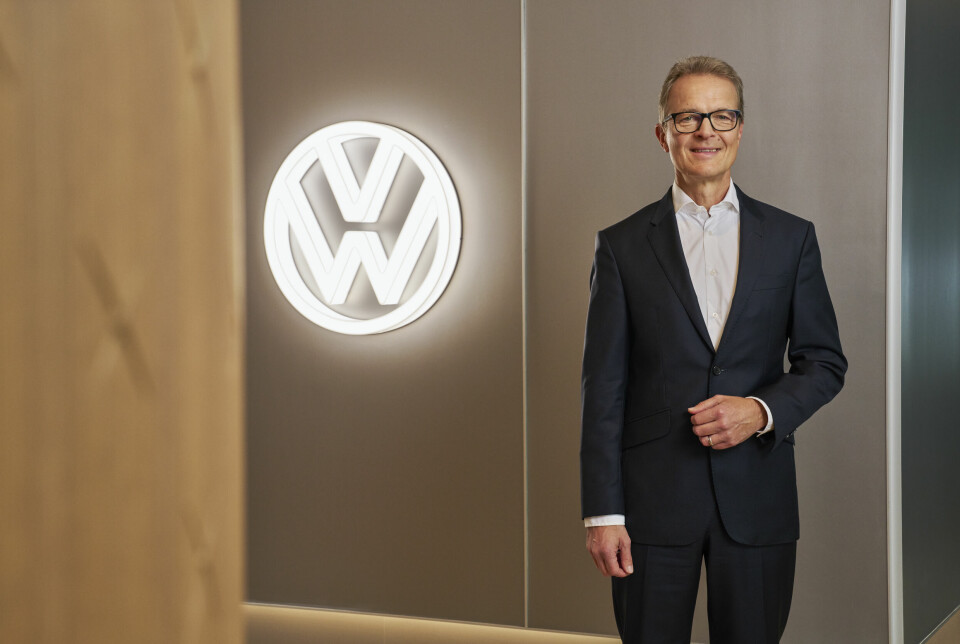
Volkswagen Group of America’s President and CEO Kjell Gruner framed the shift in unambiguous terms. “The Chattanooga plant has been, and will continue to be, a cornerstone of Volkswagen’s strategy in the United States,” he said. “This strategic shift underscores the company’s commitment to Chattanooga and its workforce as we position the plant for long-term success and future product opportunities.”
Such statements invite scepticism, particularly from workers weighing the suspension of one production line against assurances about the next. But the commercial logic underlying the decision is coherent. A plant producing vehicles that consumers are buying in meaningful numbers is, by any measure, more durable than one committed to a product whose market has resisted the growth its advocates expected.
Volkswagen’s American story has never been straightforward. For much of the brand’s history in the United States, it occupied a position of cultural affection uncoupled from commercial scale, admired without being dominant. The Atlas changed that balance in part, giving Volkswagen a genuine foothold in the large SUV segment that American buyers have never meaningfully abandoned.
The decision to build the plant’s near-term future around that foothold, rather than subordinating it to an EV market that has not arrived at the scale once projected, is the bet Volkswagen is now placing in Tennessee. Whether the next chapter includes a new model that restores Chattanooga’s manufacturing breadth, or whether the plant operates in a more concentrated but commercially steadier configuration for the medium term, will define much of Volkswagen’s standing in the United States for the decade ahead.
Search
RECENT PRESS RELEASES
Related Post