Mars, Amazon, Chicago Cubs Leaders Prepare for the Future of Agentic Commerce
April 14, 2026
As agentic AI reshapes the consumer shopping experience, it’s important that consumer goods and retail companies consider data-driven strategies that will not only help deliver a seamless experience, but also a personalized one that consumers can trust.
But how does this happen when AI bots change the way content ranks and brands are suggested.
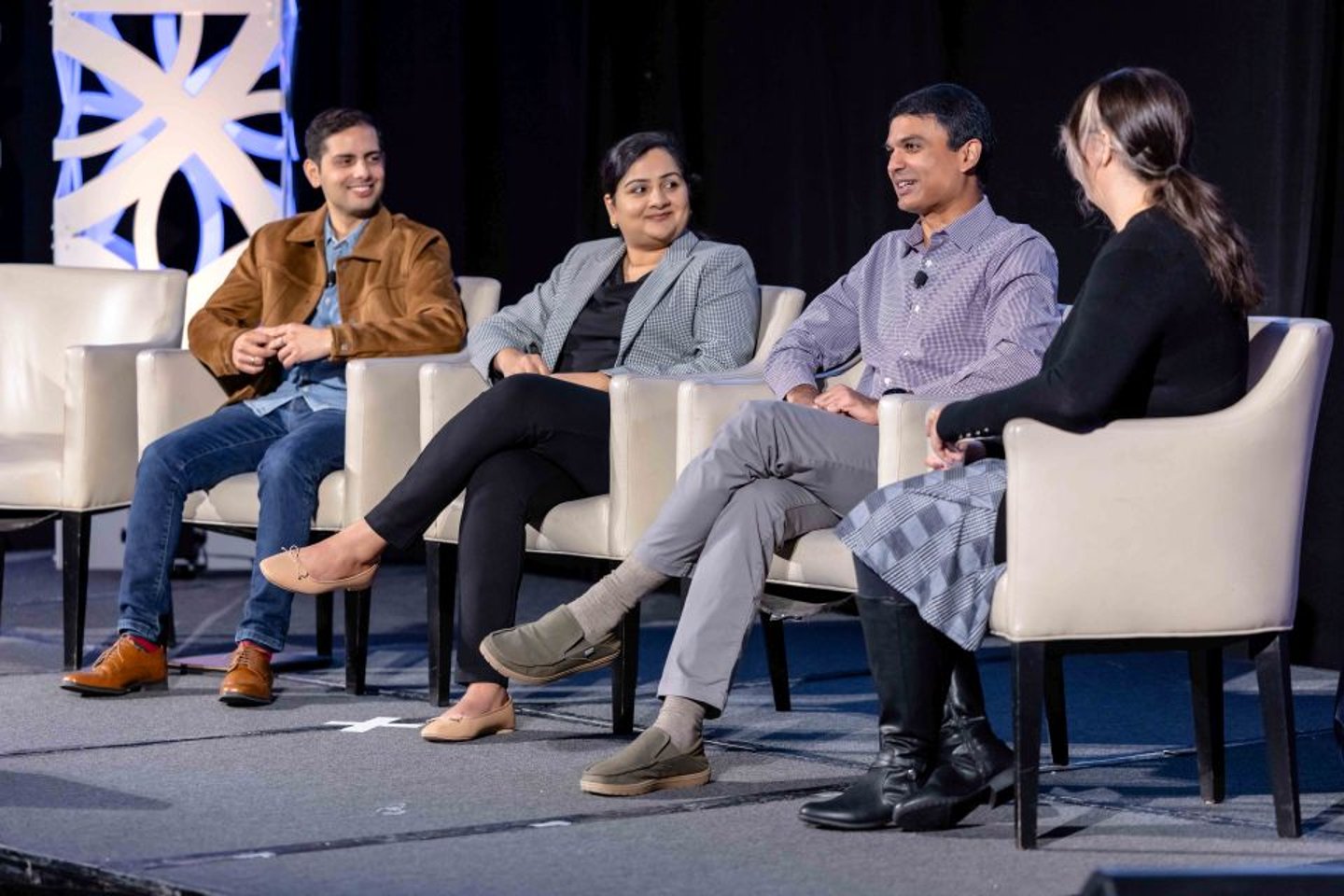
At Analytics Unite, three consumer goods experts — Udit Mehrotra, head of product for Amazon’s languages experiences business in North America, Vijay Veeraghattam, director of data science and AI innovation at Mars Snacking, and Sraavya Pathsamatla, assistant director, database marketing for the Chicago Cubs — discussed how they are considering the impact of agentic AI in the commerce landscape.
A New Pathway for Consumers
Pathsamatla cautioned that AI in the consumer shopping experience isn’t just like dealing with a new website launch; it’s adding another purchase funnel to the process.
“Companies need to think from the consumer point of view, not just the organizational point of view,” she said, comparing the near-instantaneous nature of agentic commerce to the slow adoption of Google as a search engine. “It took two years to reach one million users on Google, whereas ChatGPT is doing it in weeks and months. I think we’re already there and we’re accelerating very fast.”
That’s not to say there isn’t still room for improvement, especially as there hasn’t been wide consumer adoption. Just 23% of Gen X adults in the U.S. have used ChatGPT in the past month to search for products, per Forrester.
“To allow the AI agent to search, research and handle transactions, there are a lot of things that need to be built for individuals to feel comfortable with the agent doing the full input transaction,” said Mehrotra.
On the brand side, the key to maintaining relevancy is being consistent with data practices to elevate their positioning on AI search rankings.
“It’s not about adaptability; it’s more about uniformity,” said Pathsamatla. “The brands that show their transparency, accuracy or the controllability of data are the brands that will stand out and win the attention of consumers.”
Pain Points: Discoverability and Brand Loyalty
When agentic capabilities enter the mix, it gets harder to maintain a sense of discovery for the consumer, so it will be important to figure out how to keep it alive in the data stream.
“I think we need to somehow simulate what happens in a Costco or Trader Joe’s aisle for the experience of discovery. We need to look at how data is flowing and experiment with how we can really replicate that in the digital world,” said Veeraghattam.
Showing up isn’t enough, however. There’s still more to be done to strengthen consumer engagement through the AI bot relationship.
“The 2010s were about software, the 2020s were about AI eating software, and the next 10 years will be about philosophy eating AI,” said Veeraghattam. “Problems like automating workflows will be solved by AI, and an agentic computer will try to get the cheapest and fastest marketplace, but then the idea of loyalty is thrown out the window. Those are the problems that teams have to start thinking about: How do you still connect with your customers?”
Pathsamatla sees an opportunity in this agentic world to use data and AI to better anticipate consumer needs.
“Now you’re not just building a fan profile, but you’re responding to a fan profile,” she said. “A fan or customer can wear multiple hats. So think about all the hats and then put that in your data pipeline, and you really have full infrastructure.”
Shifts in Commerce Strategy
Mehrotra said he can’t imagine that everything will be 100% agentic, but companies will still have to build brand loyalty with agentic shoppers. To complete the shopper journey, the consumer will still need to add the brands they prefer. “Impressions and quality are just going a little upstream, where we specify that as instruction to the agent,” he said.
If agentic consumers do eventually become the majority, Veeraghattam predicts having to rethink entire pricing and marketing models, “since all of these models were learned from human behavior.”
Also: Unilever to work with Google Cloud on five-year AI, data partnership
If that were to happen, Pathsamatla doesn’t see any business process becoming obsolete, rather being refined and reshaped. “I think certain funnels might diminish and the fan experience might shrink a bit, but multiple channels might align to just a few channels,” she said.
Mehrotra stated that it helps to break down agentic commerce adoption into two parts: customer-facing and infrastructure.
“If you think about the infrastructure area, agentic AI workflows are embedded already into what’s happening and it’s changing how customers shop,” he said. It’s getting the commerce workflow to change from reactive (after guessing what consumers want) to predictive (getting ahead of direct input from bots) that will take time.
Search
RECENT PRESS RELEASES
Related Post