Japan Renewable Energy Certificate Market Outlook (2026-2032)- Policy Landscape, Demand Drivers & Strategic Op
April 19, 2026
04-19-2026 10:04 PM CET | Business, Economy, Finances, Banking & Insurance
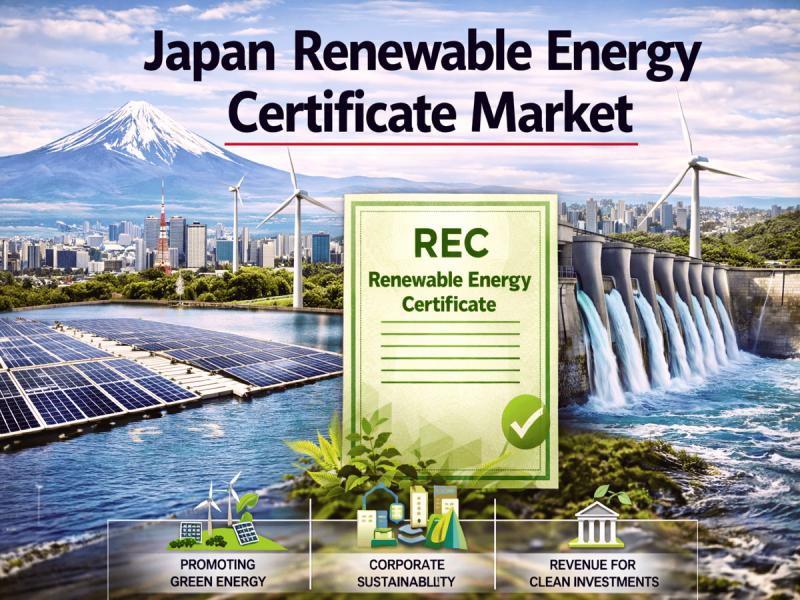
The Japan renewable energy certificate (REC) market is expected to witness robust growth during the 2026-2032 forecast period, driven by Japan’s decarbonization commitments, corporate sustainability targets, and the gradual liberalization of the electricity market. Renewable energy certificates have become a critical instrument for Japanese corporations seeking to demonstrate renewable electricity usage, comply with environmental disclosure requirements, and achieve carbon neutrality goals.
As renewable power generation expands across solar, wind, biomass, and hydro sources, the demand for credible, traceable certificates is rising. Government-led policy frameworks, coupled with increasing pressure from investors and global supply chains, are accelerating REC adoption across industrial, commercial, and service sectors. While challenges remain around standardization, pricing transparency, and market liquidity, the long-term outlook for Japan’s REC market remains strongly positive through 2032.
Download Sample Report: https://www.datamintelligence.com/research-report/renewable-energy-certificate-market
Market Definition & Scope
The Japan renewable energy certificate market refers to the trading and utilization of certificates that verify electricity generated from renewable energy sources. These certificates represent the environmental attributes of renewable power generation and can be purchased independently of physical electricity.
The market scope includes:
• Non-fossil certificates linked to renewable power generation
• Corporate procurement of RECs for sustainability reporting
• Utility and retailer participation in certificate trading
• Compliance and voluntary market mechanisms
This report focuses exclusively on the Japanese domestic REC market, covering regulatory-backed and voluntary certificate usage. Carbon offsets and international renewable energy certificates are excluded unless directly recognized within Japan’s regulatory framework.
Market Size & Forecast (Japan)
The Japan renewable energy certificate market has expanded steadily in recent years, supported by the growth of renewable electricity capacity and rising corporate demand for environmental claims. From 2026 onward, the market is expected to grow at a strong compound annual growth rate, reflecting broader adoption across manufacturing, technology, finance, and retail sectors.
Between 2026 and 2032, market expansion will be influenced by renewable capacity additions, evolving disclosure requirements, and increased participation from multinational corporations operating in Japan. While certificate pricing and transaction volumes may fluctuate in the short term, overall market value is projected to rise consistently across the forecast period.
Note: Revenue estimates beyond published benchmarks are indicative and based on policy trends and demand growth patterns.
Key Market Drivers in Japan
Several Japan-specific factors are driving the expansion of the renewable energy certificate market:
1. National Decarbonization Policy
Japan’s commitment to carbon neutrality by 2050 has elevated the role of renewable electricity and associated certificates within national energy strategy, led by the Ministry of Economy, Trade and Industry (METI).
2. Corporate Sustainability & ESG Pressure
Japanese corporations face increasing pressure from investors, global customers, and supply chains to demonstrate renewable electricity usage and emissions reduction.
3. Electricity Market Liberalization
Ongoing reforms in Japan’s power market have increased transparency and competition, enabling broader participation in REC trading.
4. Expansion of Renewable Generation Capacity
Continued growth in solar, wind, and biomass capacity directly increases the supply of certificates.
5. International Reporting Alignment
Adoption of global ESG and climate reporting standards is driving demand for verifiable renewable energy claims.
Policy & Regulatory Landscape
Japan’s renewable energy certificate market operates within a structured regulatory environment. The non-fossil certificate system plays a central role in enabling electricity retailers and end users to demonstrate the renewable attributes of their power consumption. Regulatory oversight and system design are coordinated under METI, with mechanisms intended to ensure traceability, credibility, and market integrity.
Policy refinement during the forecast period is expected to improve certificate usability, enhance market liquidity, and align domestic practices with international expectations.
Technology & Market Trends
Key trends shaping the Japan REC market include:
• Increasing corporate participation in voluntary certificate procurement
• Greater emphasis on traceability and digital tracking systems
• Bundling of renewable electricity contracts with certificates
• Growing preference for domestic certificates over international alternatives
• Integration of certificates into broader carbon management strategies
As sustainability reporting becomes more sophisticated, demand is shifting toward higher-quality and clearly defined renewable energy certificates.
Competitive & Stakeholder Landscape
The Japan renewable energy certificate market involves a diverse range of participants, including:
• Renewable energy project developers
• Electric utilities and power retailers
• Trading platforms and intermediaries
• Corporate buyers across manufacturing, technology, and services
Government agencies, particularly METI, play a central role in market design and oversight, while private-sector actors drive liquidity and innovation in procurement models.
Market Challenges & Risks
Despite favorable growth prospects, the market faces several challenges:
• Limited market liquidity in certain certificate categories
• Pricing volatility driven by policy changes and supply-demand imbalances
• Complexity in understanding certificate types and eligibility
• Risk of inconsistent corporate claims without clear guidance
• Dependence on regulatory continuity and policy clarity
Addressing these issues will be critical to maintaining trust and long-term growth in the market.
Opportunities & Strategic Outlook (2026-2032)
Looking ahead, the most significant opportunities in the Japan renewable energy certificate market include:
• Growth in voluntary corporate procurement programs
• Increased use of certificates by multinational companies operating in Japan
• Digital platforms improving transparency and transaction efficiency
• Long-term power purchase agreements bundled with certificates
• Alignment with international ESG and climate disclosure frameworks
Organizations that proactively integrate renewable energy certificates into their energy and sustainability strategies are expected to gain competitive and reputational advantages through 2032.
Conclusion
The Japan renewable energy certificate market is set for sustained expansion from 2026 to 2032, supported by national decarbonization goals, growing corporate ESG commitments, and the continued expansion of renewable electricity generation. While regulatory complexity and market maturity present challenges, the strategic importance of certificates in demonstrating renewable energy usage ensures strong long-term demand. Stakeholders that engage early and align with evolving policy and reporting standards are well positioned to benefit from the market’s continued growth.
Buy Full Report: https://www.datamintelligence.com/buy-now-page?report=renewable-energy-certificate-market
Fabian
DataM Intelligence 4market Research LLP
Ground floor, DSL Abacus IT Park, Industrial Development Area
Uppal, Hyderabad, Telangana 500039
USA: +1 877-441-4866
UK: +44 161-870-5507
Email: fabian@datamintelligence.com
DataM Intelligence is a market research and business intelligence firm delivering decision-ready insights across technology, industrial, healthcare, agriculture, consumer, energy, and infrastructure markets. The company provides premium research reports, custom studies, competitive intelligence, and growth strategy support for organizations making high-value commercial decisions.
This release was published on openPR.
Search
RECENT PRESS RELEASES
Related Post