Ioniq lands in China as Hyundai targets EV revival
April 24, 2026
Hyundai bets on 20 localized models, $1 billion to revive sales in world’s largest automotive market
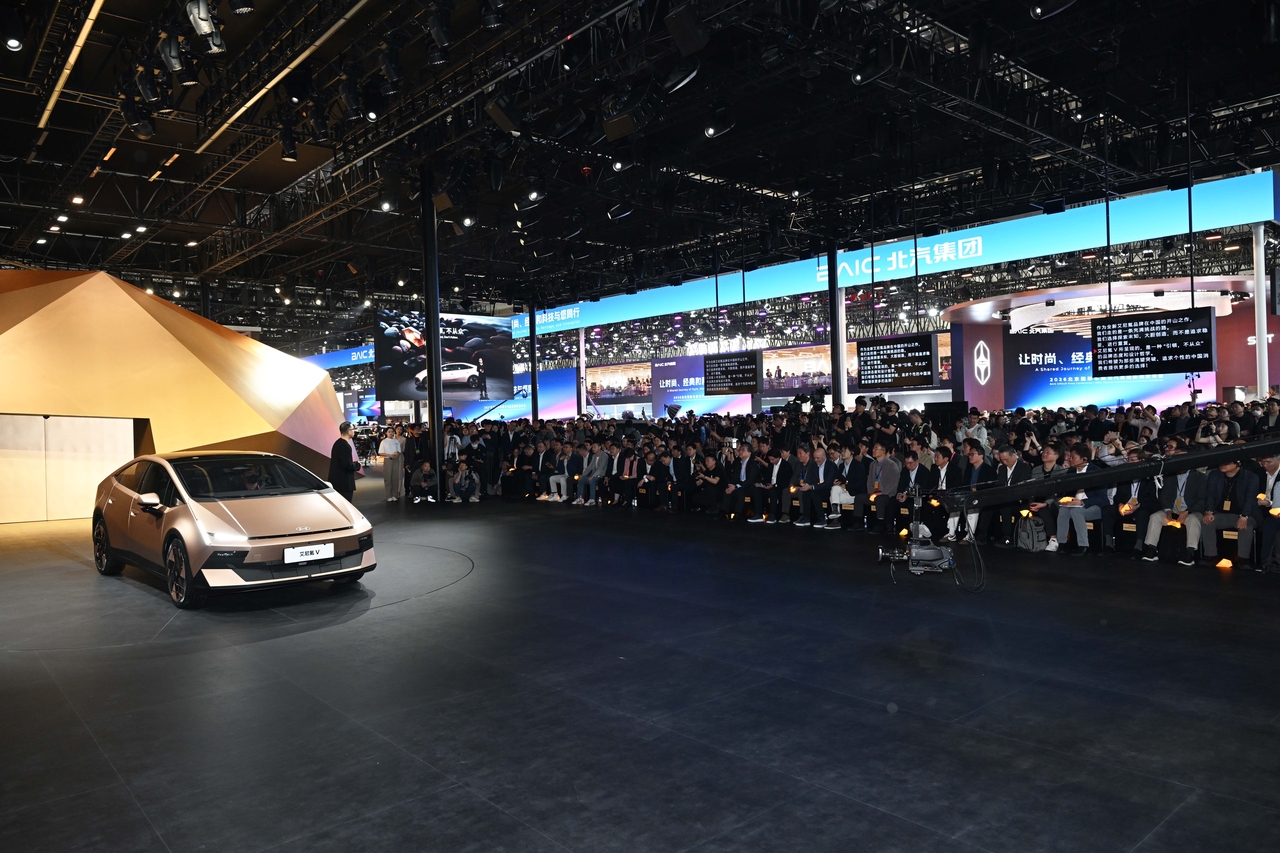
BEIJING — Hyundai Motor is “tripling down” on China, launching the China-specific Ioniq all-electric sedan and pledging 20 localized models in five years to regain ground in the world’s largest automotive market.
The new electric vehicle made its global debut at Auto China 2026, the world’s largest auto show that opened Friday and runs through May 3 in the Chinese capital.
The launch marks the first time the South Korean automaker has formally introduced its Ioniq brand in China, underscoring Hyundai’s attempt to reclaim traction in a market where Chinese players such as BYD and Geely are leading the shift toward electrification.
Hyundai also outlined an aggressive expansion plan that includes the launch of 20 electrified models in China over the next five years. The lineup will span battery-electric vehicles and extended-range electric vehicles, starting with the Ioniq V.
The company announced expanded investments and partnerships with local firms, including CATL and Momenta, as part of a broader effort to reposition the country as both a key sales market and a hub for global EV innovation.
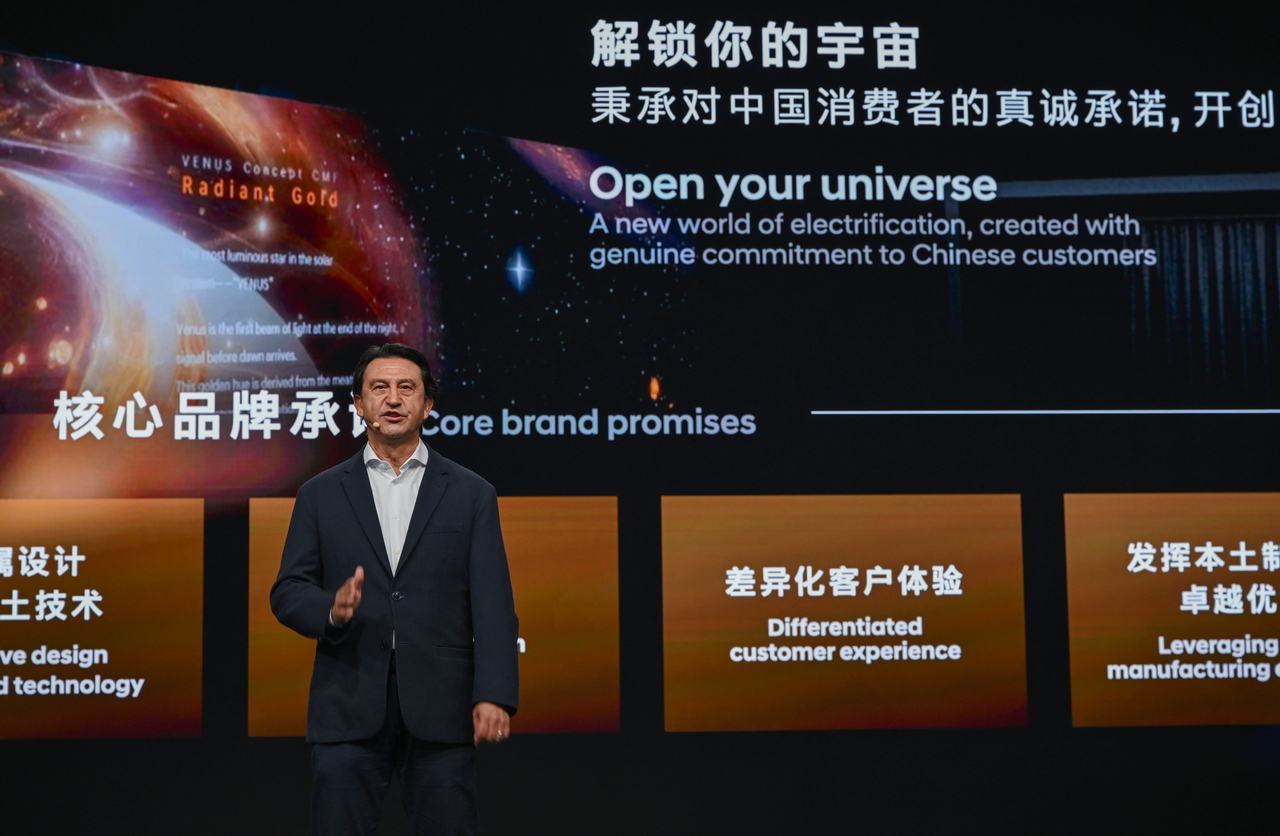
“China is our greatest opportunity for growth. It is not just the world’s largest automotive market. It is the world’s most advanced EV and software-defined vehicle ecosystem,” said Jose Munoz, president and CEO of Hyundai Motor, at the Auto China 2026 media briefing. “If you want to be globally competitive, you must be genuinely competitive here.”
$1 billion investment, 500,000 annual sales
The Ioniq V launch marks Hyundai’s most significant China-focused EV push since entering the market in 2002 through a 50:50 joint venture with BAIC Motor, which Munoz described as the “most ambitious product offensive” in the company’s history in China.
Hyundai and its joint venture partner, BAIC Group, invested 8 billion yuan ($1.17 billion) in Beijing Hyundai last year, which is to go toward manufacturing made-in-China models, new energy vehicle product development, dealer network expansion and supply chain localization.
Munoz added that the company plans to significantly expand its dealer footprint, with 181 new openings.
Based on the renewed electrification strategy, Hyundai aims to raise annual sales at Beijing Hyundai to 500,000 vehicles — around 9 percent of a global sales of 5.55 million vehicles — up from about 4 percent currently. The company also plans to use China as both a major sales market and an export base for EVs to regions including the Middle East and Central and South America.
‘In China’ with Chinese partners
At the core of Hyundai’s strategy is its “In China, For China, To Global” approach, which emphasizes designing vehicles tailored to Chinese consumers, while leveraging local technology for broader global competitiveness.
“We know that simply importing global models or technical solutions does not guarantee success in China. Success requires a deep commitment to localization,” said Li Fenggang, president at Beijing Hyundai Motor Co. “We are fully integrating electrification and intelligent technologies from leading Chinese suppliers to develop brand-new platforms and products that are better suited to the Chinese market.”
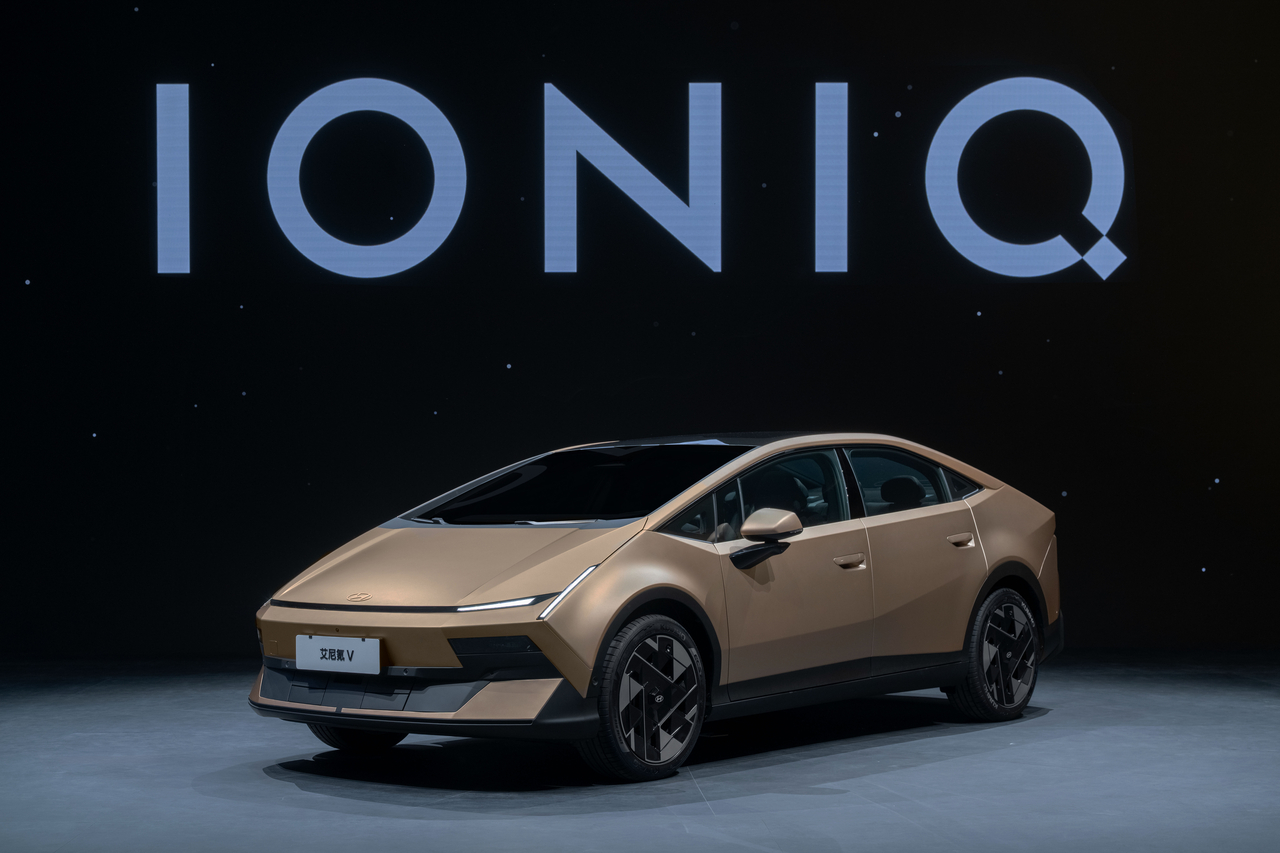
The newly unveiled Ioniq V is a midsize electric sedan that uses a platform jointly developed with BAIC and equipped with batteries from Chinese battery giant CATL, boasting a driving range exceeding 600 kilometers on a single charge under China’s CLTC standard.
It features a large 27-inch panoramic display, an artificial intelligence-powered voice assistant and advanced driver-assistance systems developed with Chinese startup Momenta.
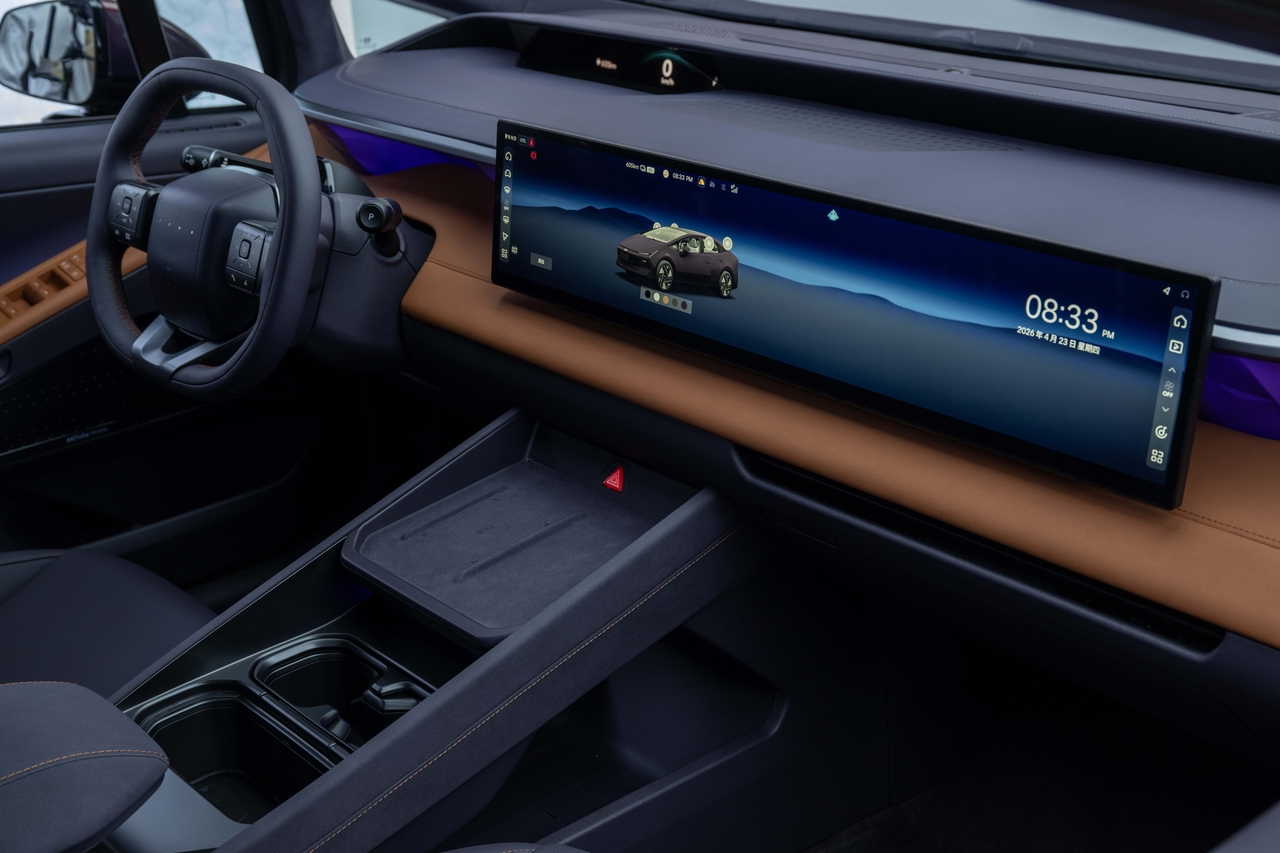
The model reflects Hyundai’s push into the premium EV segment, where connectivity, in-car experience and software capabilities are increasingly critical in luring consumers.
Going forward, Hyundai plans to introduce another electric SUV in China in the first half of next year and expand its local lineup to include extended-range electric vehicles in the midsize and large vehicle segments.
“In 2027, we add a compact SUV and a midsized SUV with an AI assistant, L2++ ADAS (hands-off automated driving), and up to 600 kilometers of range,” said Munoz.
Hyundai’s renewed ambition comes as global carmakers face intensifying competition in China, where electric vehicles now account for more than half of new car sales. The South Korean carmaker, which was selling more than 1 million vehicles annually at its peak in China, has struggled in recent years to keep up with local rivals and shifting consumer preferences.
“China is where the future of mobility is being defined,” Munoz said. “Hyundai intends to help define it, in China, for China, and ultimately, for the world.”
sahn@heraldcorp.com
Search
RECENT PRESS RELEASES
Related Post