Zeekr’s premium EV strategy in Europe: In-house development, technology and Chinese speed
April 28, 2026
Zeekr does not intend to grow in Europe through discounts or rapid volume channels. Instead, the Geely brand is relying on a European-style development setup, a high degree of in-house production in China, and market entry based on trust, technology and premium positioning.
When a young Chinese brand pushes into Europe, the pattern is usually easy to explain: plenty of features, a competitive price, and high growth ambitions. Zeekr wants to avoid precisely this pattern. The Geely subsidiary is attempting to establish itself in Europe not as just another EV importer, but as a premium challenger with technological depth and a European approach to development.
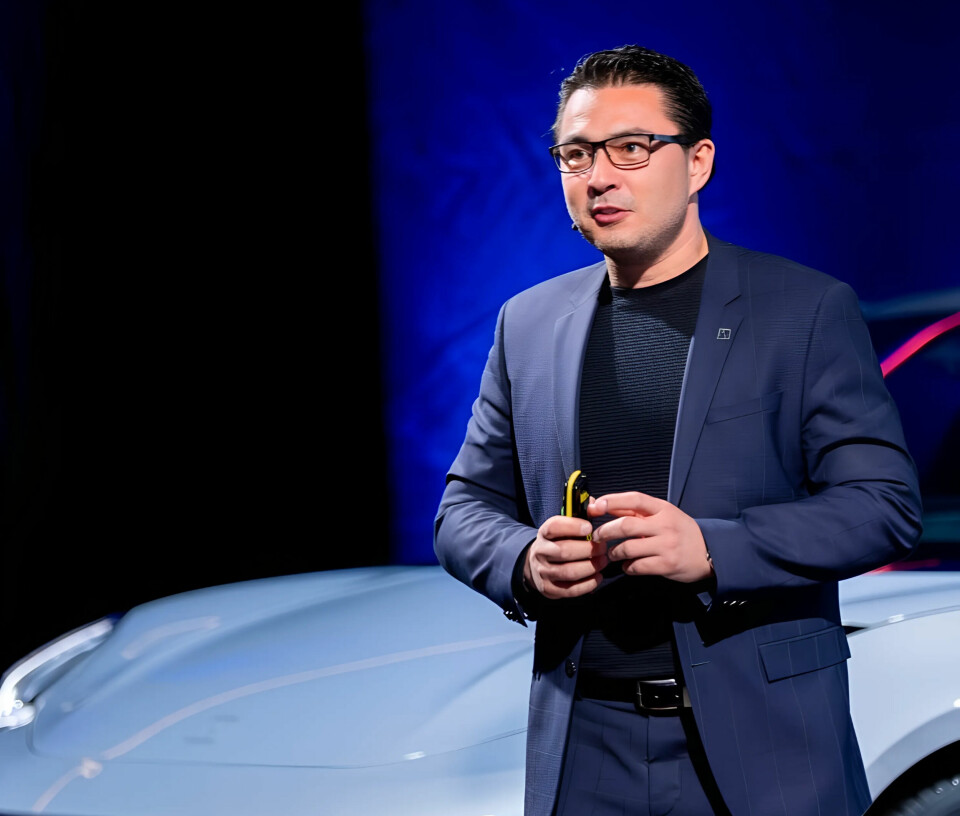
For European head Lothar Schupet, this is not merely a marketing narrative. Zeekr is specifically targeting a modern, tech-savvy and status-conscious customer segment that has not yet been addressed in this form within the Geely Group. There, the brand aims above all, to appeal to customers who have previously purchased from established premium brands.
To lend credibility to this claim, Zeekr places an unusually strong emphasis on its European footprint. Schupet speaks of the brand’s “European soul”. By this he means, above all, the synergy between the design centre in Sweden, technology and development sites in Frankfurt, Sweden and Poland, as well as the targeted adaptation of the chassis, steering, pedal characteristics, HMI and connectivity to European requirements.
Advertisement
The vehicles will continue to be produced in China. However, from the company’s perspective, the crucial factor is that they are not simply exported to Europe unchanged, but are developed and fine-tuned with a European understanding of what constitutes a premium vehicle.
This is also strategically relevant because Zeekr must clearly distinguish itself within the Geely portfolio from brands such as Volvo or Lynk & Co. Schupet describes Zeekr as more modern, extroverted and defined more strongly by performance, technology and craftsmanship. The aim is to ensure that the brand does not appear as an interchangeable sister brand within the group, particularly in the European market, but rather as a standalone offering with a clear target audience strategy. For a newcomer without a long history, this differentiation is essential. Zeekr does not need to maintain its brand identity, but must build it up in real time.
What is striking is the speed with which the company develops products and makes decisions. Stefan Sielaff illustrates this using the GT as an example. The vehicle essentially emerged from a design impulse after the team had shown the CEO a full-size model in Gothenburg. The decision was therefore made on the very same day, and the vehicle was on the roads in China around twelve months later. Such stories are more than just PR-friendly anecdotes.
They point to a different form of industrial decision-making – faster, more direct and more willing to set product programmes in motion at short notice if the argument is convincing. In substance, Zeekr translates this pace into three recurring brand pillars: technology, performance and craftsmanship. Schupet combines this with a clear value-for-money proposition in the premium segment. He argues that traditional brand loyalty is declining, particularly when it comes to electric vehicles.
Customers are focusing more on range, charging speed, equipment, digital convenience and overall value. This is precisely where Zeekr intends to step in – not as a budget alternative, but as a brand that reinterprets premium and sees itself as a ‘high-end challenger’.
In substance, Zeekr translates this pace into three recurring brand pillars: technology, performance and craftsmanship
From an industrial perspective, it is also interesting to note how strongly Zeekr emphasises its in-house technological capabilities. These include the group’s platform logic, in-house battery expertise, software architecture, and the ability to rapidly incorporate customer feedback into development cycles. In its public communications, this is often framed as a digital value proposition. For industry observers, it also signals more vertical control, closer feedback loops between market and development, and potentially greater responsiveness in product management.
Timo Kabus, product manager, also makes it clear that for Zeekr, Europe is not merely a sales market but a real-world testing ground. The vehicles have been tested and adapted across 15 European countries. Even seemingly mundane issues such as acoustics, vibration behaviour and long-distance comfort are addressed at an early stage, as they can only be corrected to a limited extent later on. This is particularly important for the premium segment.
After all, it is not just key technical specifications that matter there, but often the fine-tuning of NVH, ergonomics and build quality that determines whether a product is perceived as high-quality.
Advertisement
Zeekr is also strikingly disciplined when it comes to market entry itself. Schupet openly states that, as a first step, they do not wish to define the brand by sales figures. Channels such as rentals or private registrations, which could damage residual values, are to be avoided. Instead, the initial focus is on B2B, fleet customers and the aim of appearing on fleet managers’ shopping lists as a serious alternative. Only in a second phase will private customers and the point-of-sale experience come more to the fore. For a new entrant, this is a remarkably measured approach – and an indication that Zeekr is taking a longer-term view of market development than some competitors.
It is also interesting to look at the company’s industrial presence in Europe. Zeekr currently manufactures exclusively in China. During the Q&A session, however, the management admitted that potential European production options within the Geely network were being analysed in principle. Although no concrete decisions have been made yet, the mere fact that this possibility is being publicly considered shows that, looking ahead, Europe is not just a sales market for Zeekr, but potentially also part of its industrial value chain.
This is precisely why Zeekr is of interest to European industry observers. The brand is testing whether a Chinese manufacturer with a European approach to development, deep technological expertise and rapid industrial implementation can establish itself in the most demanding segment of the European car market. The push is not coming from the budget end of the market, but from the premium segment. This is precisely what makes Zeekr more than just another newcomer brand. The company serves as a barometer of how seriously Chinese manufacturers now take the combination of local development, industrial scale-up and brand differentiation.
Advertisement
Search
RECENT PRESS RELEASES
Related Post