6 Ways GPS Tech Is Saving The Environment
May 29, 2026
For most people “GPS” is the thing they use in their cars or on their smartphones to avoid getting lost on the way somewhere. The Global Positioning System used in the U.S. may be a technology that is commonplace in our daily lives, but it actually started out as a military project for the U.S. Navy conducting submarine-tracking experiments in the 1960s. Although, ironically, GPS can’t work underwater!
As the ’70s rolled on, the US Department of Defense needed a global navigation and positioning system desperately, and that research resulted in the NAVSTAR satellite in 1978. Today, the GPS we use isn’t the only choice either as various countries have specific satellite tracking systems including China’s advanced GPS alternative and Russia’s GLONASS system. Once GPS became widely available, scientists across the world started taking advantage of it to aid in research that helps us conserve the environment, and private companies have used it to reduce cost and thus waste. So even if it was created for war, GPS is now actually saving the planet in various unexpected ways.
GPS tech helps track endangered wildlife
 Galloots13/Shutterstock
Before the age of GPS, scientists tracked the movements — especially endangered species — using a radio telemetry technology. Animals were collared or tagged with a radio transmitter and the signal was then sent to a receiver, but in order to work, the receiver had to be within a mile or two of the transmitter. When GPS came on the scene, it revolutionized conservation, making it possible to track the exact position of tagged animals in real time. With this data, conservationists can keep an eye on endangered animals in the air, on the land, and even in the sea.
It’s trickier to track and tag aquatic animals since the location only pings when the GPS tracker is near the surface. This information is invaluable not only to track endangered ocean life, such as North Atlantic right whales, but also potentially dangerous animals, such as great white sharks. Many animal species have benefited from GPS tracking technology, and as climate change takes hold it will become even more crucial to understand what’s happening in various ecosystems around the world.
GPS helps enforce environmental laws
 Wiktoria West/Getty Images
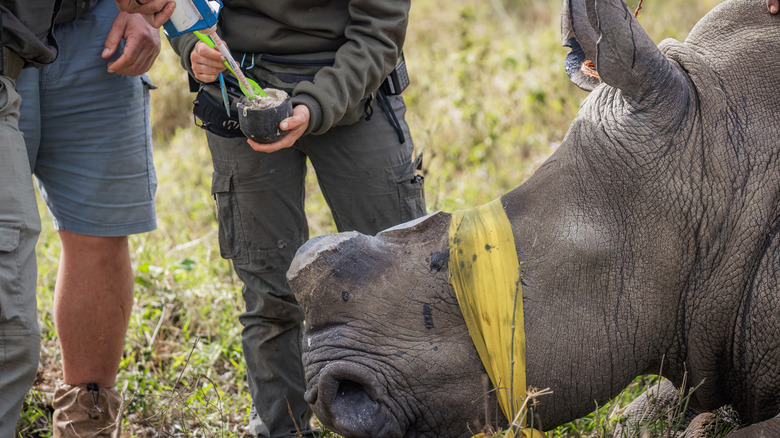
A law isn’t worth the paper it’s printed on if it can’t be enforced. There are numerous laws across the world that are meant to reduce or prevent pollution or mitigate issues like poaching. Law enforcement can’t be everywhere, and sometimes it hard to prove that acts like poaching or illegal hunting even happened. So, GPS tracking can be used as a high-tech solution to enforce environmental laws.
In 2023, a team of researchers demonstrated how GPS-tagged wolves and vultures could reveal how laws related to the disposal of animal carcasses were being broken. More recently, the BBC highlighted how researchers are using a satellite system that can track real-time animal movement behavior to detect “animal panic” stemming from events like a gunshot. GPS surveillance is a privacy concern for humans — Google knows where you are even with your GPS off — but for animals and the environment as a whole, round-the-clock real-time surveillance can help ensure that environmental laws are being enforced properly.
GPS can improve wildfire response
 Justin Sullivan/Getty Images
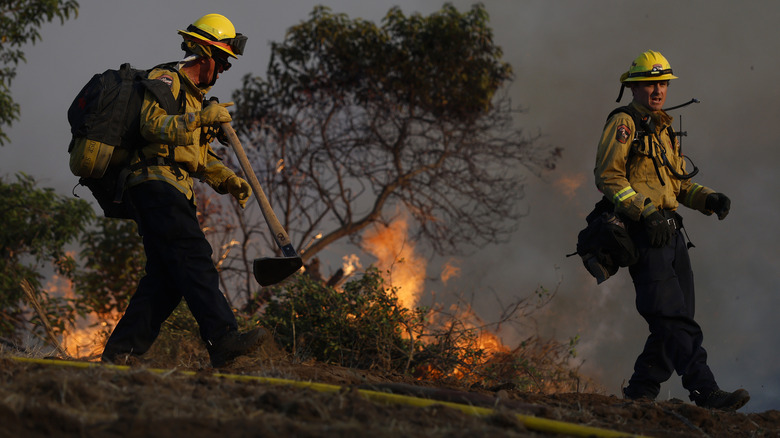
If you’ve never come face-to-face with a wildfire, you know that most people can’t conceive the speed with which the flames move, and the unpredictability with which they can change direction. This makes it extremely dangerous for firefighters on the ground, even with eyes in the sky relaying visual information about the fire back to a ground station. In the past, it just wasn’t possible to get a detailed picture of how the fire was propagating, but that has changed with GPS tracking.
By equipping aircraft with both GPS and infrared (IR) scanners, the fires can be mapped with high levels of precision. The firefighters on the ground then use a portable field computer to receive the mapping information live. Combined with other data, this technology allows for an unprecedented level of insight into a disaster as it’s happening. This lets the firefighters coordinate dynamically, with enough warning to evacuate people and send adequate firefighting resources to areas that need it most.
Drones are also becoming a crucial part of wildfire management, too. Modern drone technology is only possible thanks to GPS, so really GPS might be as crucial to managing fires in the modern era as water and fire-retardant chemicals. If you want to know what it’s like to be on the ground for these firefighters, check out this incredible GoPro video of a battle with a massive forest fire.
GPS can track oil spills faster
 Wonderful Nature/Shutterstock
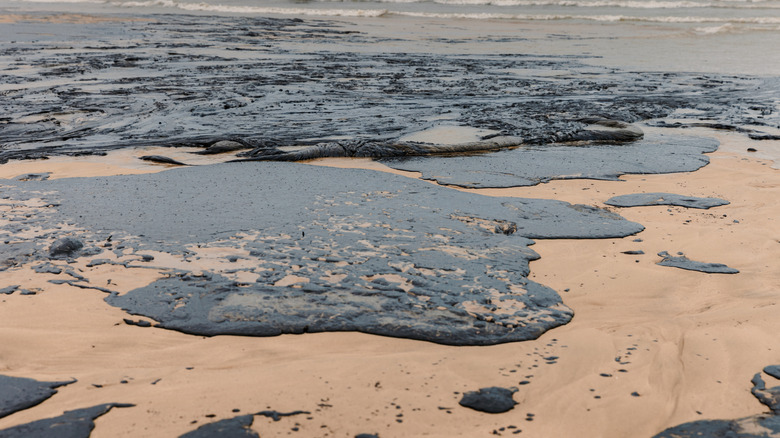
Until we’ve finally achieved infinite clean energy, the world probably won’t be able to kick its fossil fuel addiction. That means crude oil has to be transported across our oceans and, inevitably, sometimes those ships spill that oil in massive environmental disasters. Now, GPS technology certainly helps ships stay out of the sort of trouble that would lead to a spill in the first place, but when the worst does happen it can also track spills in the aftermath.
In a 2020 study, scientists were able to use GPS drifters alongside drones to learn where the oil goes after a spill and how long it stays there. This information helps predict how oil spills will play out, which makes it easier to plan for them and limit the damage they can do. Today, radar satellites and floatable beacons track spills exactly, allowing disaster recovery efforts to be as effective as possible. The ideal situation would be to preventing oil spills in the first place, but until that happens, every extra layer of protection helps.
GPS supports more accurate weather forecasts
 Frankramspott/Getty Images
If you’ve ever watched “Back to the Future Part II,” you may remember at one point Doc Brown looks at his (presumably) smart watch waiting for the rain to stop and then says, “Too bad the Post Office isn’t as efficient as the weather service.” You may have noticed that these days you’ll get a notification from your weather app that “rain will stop soon” or “rain expected to start in a few hours.” It’s not exactly Doc Brown’s to-the-second accuracy show in the movie, but it’s far better than the weather forecasts we got in the ’90s, for example. Then you might as well have based your decision to grab an umbrella on a coin flip.
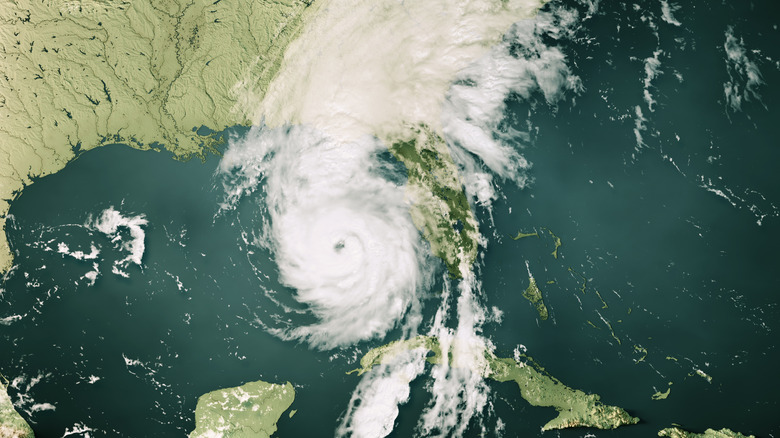
A lot of this improvement in modern forecasting accuracy comes incredible supercomputers that can model the weather to a fine degree, but this data comes from GPS-enabled weather devices, not to mention satellite imagery. In 2020, scientists came up started measuring GPS satellite signals as they pass through Earth’s atmosphere to infer temperature and moisture content. This allows for more accurate weather predictions.
GPS is helping reducing waste all over the world
 Georgeclerk/Getty Images
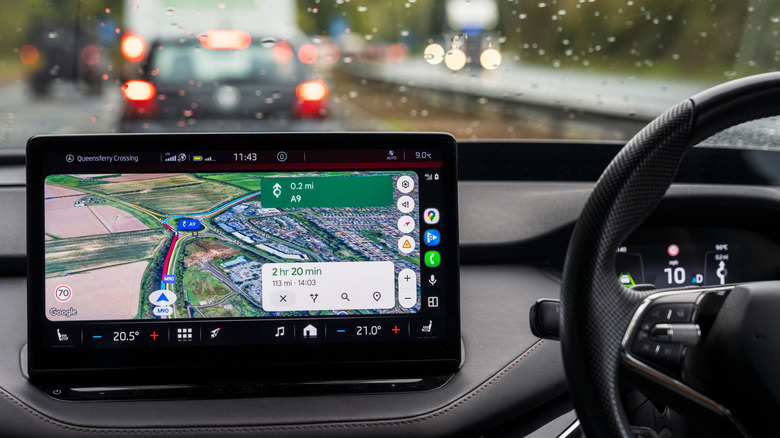
The last time you used Google Maps to navigate somewhere, you might have noticed that it offered an option to “prefer fuel-efficient routes.” It might not be the fastest or the shortest way to get where you’re going, but it would use the least fuel and produce the least emissions. This is just one example of how GPS technology can directly reduce waste and emissions.
Even without a special eco-friendly route, GPS was already saving massive amounts of fuel all over the world simply because vehicles would spend less time getting lost or sitting in traffic — the small amounts of fuel you avoid burning by being routed around these issues add up. In a 2019 report, the National Institute of Standards and Technology (NIST) noted that GPS technology has reduced fuel use and wear on fleet vehicles. Not only is this good for the environment, but it also saves us money by reducing the cost of transport.
It’s not just about vehicle emissions either. In the world of agriculture, crop-spraying drones can precisely spray only the right sectors of a field reducing the total amount of pesticide. That means fewer chemicals are needed to sustain our food supply, and we make better use of natural resources.
Search
RECENT PRESS RELEASES
Related Post