The Eye-Watering Sum SpaceX Spent Last Year Reveals What’s Really Coming Next
June 3, 2026
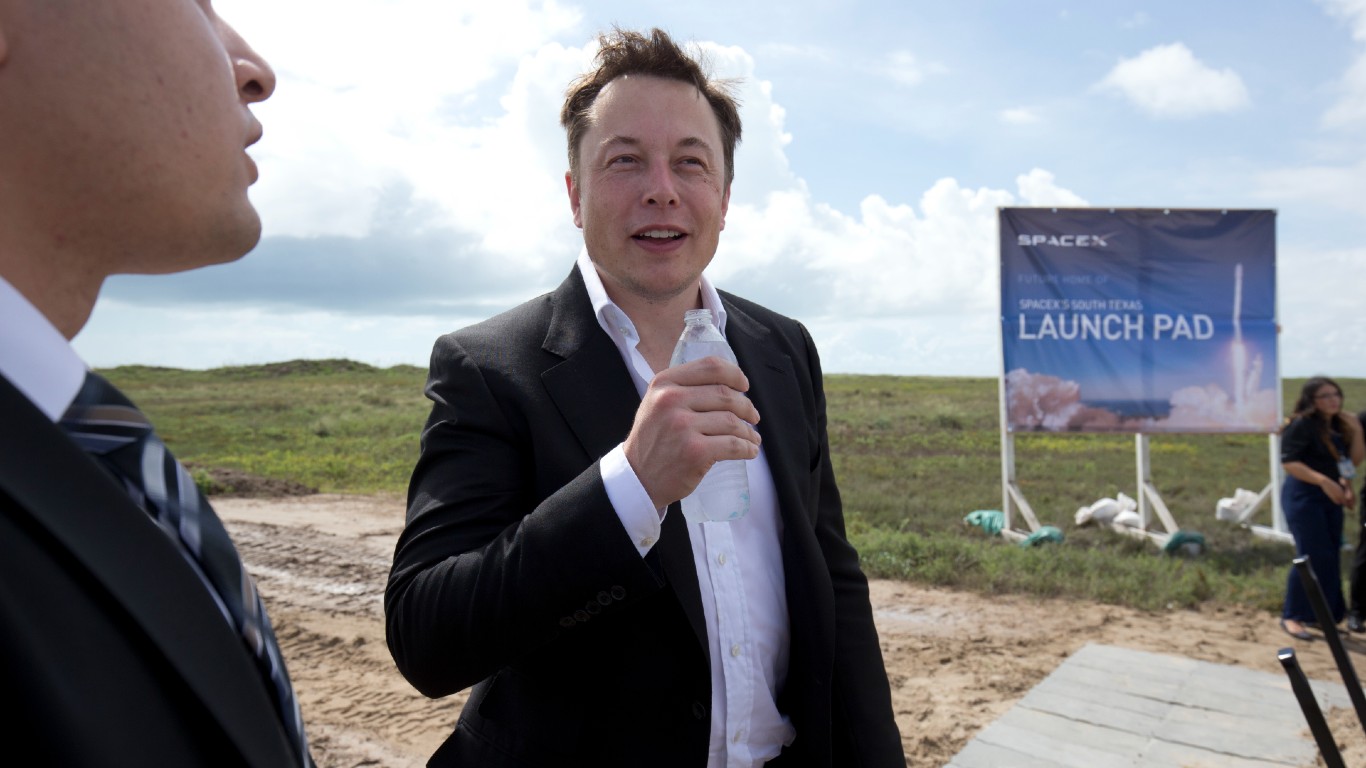
I’ve been studying SpaceX’s business model for nearly a decade, and the IPO paperwork reframes the entire company. Forget rockets for a second. The single line got my attention was capital expenditures. The number is the story.
Here is what SpaceX spent building things last year: $20,737 million in total capital expenditures for the year ended December 31, 2025. That is up from $11,163 million in 2024 and just $4,415 million in 2023. In two years, SpaceX’s annual capex roughly quintupled.
The cash flow statement tells the same story from a different angle. Net cash used in investing activities jumped from $10,796 million in 2024 to $19,575 million in 2025, an increase driven almost entirely by a $9,574 million rise in capital expenditures tied to the build-out of data centers and space launch facilities.
Where the money actually went
Break the capex down by segment and the strategy snaps into focus. AI capital expenditures hit $12,727 million in 2025, up $7,094 million from $5,633 million in 2024. In 2023, that same line was just $463 million.
SpaceX, the rocket company, spent more on AI infrastructure last year than it did on its Space and Connectivity segments combined. Space capex was $3,832 million and Connectivity capex was $4,178 million in 2025.
The company describes the AI spend bluntly: “investments in the rapid expansion of our terrestrial data centers, including the development, construction, and equipping of new facilities and supporting infrastructure.” Translation: gigawatt-scale training clusters, the kind that consume small-city quantities of power.
The Space segment increase funds Starbase. The filing notes the rise was “primarily driven by increased investment in our launch site infrastructure for Starship.”
Two megaprojects, one balance sheet
SpaceX is running two parallel infrastructure buildouts that would each, on their own, qualify as the most ambitious capex programs in their industries. The company tells investors it is “the first to build a gigawatt-scale AI training cluster and largest coherent supercomputer” in 2026, while simultaneously scaling Starship toward a payload capacity of 100 metric tons on V3, with future generations potentially reaching 200 metric tons.
The first quarter of 2026 already shows the trajectory accelerating. Q1 2026 capex came in at $10,107 million, with AI alone accounting for $7,723 million of that. One quarter nearly matched all of 2024.
What the eye-watering sum reveals
If you believe SpaceX is a launch company with a satellite broadband side hustle, the numbers do not add up. If you believe the next decade of AI leadership belongs to whoever controls the most vertically integrated compute, energy, and orbital infrastructure stack, the capex makes complete sense.
Twenty billion dollars in a single year reflects Elon Musk positioning SpaceX as both the world’s dominant launch provider and one of the largest AI compute operators on the planet. That is the bet to watch.
Search
RECENT PRESS RELEASES
Related Post