A ‘Bitcoin bar’ opened in DC — but what does that mean?
January 22, 2026
A ‘Bitcoin bar’ opened in DC — but what does that mean?
Now open in D.C.’s Penn Quarter neighborhood is what some have described as a “Bitcoin bar,” but for PubKey co-founder and CEO Thomas Pacchia, he said it’s much more than that.
“I bristle a little bit whenever we’re described as a ‘Bitcoin-themed bar.’ Bitcoin is much more so in the DNA of the organization,” he said. “You can think of us as a media company with a hospitality wrapper.”
This is the second location of PubKey, with the first in New York City’s Greenwich Village, which opened a little over three years ago.
The space in D.C. is bigger than the original location and includes a glass-enclosed podcast and video studio, a stage for live events, plus private karaoke rooms. In the rear of the space is also the headquarters for the Bitcoin Policy Institute, a nonpartisan, nonprofit organization that researches Bitcoin and other “emerging monetary networks.”
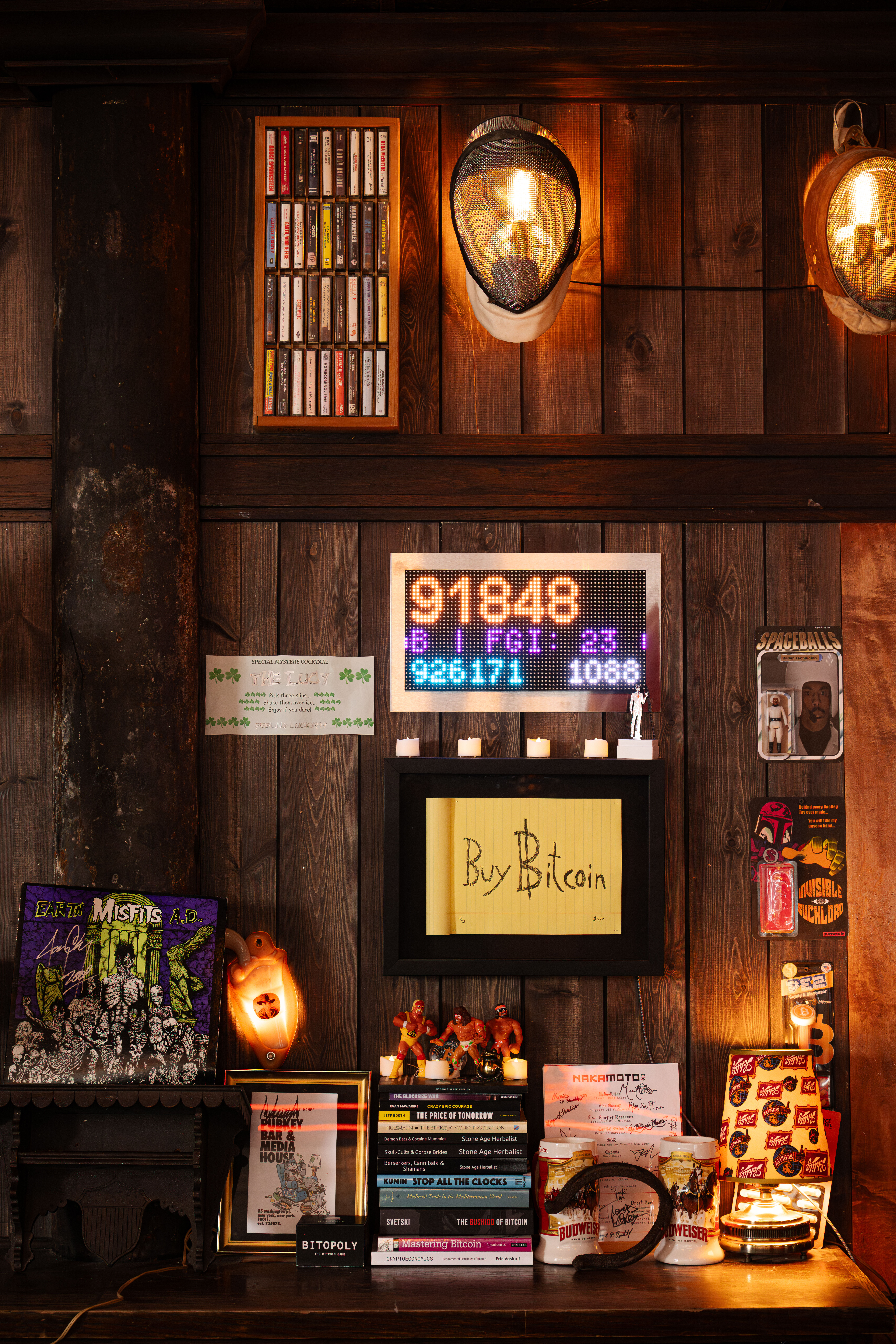
Customers don’t need to own Bitcoin to enjoy PubKey, and it is possible that a guest could overlook the Bitcoin references found within the space, which was formerly home to a Hill Country Barbecue Market. The look of PubKey taps into the nostalgic comforts of dive bars with wood-paneling, vintage-looking portraits, beer ads and a neon Budweiser sign.
Looking closer at the details, PubKey isn’t hiding its mission, though. Inside, there is an LED display showing the real-time price of Bitcoin in U.S. dollars. Nestled in one corner is a framed, printed tweet from President Donald Trump when he posted, “We will end Kamala’s war on crypto, & Bitcoin will be MADE IN THE USA!”
PubKey also hosts a variety of events, workshops and meetups each week focused on Bitcoin.
The menu also includes references to crypto-slang like the “Orange Pill Whale” cocktail. This is in reference to those who are significant holders of crypto who passionately evangelize the cryptocurrency’s value, while trying to “orange-pill” (or persuade) others into understanding its importance and worth. This cocktail is only served to those able to pay $100 worth of Bitcoin.
When it comes to how Bitcoin transactions are done at PubKey, Pacchia said he uses the point-of-sale system, known as Square, which began integrating Bitcoin as a method of payment this past year. Certainly, PubKey accepts cash and card payments alongside Bitcoin, but customers who do use the cryptocurrency get a 21% discount. No other cryptocurrency besides Bitcoin is accepted at PubKey at the moment.
While Pacchia said, “We’ve become sort of a central cultural hub for Bitcoiners,” he emphasized that PubKey is “not exclusively for Bitcoiners. It’s for everybody.”
While not necessarily a ubiquitous payment method, Bitcoin may eventually be a more popular option. The cryptocurrency launched in 2009 and is now worth nearly $100,000 per BTC (at the time of this article’s publication).
Currently, 7% of the transactions at PubKey’s New York City location are via Bitcoin, according to Pacchia. And there are estimates that cryptocurrency payment users in the U.S. are expected to jump by approximately 82% from 2024 to 2026.
In August 2025, Trump signed an executive order that cleared a path for alternative assets — including cryptocurrencies like Bitcoin — to be offered more broadly across traditional retirement plans, such as 401(k) plans.
Critics like Massachusetts Sen. Elizabeth Warren, though, have noted the volatility of Bitcoin.
“There is ample reason to think these investment options will make things worse by increasing the risk of large losses for participants, most of whom can ill afford them,” Warren said.
Pacchia said he knows Bitcoin and cryptocurrency in general can be “a little bit off-putting” for some people, which is why he finds the term “Bitcoin bar” to be “a little bit of a prickly term for me.”
“I don’t think that there has been a critical enough dive into the reality of the situation,” he said, adding that he hopes PubKey and the Bitcoin Policy Institute can “help set the record straight.”
He told WTOP that “Bitcoin has a bit of a mind of its own,” and that while there has been volatility in its worth, “If you zoom out and look at it in the long run, it’s unbelievable what it’s accomplished.”
When it comes to the future of Bitcoin, Pacchia said he believes Bitcoin transactions will eventually become ubiquitous. 10 years from now, he said, people will look at Bitcoin the way people in the past looked at the internet or electricity. He argued that Bitcoin shouldn’t be a partisan issue because “it’s just a tool.”
In the end, whether you’re a critic or already “orange-pilled,” Pacchia said there’s a place for everyone at PubKey.
“With PubKey, what we provide is a light-hearted, accessible place that people can come and engage with people that work in Bitcoin, that are enthusiasts of Bitcoin, that are skeptics, and they can have a normal debate over a couple of beers, the way it’s supposed to be,” Pacchia said.
Now open in D.C.’s Penn Quarter neighborhood is what some news organizations have described as a “Bitcoin bar,” but for PubKey co-founder and CEO Thomas Pacchia, he said it’s much more than that.
“I bristle a little bit whenever we’re described as a ‘Bitcoin-themed bar.’ Bitcoin is much more so in the DNA of the organization,” he said. “You can think of us as a kind of a media company with a hospitality wrapper.”
This is the second location of PubKey, with the first in New York City’s Greenwich Village, which opened a little over three years ago.
The space in D.C. is bigger than the original location – with the D.C. location spanning around 12,000 square feet compared to New York’s 2,200 – and includes a glass-enclosed podcast and video studio, a stage for live events, plus private karaoke rooms. In the rear of the space is also the headquarters for the Bitcoin Policy Institute, a nonpartisan, nonprofit organization that researches Bitcoin and other “emerging monetary networks.”
Customers don’t need to own Bitcoin to enjoy PubKey, and it is possible that a guest could overlook the Bitcoin references found within the space, which was formerly home to a Hill Country Barbecue Market. The look of PubKey taps into the nostalgic comforts of dive bars with wood-paneling, vintage-looking portraits and beer ads and a banal neon Budweiser sign.
Looking closer at the details, PubKey isn’t hiding its mission, though. Inside, there is an LED display displaying the realtime price of Bitcoin in U.S. dollars. Nestled in one corner is a framed, printed tweet from President Donald Trump when he posted, “We will end Kamala (Harris)’s war on crypto, & Bitcoin will be MADE IN THE USA!” PubKey also hosts a variety of events, workshops and meetups each week focused on Bitcoin.
The menu also includes references to crypto-slang like the “Orange Pill Whale” cocktail. This is in reference to those who are significant holders of crypto who passionately evangelize the crypto-currency’s value, while trying to “orange-pill” (or persuade) others into understanding its importance and worth. This cocktail is only served to those able to pay $100 worth of Bitcoin.
When it comes to how Bitcoin transactions are done at PubKey, Pacchia said he uses the point-of-sale system, known as Square, which began integrating Bitcoin as a method of payment this past year. Certainly, PubKey accepts cash and card payments alongside Bitcoin, but customers who do use the cryptocurrency get a 21% discount. No other cryptocurrency besides Bitcoin is accepted at PubKey at the moment.
While Pacchia said, “We’ve become sort of a central cultural hub for Bitcoiners,” he emphasized that PubKey is “not exclusively for Bitcoiners. It’s for everybody.”
While not necessarily a ubiquitous payment method, Bitcoin may eventually be a more popular option. The cryptocurrency launched in 2009 and is now worth nearly $100,000 per BTC (at the time of this article’s publication). Currently, 7% of the transactions at PubKey’s New York City location are via Bitcoin, according to Pacchia. And there are estimates that cryptocurrency payment users in the U.S. are expected to jump by approximately 82% from 2024 to 2026.
In August of 2025, Trump signed an executive order that cleared a path for alternative assets – including cryptocurrencies like Bitcoin – to be offered more broadly across traditional retirement plans, such as 401(k) plans.
Critics like Senator Elizabeth Warren, though, have noted the volatility of Bitcoin, with Warren saying, “There is ample reason to think these investment options will make things worse by increasing the risk of large losses for participants, most of whom can ill afford them.”
For Pacchia, he said he knows Bitcoin and cryptocurrency in general can be “a little bit off putting” for some people, which is why he finds the term “Bitcoin bar” to be “a little bit of a prickly term for me.”
“I don’t think that there has been a critical enough dive into the reality of the situation,” he said, adding that he hopes PubKey and the Bitcoin Policy Institute can “help set the record straight.”
He told WTOP that “Bitcoin has a bit of a mind of its own,” and that while there has been volatility in its worth, “If you zoom out and look at it in the long run, it’s unbelievable what it’s accomplished.”
When it comes to the future of Bitcoin, Pacchia said he believes Bitcoin transactions will eventually become ubiquitous. 10 years from now, he said, people will look at Bitcoin the way people in the past looked at the internet or electricity. He argued that Bitcoin shouldn’t be a partisan issue because “it’s just a tool.”
In the end, whether you’re a critic or already “orange-pilled,” Pacchia said there’s a place for everyone at PubKey.
“With PubKey, what we provide is a light-hearted, accessible place that people can come and engage with people that work in Bitcoin, that are enthusiasts of Bitcoin, that are skeptics, and they can have a normal debate over a couple of beers, the way it’s supposed to be,” said Pacchia.
Now open in D.C.’s Penn Quarter neighborhood is what some news organizations have described as a “Bitcoin bar,” but for PubKey co-founder and CEO Thomas Pacchia, he said it’s much more than that.
“I bristle a little bit whenever we’re described as a ‘Bitcoin-themed bar.’ Bitcoin is much more so in the DNA of the organization,” he said. “You can think of us as a kind of a media company with a hospitality wrapper.”
This is the second location of PubKey, with the first in New York City’s Greenwich Village, which opened a little over three years ago.
The space in D.C. is bigger than the original location – with the D.C. location spanning around 12,000 square feet compared to New York’s 2,200 – and includes a glass-enclosed podcast and video studio, a stage for live events, plus private karaoke rooms. In the rear of the space is also the headquarters for the Bitcoin Policy Institute, a nonpartisan, nonprofit organization that researches Bitcoin and other “emerging monetary networks.”
Customers don’t need to own Bitcoin to enjoy PubKey, and it is possible that a guest could overlook the Bitcoin references found within the space, which was formerly home to a Hill Country Barbecue Market. The look of PubKey taps into the nostalgic comforts of dive bars with wood-paneling, vintage-looking portraits and beer ads and a banal neon Budweiser sign.
Looking closer at the details, PubKey isn’t hiding its mission, though. Inside, there is an LED display displaying the realtime price of Bitcoin in U.S. dollars. Nestled in one corner is a framed, printed tweet from President Donald Trump when he posted, “We will end Kamala (Harris)’s war on crypto, & Bitcoin will be MADE IN THE USA!” PubKey also hosts a variety of events, workshops and meetups each week focused on Bitcoin.
The menu also includes references to crypto-slang like the “Orange Pill Whale” cocktail. This is in reference to those who are significant holders of crypto who passionately evangelize the crypto-currency’s value, while trying to “orange-pill” (or persuade) others into understanding its importance and worth. This cocktail is only served to those able to pay $100 worth of Bitcoin.
When it comes to how Bitcoin transactions are done at PubKey, Pacchia said he uses the point-of-sale system, known as Square, which began integrating Bitcoin as a method of payment this past year. Certainly, PubKey accepts cash and card payments alongside Bitcoin, but customers who do use the cryptocurrency get a 21% discount. No other cryptocurrency besides Bitcoin is accepted at PubKey at the moment.
While Pacchia said, “We’ve become sort of a central cultural hub for Bitcoiners,” he emphasized that PubKey is “not exclusively for Bitcoiners. It’s for everybody.”
While not necessarily a ubiquitous payment method, Bitcoin may eventually be a more popular option. The cryptocurrency launched in 2009 and is now worth nearly $100,000 per BTC (at the time of this article’s publication). Currently, 7% of the transactions at PubKey’s New York City location are via Bitcoin, according to Pacchia. And there are estimates that cryptocurrency payment users in the U.S. are expected to jump by approximately 82% from 2024 to 2026.
In August of 2025, Trump signed an executive order that cleared a path for alternative assets – including cryptocurrencies like Bitcoin – to be offered more broadly across traditional retirement plans, such as 401(k) plans.
Critics like Senator Elizabeth Warren, though, have noted the volatility of Bitcoin, with Warren saying, “There is ample reason to think these investment options will make things worse by increasing the risk of large losses for participants, most of whom can ill afford them.”
For Pacchia, he said he knows Bitcoin and cryptocurrency in general can be “a little bit off putting” for some people, which is why he finds the term “Bitcoin bar” to be “a little bit of a prickly term for me.”
“I don’t think that there has been a critical enough dive into the reality of the situation,” he said, adding that he hopes PubKey and the Bitcoin Policy Institute can “help set the record straight.”
He told WTOP that “Bitcoin has a bit of a mind of its own,” and that while there has been volatility in its worth, “If you zoom out and look at it in the long run, it’s unbelievable what it’s accomplished.”
When it comes to the future of Bitcoin, Pacchia said he believes Bitcoin transactions will eventually become ubiquitous. 10 years from now, he said, people will look at Bitcoin the way people in the past looked at the internet or electricity. He argued that Bitcoin shouldn’t be a partisan issue because “it’s just a tool.”
In the end, whether you’re a critic or already “orange-pilled,” Pacchia said there’s a place for everyone at PubKey.
“With PubKey, what we provide is a light-hearted, accessible place that people can come and engage with people that work in Bitcoin, that are enthusiasts of Bitcoin, that are skeptics, and they can have a normal debate over a couple of beers, the way it’s supposed to be,” said Pacchia.
Get breaking news and daily headlines delivered to your email inbox by signing up here.
© 2026 WTOP. All Rights Reserved. This website is not intended for users located within the European Economic Area.
Search
RECENT PRESS RELEASES
Related Post