A New Wave of Functional Wellness Products – A massive Market and Investment Opportunity
March 24, 2026

A New Wave of Functional Wellness Products
creates a massive Market and Investment Opportunity
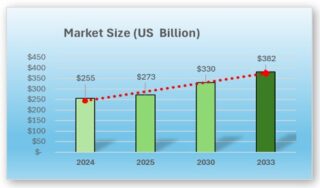
The FUNCTIONAL WELLNESS MARKET, including supplements, functional foods, nootropics, adaptogens, and performance nutrition, is projected to grow to over $382 Billin by 2033, with a compound annual growth rate (CAGR) of 15 % from 2026 to 2030, outpacing overall economic growth and offering a compelling strategic opportunity for investors and small producers.
Several structural shifts in consumer behavior, healthcare economics, and technology are driving the next wave of innovation. Functional beverages alone, some enhanced with THC or CBD, already represent a hundreds-of-billions-dollar segment with strong growth.
Investing in small public companies in the sector, especially those pivoting from the cannabis industry to the broader wellness and functional wellness markets, can inspire investor confidence by showcasing compelling growth and market shifts. This shift reflects a broader transition happening across the health, supplement, and lifestyle sectors.
US Functional Wellness Market to Grow to $382 Billion by 2033
While the total U.S. wellness market is forecast to reach $3.7T by 2034, the functional wellness niche is forecast to hit $382B by 2033, indicating faster growth relative to its starting size.
Natural Performance Optimization – Cannabinoid Wellness
The functional wellness sector is entering a structural growth phase driven by preventive health efforts, aging demographics, and consumer demand for natural performance optimization, with longevity- and stress-relief-focused products and services expanding rapidly. Functional wellness includes supplements, adaptogens, nutraceuticals, and cannabinoid-based products.
Cannabinoid-based wellness, including CBD and broader cannabinoids, is among the fastest-growing subsegments, driven by regulatory easing, product innovation, and mainstream acceptance, with the U.S. representing the largest wellness economy, accounting for approximately 32% of the global market.
Strong Market Drivers
Strong market drivers include trends in preventive health, fitness, nutrition, personal care, and mental wellness. Functional wellness products are products designed to deliver specific health benefits beyond basic nutrition or hygiene.
The new functional wellness products sit at the intersection of nutrition, preventive healthcare, and lifestyle optimization, making them one of the fastest-growing segments in the global wellness economy and a compelling space for investment, driven by innovation and mass-market brand building. These products combine nutrition, bioactive ingredients, or technology to support targeted outcomes such as energy, immunity, cognitive performance, stress reduction, or sleep.
Increasing Interest in Functional Foods and Supplements
Consumers increasingly prefer health benefits in convenient formats rather than pills. The concept aligns with the broader shift toward preventive health, in which consumers actively manage their well-being rather than waiting for medical treatment. Growing concern about obesity, stress, and chronic disease is driving interest in functional foods and supplements. Preventive wellness is becoming a core consumer spending category rather than a discretionary spending, with nutraceuticals and functional foods gaining mainstream adoption.
Avoid Illness rather than treat
Consumers increasingly view nutrition and wellness products as tools to avoid illness rather than treat it. People prefer wellness integrated into everyday consumption, such as beverages, edibles, snacks, or powders. Consumers increasingly expect products tailored to their individual biology, lifestyle, and social environment.
Stress Resilience and Daily Balance
Chronic stress has become one of the defining health challenges of modern society. Consumers increasingly seek products that help regulate stress responses and restore balance. Adaptogenic herbs, functional beverages, and daily stress-support supplements, often THC and CBD-enhanced, are becoming staples of the wellness lifestyle.
For emerging small companies, this segment allows brands to build strong consumer loyalty by positioning products as daily wellness rituals rather than occasional treatments.
The Rise of Cognitive, Mental, and Nervous-System Wellness
Consumers increasingly expect products tailored to their individual biology and lifestyle. Mental performance and stress resilience are becoming central to the wellness economy.
Consumers are increasingly focused on:
- Focus and productivity
- Stress management
- Emotional resilience
- Sleep optimization
Why These Opportunities Are Especially Attractive for OTC Companies
- The wellness market is vastly larger than the cannabis market
- Regulatory barriers are much lower
- Existing cannabis infrastructure can be repurposed
- Public market valuations are often extremely low
- Consumer demand is shifting toward functional products
- Brand story transition is natural
- Institutional capital prefers wellness over cannabis
For OTC investors and small-cap public companies, this transition offers opportunities, as demonstrated by [example company], which rapidly launched [product] in [year], achieving [X]% growth within [timeframe]. Such examples highlight how rapid innovation cycles and lower regulatory hurdles enable quick product launches and scalable growth through traditional distribution and digital channels, providing strategic advantages in this sector.
- Faster innovation cycles.
Functional wellness products can be launched more quickly than pharmaceuticals. - Lower regulatory barriers.
Nutraceuticals and functional wellness products face fewer FDA hurdles than drugs. - High-margin consumer brands.
Gross margins often range 60–80% in supplements and functional beverages. - Direct-to-consumer distribution.
Digital marketing and e-commerce enable small companies to scale quickly through direct-to-consumer distribution, providing a strategic advantage in nationwide and global markets with minimal infrastructure investment. - Strategic M&A potential.
Large consumer health companies frequently acquire emerging wellness brands. - Nationwide scalability through digital marketing.
Online Sales allow easy distribution throughout the US and potentially globally.
Strong Branding in the Sector Captures Investor Interest
Companies that combine scientific credibility, strong branding, and disciplined capital management may be particularly well positioned to capture investor interest in the emerging wellness economy. As capital markets begin to recognize the scale of the opportunity, functional wellness may become one of the most attractive sectors for small-cap growth companies seeking to build long-term shareholder value.
“The functional wellness market represents one of the largest consumer health opportunities for the next decade. As the global wellness economy enters a new phase of expansion, functional wellness products that deliver measurable physiological or cognitive benefits are emerging as one of the fastest-growing segments within the broader wellness market for the next decade.”
Functional Wellness Products are Attractive
- Higher margins.
Consumers pay premiums for health benefits and prevention. - Recurring consumption
Daily-use products create repeat purchases. - Brand differentiation
Functional benefits help brands stand out in crowded food or supplement markets. - Lifestyle Branding
The strongest wellness brands represent a lifestyle identity rather than just a product.
Why This Is a Huge Opportunity for Smaller Companies
Large pharmaceutical companies focus on drug development and regulation, not lifestyle ecosystems. Large consumer companies focus on mass-market products. That leaves a large opportunity for smaller, innovative wellness brands to build authentic platforms. Once these platforms reach scale, they often become acquisition targets for large corporations.
Why the Wellness Market Is Particularly Attractive Now
Several structural trends are accelerating growth:
- Aging populations seeking longevity
- Rising stress and mental health awareness
- Consumer distrust of traditional healthcare systems
- Demand for natural and plant-based solutions
- Social media is accelerating trends
Strategic Takeaway: The Wellness Boom as a Structural Growth Opportunity
The wellness market is undergoing a structural shift toward preventive health and lifestyle optimization, creating massive opportunities for companies offering functional, science-backed consumer wellness products. Wellness is rapidly becoming the new consumer health infrastructure.
Functional wellness products, ranging from foods and beverages to supplements and personal care, are transforming everyday consumption into targeted, measurable health solutions. This evolution allows companies to scale from a single product to a diverse ecosystem of functional offerings. What started as a niche supplement market is maturing into a multi-trillion-dollar lifestyle ecosystem that integrates nutrition, mental health, technology, and preventive medicine.
The highest-value wellness companies will not be defined solely by individual products; they will be trusted brands with expansive product ecosystems. Over the next five years, this shift is where the largest valuations are expected to emerge.
Small cannabis companies represent undervalued platforms that can pivot into the broader wellness economy, a far larger, faster-growing market. They can react quickly to changing market conditions and lower operating expenses, thus unlocking significant valuation expansion. This trend also creates fertile ground for strategic acquisitions of smaller wellness brands, enabling rapid ecosystem building and market penetration.
Search
RECENT PRESS RELEASES
Related Post