AI-generated ads are trickling into political campaigns, sparking big worries
March 22, 2026
At least 15 campaign ads featuring AI-generated content have run since November, stoking concerns that the now-ubiquitous technology could cause confusion or even mislead voters ahead of the 2026 midterm elections.
In state, local and federal elections across the country, AI has been everywhere from school board campaigns to governor’s races, used to enhance speech, turn politicians into cartoons or, in one notable case in Massachusetts, mimic a rival politician’s voice.
In the state’s gubernatorial race, the campaign of Republican primary candidate Brian Shortsleeve created an AI-generated radio ad that sounds like Democratic Gov. Maura Healey, using Healey’s “voice” to say things she never actually said, including about the state’s economy. The clip does not contain an explicit AI disclaimer, and instead the caption says it’s what her radio ads would sound like “if she was honest.” Shortsleeve’s campaign has also released AI-generated videos depicting Healey as the Grinch and another of her hissing with red eyes, neither of which contained explicit AI disclaimers.
Patrick Nelson, Shortsleeve’s communications director, said the campaign uses AI to educate voters in a “creative, humorous, and fun” way, adding that its policy is to disclose AI use if it depicts a person in a way that is “not obvious to a reasonable viewer.” Healey’s campaign directed NBC News to a statement from the Massachusetts Democratic Party in February.
“He should stop lying to voters and tell them the truth — he will be a rubber stamp on President Trump’s harmful agenda,” said MassDems Chair Steve Kerrigan.
More recently, the National Republican Senatorial Committee last week released an AI-generated video of James Talarico, the Democratic nominee for Senate in Texas, reading real tweets on race and transgender rights. Talarico spokesperson JT Ennis said in response to the ad that the Republican primary candidates are the ones who are “scared” of the Democrat, according to CNN. Talarico’s campaign declined NBC News’ request for comment.
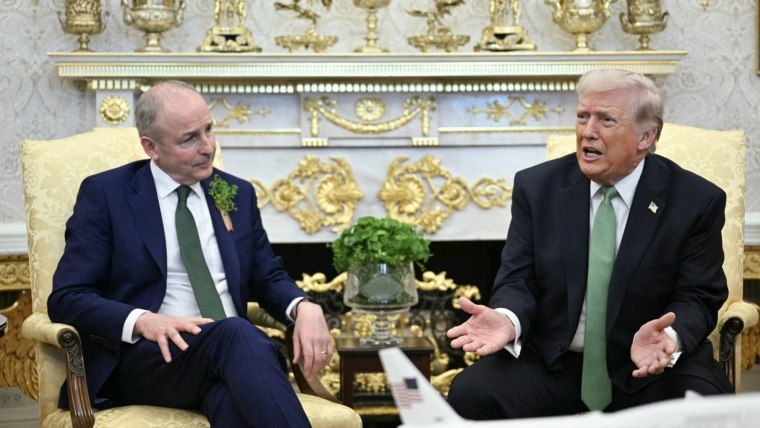
At the local level, former New York Gov. Andrew Cuomo’s recent mayoral campaign in New York City used AI in a few ads, including one depicting criminals in support of now-Mayor Zohran Mamdani. And in Texas, Rep. Jasmine Crockett drew attention and plenty of scrutiny for her Senate campaign’s use of AI, while her likeness was also used in Republican AI ads.
The ads demonstrate that AI is not just coming for political campaigns — it’s already here. Now, it’s a question of where the lines are both legally and ethically.
“Anytime generative AI is used to create messaging or imagery that is misleading, I hope we can all agree that’s a negative thing,” said Mark Jablonowski, the CEO of DSPolitical, a progressive advertising firm. “When you’re trying to be deceitful or have something that never existed, that’s a big issue.”
AI video generators have grown by leaps and bounds in recent years, starting off with crude and at times bizarre clips to now being capable of ultrarealistic media that requires particularly close inspection to determine its synthetic origins.
Producing political ads is not cheap. The cost can range anywhere from around $1,000 to orders of magnitude more, depending on factors such as production costs, casting, postproduction costs and distribution, according to Media Culture, a media buying and marketing company. For smaller campaigns with less resources — and larger ones too — AI-generated imagery can be a cost saver.
“It’s not the overall size of the campaign itself. It’s, are they hiring an ad agency that is running on thin margins and needs to do this, or needs to turn it around in a certain amount of time, very quickly?” said Todd Belt, a professor at George Washington University and director of its political management program.
But with efficiency comes the risk of deceiving voters. Jablonowski said the bigger concern of AI-generated imagery in political communications is when individuals who create those products don’t follow ethical guidelines.

AI usage in political ads is largely regulated at the state level. Twenty-six states have laws regulating the use of political deepfakes — which use AI to create deceptively realistic video or audio — and either require their disclosure or prohibit their use within a certain time frame before an election, according to the National Conference of State Legislatures. Some state legislatures, including in Maine and Vermont, have introduced bills to require disclosures on AI-generated imagery in political advertising.
At the federal level, AI regulation has remained in limbo. In 2023, Sen. Amy Klobuchar, D-Minn., and Rep. Yvette Clark, D-N.Y., introduced the REAL Political Advertisements Act, which would require AI disclosures on political ads. Neither bill made it to a vote in their respective chamber.
While Jablonowski believes AI-generated ads will only ramp up as the midterms approach, he believes that politicians will rise above them.
“The good news is, I think most campaigns on both sides of the aisle probably want to do the right thing,” Jablonowski said. “There, of course, are going to be examples that you can point to where people are going about it the wrong way.”
Search
RECENT PRESS RELEASES
Related Post