Amazon could invest US$10B in OpenAI
December 30, 2025
Amazon is reportedly in talks to invest US$10B in OpenAI as both companies deepen ties through chip and cloud deals
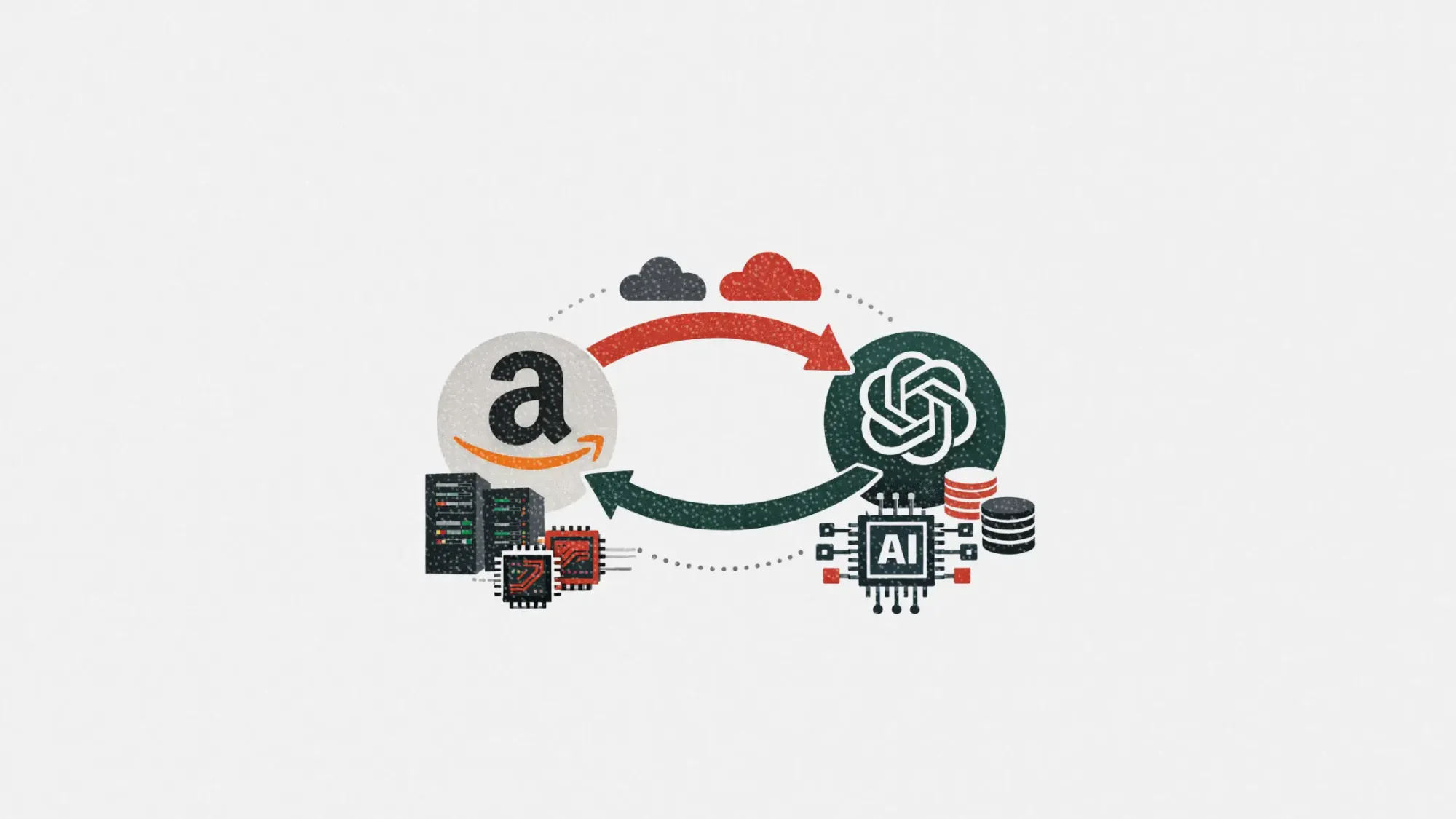
Amazon is reportedly in early discussions to invest as much as US$10 billion in OpenAI in a deal that could deepen the AI lab’s use of Amazon-designed chips and cloud infrastructure. If finalized, the investment would peg OpenAI’s valuation at over US$500 billion, according to Bloomberg.
This potential tie-up comes just months after OpenAI restructured its corporate model and freed itself from exclusive compute obligations to Microsoft, one of its earliest and largest backers. For marketers watching the generative AI space, the move hints at a broader shift: the rise of circular deals between hyperscalers and AI companies, where compute, chips, and cash are traded in mutually reinforcing loops.
This article explores what Amazon’s possible stake in OpenAI could mean for the AI infrastructure market, why circular deals are becoming the norm, and what it signals for marketers investing in AI tools and platforms.
Here is a table of content for quick access:
Amazon is reportedly eyeing OpenAI
Amazon is in confidential talks to invest up to US$10 billion into OpenAI, according to The Information and confirmed by CNBC. While still fluid, the deal would mirror previous cloud-chip alliances forming across the generative AI industry.
Under the rumored agreement, OpenAI would use Amazon’s Trainium and Inferentia chips, purpose-built hardware for training and deploying large language models. This complements a US$38 billion compute deal the two companies signed last month, making Amazon Web Services (AWS) a formal OpenAI cloud partner for the first time.
Amazon has already committed US$8 billion to Anthropic, OpenAI’s closest competitor, and unveiled its next-generation Trainium chips in early December. The company is aggressively positioning itself as an infrastructure provider to AI companies, leveraging both cloud capacity and in-house semiconductors.
Meanwhile, OpenAI has secured over US$1.4 trillion in infrastructure commitments in recent months, including partnerships with AMD, Nvidia, and Broadcom. It also invested in CoreWeave earlier this year, a move that helped the GPU provider scale up while indirectly boosting OpenAI’s own access to compute.
Why this kind of deal is becoming standard
The potential Amazon-OpenAI deal reflects a growing trend in AI: circular deals between tech giants and AI startups. In these arrangements, big cloud providers or chipmakers invest in fast-growing AI firms, which in turn agree to use the investor’s infrastructure.
This model helps both parties. Cloud platforms get guaranteed long-term customers, and AI companies get compute at scale, often at preferential terms. It is a win-win on paper, but also raises questions about market concentration and lock-in.
We have already seen this with:
- OpenAI investing US$350 million into CoreWeave, which then bought Nvidia chips to support OpenAI’s compute needs
- A 10% stake in AMD, along with chip usage commitments
- Amazon’s separate bet on Anthropic, and Microsoft’s earlier US$13 billion investment into OpenAI
As these deals stack up, they effectively turn hardware and infrastructure providers into kingmakers, controlling who gets to scale and how fast.
What marketers should know
Marketers may not be trading chips or cloud credits, but these moves affect the future of AI tools and services they rely on. Here’s how:
1. AI stack consolidation could affect tool diversity
As AI companies partner more deeply with cloud or chip providers, expect tools built on the same infrastructure. That could mean similar capabilities, limitations, and even biases. For marketers, this may reduce differentiation across platforms.
2. Pricing wars and performance gains ahead
Chip-backed deals often come with cost advantages. If OpenAI gets cheaper or faster compute via Trainium, its API pricing or feature set may evolve. This could impact the platforms marketers use, such as ChatGPT or tools built on its APIs.
3. Greater risk of cloud-aligned silos
As Amazon, Microsoft, and Google double down on exclusive AI partnerships, tools may start optimizing only for certain platforms. Marketers should track which cloud ecosystem their preferred vendors are aligned with.
4. Strategic alignment is key
Now more than ever, marketers need to ask who is building the AI tools they use, and whose infrastructure those tools are tied to. Understanding these dynamics will help anticipate performance, ethics, and reliability questions down the line.
A US$10 billion Amazon investment in OpenAI would be one of the largest circular AI deals to date. It signals that AI infrastructure is no longer just about chips or cloud, but about power and positioning.
For marketers, the takeaway is clear. Watch where the AI money flows, because it will shape the tools, platforms, and performance benchmarks you will depend on in the years to come.
This article is created by humans with AI assistance, powered by ContentGrow. Ready to explore full-service content solutions starting at $2,000/month? Book a discovery call today.
Search
RECENT PRESS RELEASES
Related Post