Amazon’s next battle isn’t for customers
April 19, 2026
•
Business
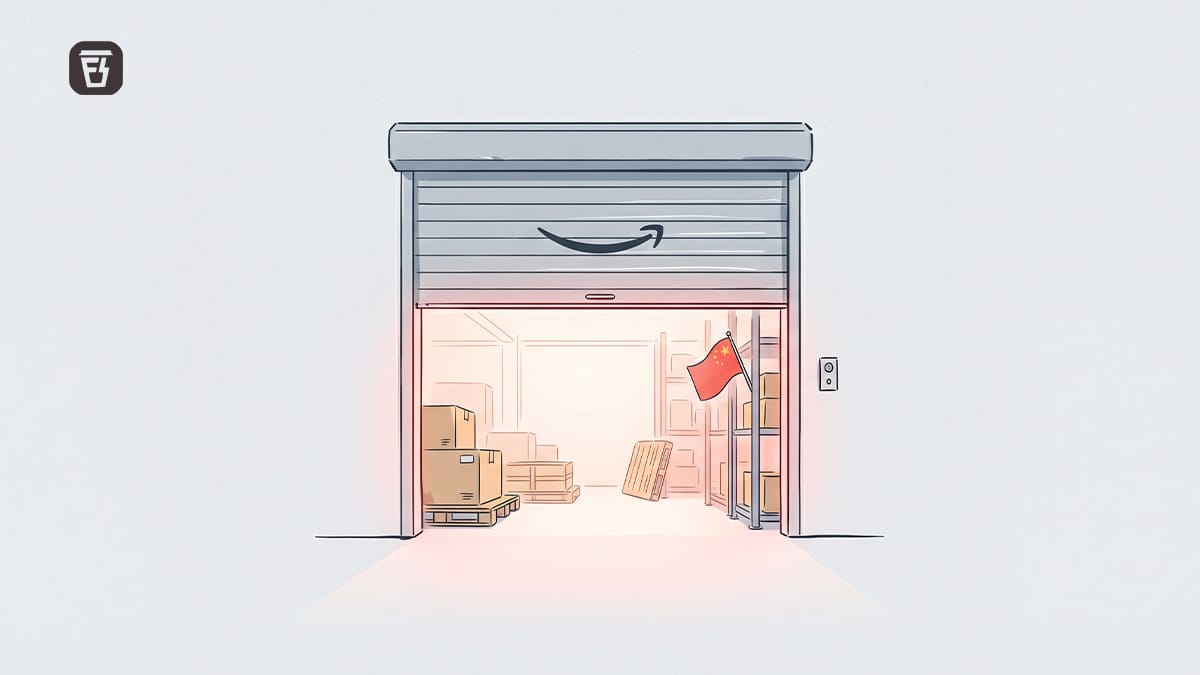
In today’s Finshots, we break down why Amazon is back in China, years after it gave up on winning the market.
But here’s a quick sidenote before we begin. If you’re someone who loves keeping tabs on the world of business and finance, hit subscribe if you haven’t already. If you’re already a subscriber, thank you! Maybe forward this newsletter to someone who’d enjoy our stories but hasn’t discovered us yet.
Now onto today’s story.
Imagine you’re a manufacturer in China. You’ve figured out how to make a product cheaply and at scale. Your customers are sitting on the other side of the globe. Now comes the harder question:
Do you ship it through Amazon and reach customers in two days?Or do you sell through platforms like Temu and wait weeks?
This dilemma didn’t always exist. In fact, for a long time, Amazon was never really part of the equation within China.
Local giants like Alibaba and JD.com had already built deep ecosystems that blended shopping, payments and social interaction into a single experience. Consumers were mobile-first, highly price-sensitive and used to platforms that felt local in every way.
Amazon, on the other hand, brought a very different playbook. Think clean listings, standardised experiences and a global model that had worked well in the US and Europe. They basically tried to bring the Western shopping experience to the Asian market.
But in China, that approach felt rigid and out of place.
It wasn’t just that Amazon failed to win customers. It never became the natural home for sellers either. That’s why by 2019, it shut down its domestic marketplace in the country. And that made it look like a complete exit.
… Until recently, when Amazon quietly launched a global warehousing hub in China. Now we know what you’re thinking. We’ve seen this before and it doesn’t end well.
At first, it looks like Amazon is coming back for the Chinese customers it once tried so hard to please. But this time, it’s solving a different problem. For one, it isn’t chasing consumers anymore, that battle is already lost. Instead, it is chasing something else: the sellers.
Because even as Amazon faded within China, something unexpected happened outside it. Chinese manufacturers began to dominate Amazon’s global marketplace. Platforms like Alibaba already solved that problem. But they needed Amazon to reach customers across the US, where demand was stronger and margins were higher. In that sense, Amazon quietly became an export engine for Chinese sellers.
But that advantage is now under threat. And for the first time, it’s a real one.
New platforms like Temu and Shein are changing how global commerce works. Instead of shipping goods in bulk to foreign warehouses, they connect factories directly to consumers around the world. Products move only when there is demand, and at significantly lower costs. This removes the need for a middle layer altogether. And it just so happens to be the middle layer that Amazon occupies.
That’s when the new China warehousing hub starts to make sense.
Amazon is not trying to build a storefront. It is building infrastructure. By placing inventory closer to factories, it allows manufacturers to store goods domestically and ship globally only when orders arrive. This reduces upfront costs, improves speed and makes Amazon’s logistics network more tightly integrated with the supply side.
Earlier, Amazon was a marketplace supported by logistics. Now it is turning into a logistics backbone that anchors sellers to its ecosystem. The closer it gets to the source of production, the harder it becomes for sellers to leave.
There’s also a quieter problem sellers run into after the first few orders go out.
Before setups like this existed, much of the heavy lifting fell on them. They had to figure out where to store inventory, how much to ship overseas and when to move it. Every shipment meant fresh paperwork, new customs declarations and another round of coordination with logistics partners.
For a seller, that means constantly dealing with uncertainty. You don’t always know when a product will reach the customer, or whether it will get held up along the way.
Amazon’s model flips this completely. Instead of sending thousands of small parcels across borders, it moves goods in bulk, clears customs upfront and then delivers them domestically. What used to be an international shipping problem becomes a local delivery problem.
That means fewer delays, more predictable timelines and a much smoother experience for both sellers and customers.
This is also why competing with Alibaba is no longer the point. Alibaba already dominates local commerce within China. Amazon is focused on something different. It wants to remain the preferred gateway to the rest of the world.
Which brings us to the real question: Why would Chinese sellers pick Amazon, an American e-commerce giant over homegrown players like Temu?
Well firstly, it’s the warehouse itself. What makes this different is that it doesn’t behave like a typical Amazon warehouse at all. This is Amazon’s first Global Warehousing and Distribution (GWD) centre, which means inventory doesn’t leave China immediately. Instead, it stays close to factories and moves only when demand appears. In simple terms, Amazon is moving closer to where products are made, not just where they are sold.
Then there’s the business model behind it. The new China warehousing model cuts domestic storage costs for sellers by approximately 45% compared to storing goods in overseas fulfilment centres. But there’s a deeper reason this cost advantage matters right now.
For years, many sellers relied on ‘De Minimis’, a US rule that allowed low-value packages (typically under $800) to enter duty-free. It made direct-from-China shipping incredibly cheap. Platforms like Temu and Shein didn’t just benefit from this loophole, they scaled because of it. Together, they accounted for nearly 30% of all de minimis shipments into the US in 2023.
But that system is being rolled back, with policymakers moving to suspend duty-free treatment more broadly.
Now, Amazon can’t bring back duty-free treatment for low-value imports. But by cutting storage costs so sharply, it gives sellers a reason to rethink where they want to operate.
By moving goods in bulk, clearing customs upfront and storing inventory within the US, it builds a system that doesn’t depend on shifting policy to work.
But Amazon’s real edge is simple: it already owns the last mile in the US.
As a US-based company, Amazon already operates a dense network of warehouses, fulfilment centres and delivery systems across its largest market. This allows it to move goods through customs faster, keep inventory closer to customers and deliver on tighter timelines.
By linking Chinese factories directly to its US logistics backbone, Amazon is trying to offer the best of both worlds: the cost proximity of direct-from-China sourcing, and the delivery reliability that its brand has been built on. For sellers who care about reviews, repeat customers and long-term marketplace standing, that combination is genuinely hard to walk away from.
So yeah, Amazon’s next battle is not being fought in front of Chinese consumers. It is being fought in the minds of Chinese sellers — manufacturers deciding which platform deserves their inventory, their trust and their future.
Temu and Shein have shown that the old model of bulk international shipping can be disrupted. Amazon’s response is not to defend that model. It is to build something stickier: an end-to-end supply chain so tightly connected, from the factory floor in Shenzhen to the doorstep in Dallas, that the cost of leaving it outweighs any alternative.
For a manufacturer in China, the question is no longer just where to sell. It’s who controls the journey from factory floor to front door. And Amazon is making sure that journey still runs through it.
Until next time…
Liked this story?
Share it with friends, family members or even strangers on WhatsApp, LinkedIn and X.
A leading insurer is revising its health insurance premiums!
Policies issued after April 28th, 2026 (midnight) will reflect the updated premiums.
If you’ve already generated a quote, the premium may change once the revision comes into effect.
So, book a free call with Ditto to understand your options.
Search
RECENT PRESS RELEASES
Related Post