America’s Auto Industry Is Stuck In Neutral, And There’s One Key Reason Why
May 30, 2026
This week you may have read about the strained talks between negotiators trying to hammer out a new free trade agreement between the US, Mexico, and Canada. Michael Robinet, vice president of forecasting at S&P Global Mobility, said this week there’s “at least a 40% chance of a trade agreement” being reached before this November’s midterm elections in the US.
But Robinet, a veteran auto analyst, had a lot more to say about the broader US political landscape as it affects the auto industry. In short, he sees the North American industry stagnating in the face of political uncertainty.
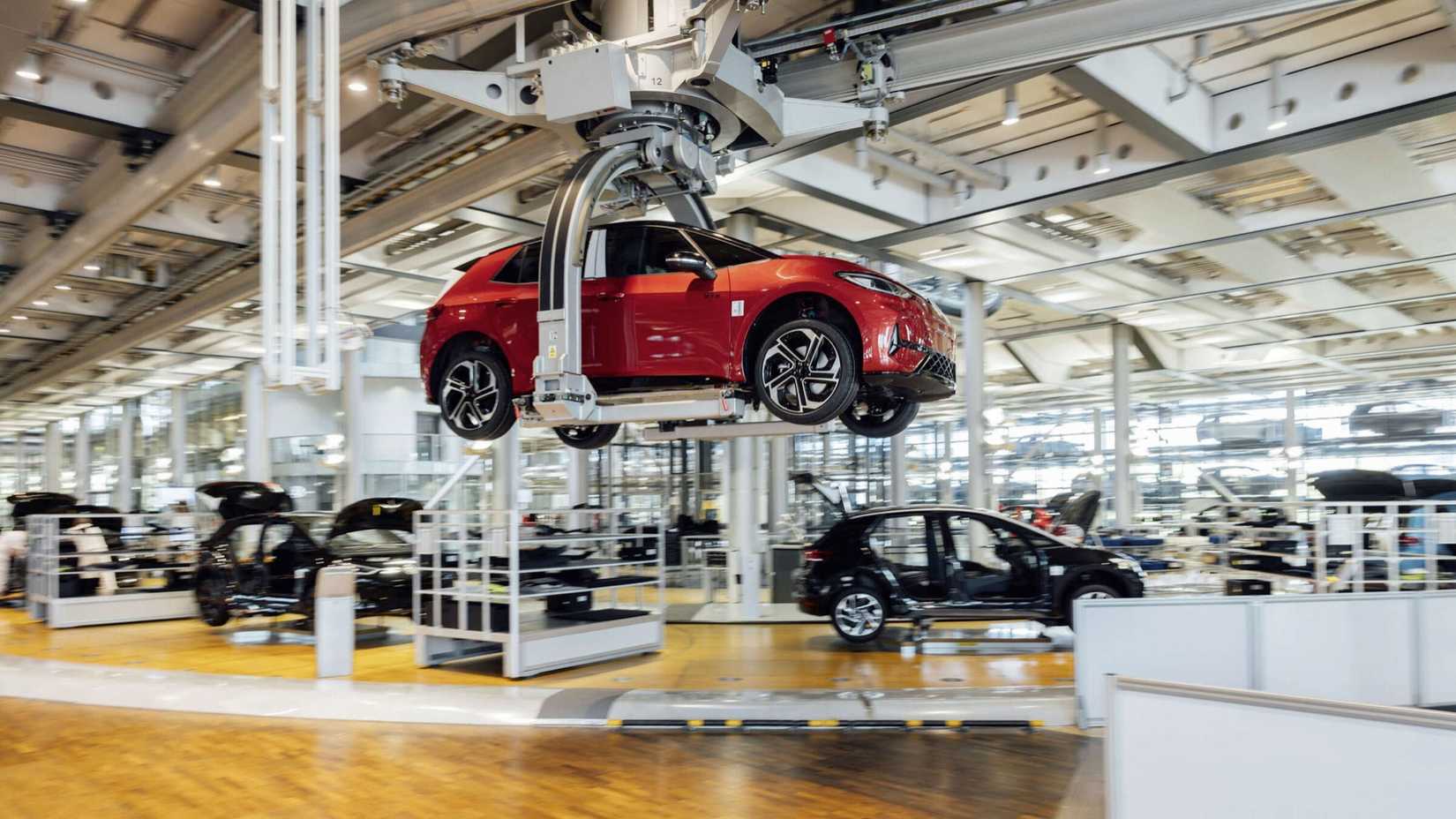
Speaking on a webinar hosted by the Automotive Press Association, Robinet said the industry has been “sitting on our hands since summer of 2024” after the second Trump administration took office in January. Before the election, automakers and suppliers knew that a new administration would change the balance of power, the economy, and the way automotive legislation was enacted, while setting new priorities. Since that time, automakers and suppliers have held back on many corporate initiatives, waiting to see how all the political wrangling shakes out.
“Well, here we are. We’re moving into summer of 2026, and it’s been 24 months, and we still have essentially the same level of uncertainty with respect to our trade relationship between US, Canada, Mexico.”
– Michael Robinet, VP of Forecasting at S&P Global Mobility
While he sees some certainty in the trade relationship with markets such as the European Union, Korea, the UK, or Japan, the most important trading partners for the US are Canada and Mexico, and progress toward a new deal has been slow. “So the lack of trade certainty and structure certainty is a major problem for our industry, and one that’s been hit by increased risk of all different types, whether it be supply risk or legislative risk, with respect to BEVs and hybrids and ICE, and a lot of stagnant and strained capital along the way.”
Hard To Invest After Big Losses With EVs
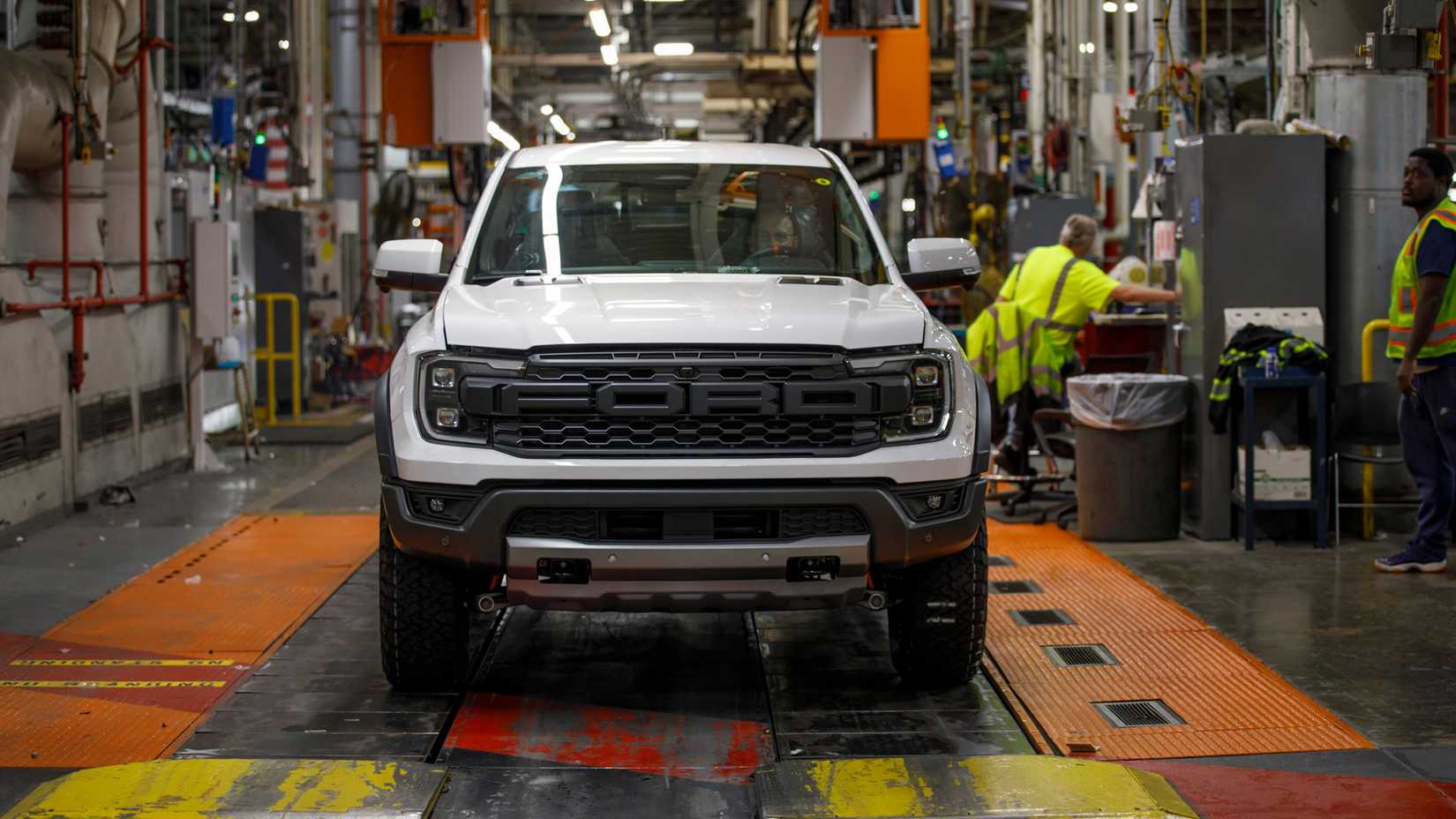
One result is that automakers are changing the lifespan of their vehicle programs, extending what may have been a five-year program to seven, eight, or nine years.
“Why are they doing that? Well, if there’s no legislation from an emissions perspective that says I need to lightweight my vehicle, then they’re not going to spend the money,” Robinet said. Instead, they’ll invest in a new top hat, interior features, autonomous capability, or software-defined vehicle content. He noted automakers “are in a capital light structure,” having written off billions of dollars invested in EVs.
Analysts Warn New Car Prices Could Get Even More Out Of Reach
The volatile political situation in America could bring further bad news for the price of new cars.
“Hybridization is the new lightweighting, at least within North America, for the next four to five years.”
– Michael Robinet
While automakers have hunkered down for two years, the malaise is apparent in vehicle production data, going back even further. In 2016, automakers in North America manufactured 17.8 million light vehicles as plants were running three shifts or three crews. “We were kind of hand-to-mouth on getting engines and transmissions to everybody, and boy, those were good days,” Robinet recalled. “And since then, it’s been a far cry.”
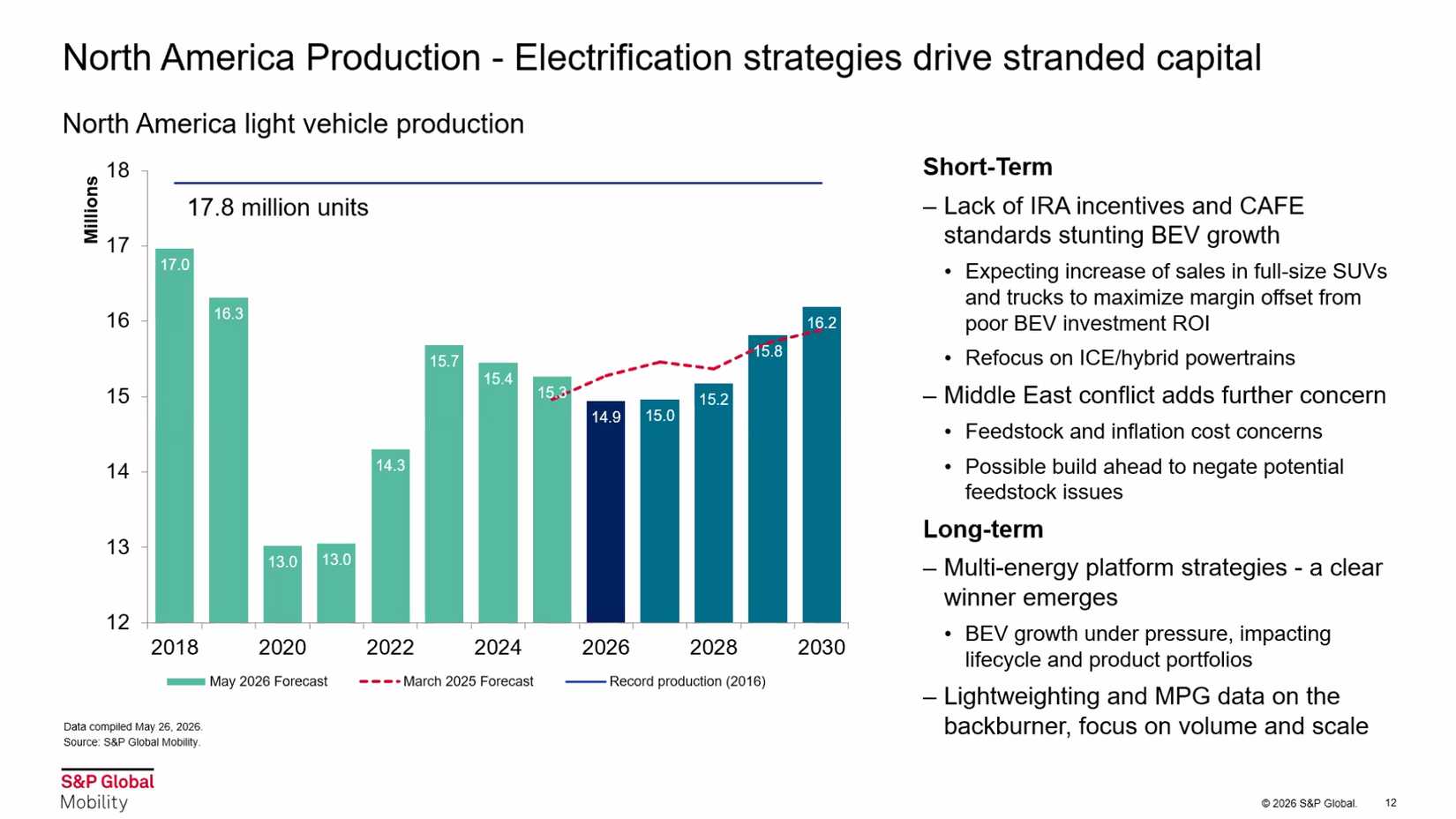
Production dropped to 13 million units in 2020 due to COVID, followed by chip shortages in 2021, followed by slow growth. “But it’s been basically three years of settling in around 15 (million units),” and S&P Global is forecasting slightly below 15 million units this year. And Robinet said that number will include about 200,000 vehicles originally slated for
2027 production but pulled ahead to this year due to concerns about fuel prices and the Iran War dragging on.
Relocating Lots Of Plants To US? That’s Unlikely
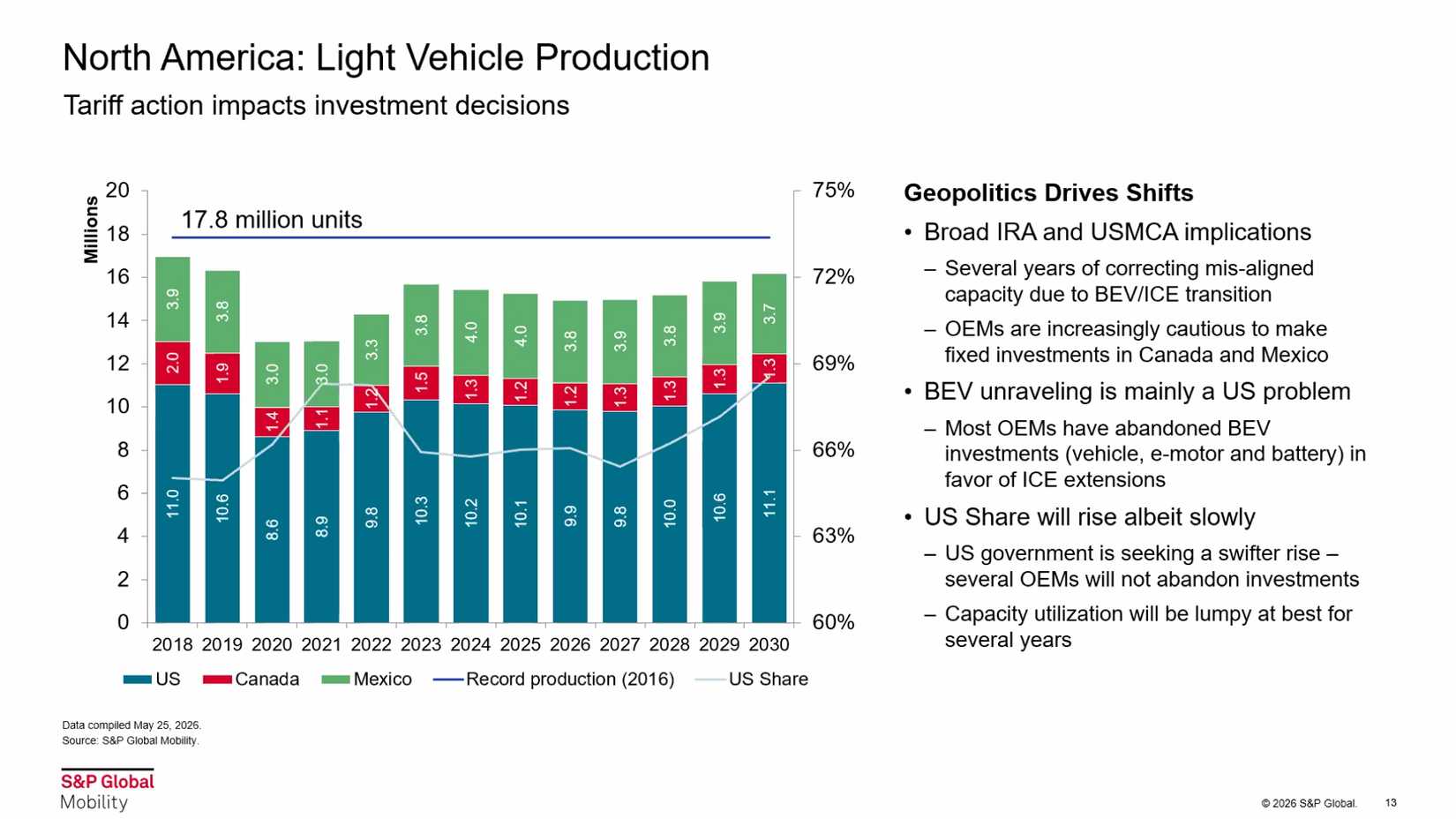
Robinet said stagnant production has also made it harder for automakers to invest in new US operations, despite urging from President Trump. “There’s not a lot of wiggle room for the OEMs to say, ‘Well, I’m going to relocate or I’m going to close a plant in either Mexico or Canada and open a brand-new plant in the United States,'” he said, noting that certain idle plants are being resurrected, as well as expansions announced by Volkswagen (Scout), Hyundai, and Toyota.

Automakers Warn ‘America First’ Could Kill The Last Cheap Cars We Have
Tariffs could force automakers to axe remaining affordable models like the Civic and Corolla.
“But in terms of expecting the Detroit 3 to locate a whole bunch of new facilities, we don’t feel that’s really in the cards,” opting instead to optimize their existing US footprint, Robinet said.
Lost in the political haze is a topic that is certainly not lost on shoppers: vehicle affordability. “2026 was supposed to be the year when we really looked at affordability, but along came the Iran conflict, along came continued tariff issues, and again that makes it super difficult to be able to do that,” Robinet said.
Source: S&P Global
Search
RECENT PRESS RELEASES
Related Post