Analysts Say AAPL May Underperform Other “Magnificent Seven” Stocks Through 2030
March 29, 2026
Current AAPL Performance vs. Magnificent Seven Peers
Recent Returns Snapshot
Apple’s role within the Magnificent Seven tech elite has shifted over the past year. The “Magnificent Seven” are seven large‑cap tech stocks that include Apple, Microsoft, Alphabet, Amazon, Meta Platforms, Nvidia, and Tesla, and together have driven a big portion of the S&P 500’s returns since 2023.
Market Cap & Valuation Dynamics
In recent market action, Apple’s stock has moved modestly compared to several peers. While Apple still trades near historically high levels, other members, particularly Nvidia and Alphabet, have shown stronger momentum, especially in AI‑driven growth sectors. Apple’s returns have lagged behind the best performers in the group, prompting analysts to question whether Apple can maintain leadership through 2030.
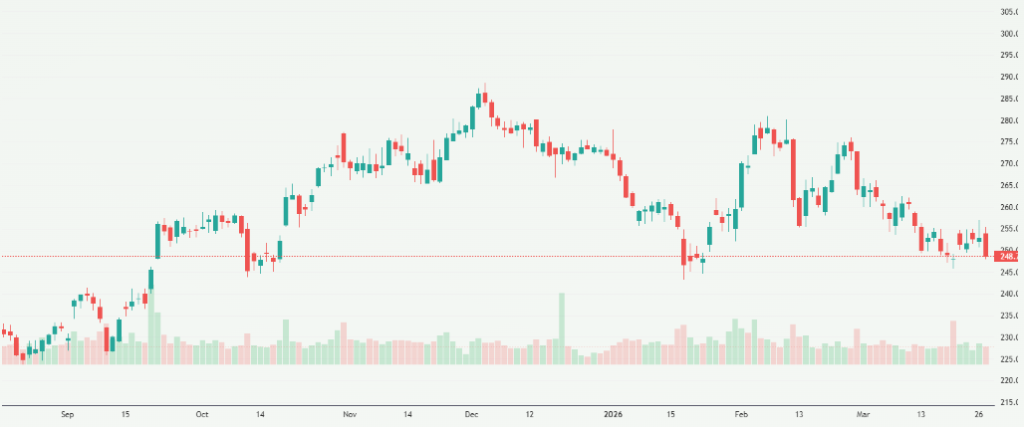
Furthermore, volatility in the broader tech sector has impacted the Magnificent Seven’s collective gains. In early 2026, major tech stocks showed a mixed performance compared with the S&P 500, highlighting that Apple’s relative strength has softened compared to recent years.
Analyst Expectations Through 2030
Analysts are increasingly debating Apple’s future relative to its tech peers. Some research warns that Apple could underperform many of the Magnificent Seven stocks between now and 2030 due to slower growth in AI, device innovation, and cloud services monetization. A recent commentary suggests investors should be cautious about relying on Apple as the top performer of the group through the next decade.
Product Cycle & Growth Catalysts
Apple’s strategy is evolving. According to a March 28, 2026, investment note, analysts see Apple widening its price tiers in smartphones and targeting broader consumer segments. This direction mirrors tactics used by competitors in previous cycles.
However, long‑term projections remain mixed. Some forecasting tools like Meyka’s AI‑assisted models project bullish performance by 2030, with potential upside if Apple continues to innovate and expand into services and AI‑enhanced products.
Why Might Apple Lag Behind?
A central concern is Apple’s relative pace of AI integration compared with peers such as Microsoft and Nvidia, where AI revenue and cloud spending are central to growth forecasts. Many Wall Street analysts believe these peers will harness AI infrastructure and software advantages that could outpace Apple’s hardware‑centric model.
Analysts also note that Apple’s iPhone sales cycles have matured. Growth is still strong, but it may not match the explosive growth trends seen in cloud, AI compute, and enterprise software services, trends that are boosting other Magnificent Seven stocks.
Risks That Could Affect AAPL’s Relative Performance
What Challenges Could Moderate Apple’s Return Compared to Peers?
Apple faces several industry and competitive pressures that could limit its outperformance:
- AI Integration and Revenue Timing: Apple’s AI initiatives are focused on on‑device features and distribution platforms rather than large‑scale cloud compute or infrastructure offerings. This focus could result in slower AI revenue compared with peers that monetize AI at scale.
- Product Lifecycle Dynamics: Apple’s iPhone and hardware cycles remain a key revenue driver. While this creates stability, it may limit growth potential compared to cloud and enterprise software revenue streams that expand more rapidly.
- Market Rotation and Valuation: Some analysts have argued that Apple’s high valuation relative to growth expectations makes it less attractive for further outperformance, especially if broader markets shift towards value‑oriented themes.
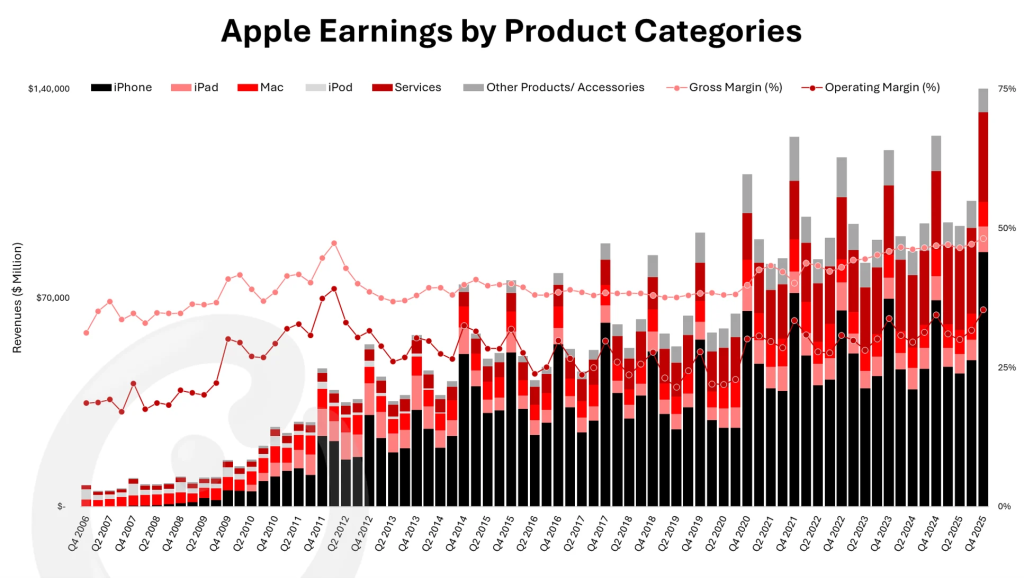
These risks are not unique to Apple, but they are significant when comparing the company’s position within the Magnificent Seven cohort.
AAPL Stock Details & Forecast – Based on Meyka & Other Analysts
AAPL Overview and Forecast
According to Meyka’s forecasting, Apple stock is projected to show moderate long‑term gains through 2030. While short‑term movement appears bearish with sideways consolidation, longer horizons indicate potential higher valuation points by 2030 if innovation and ecosystem expansion continue.
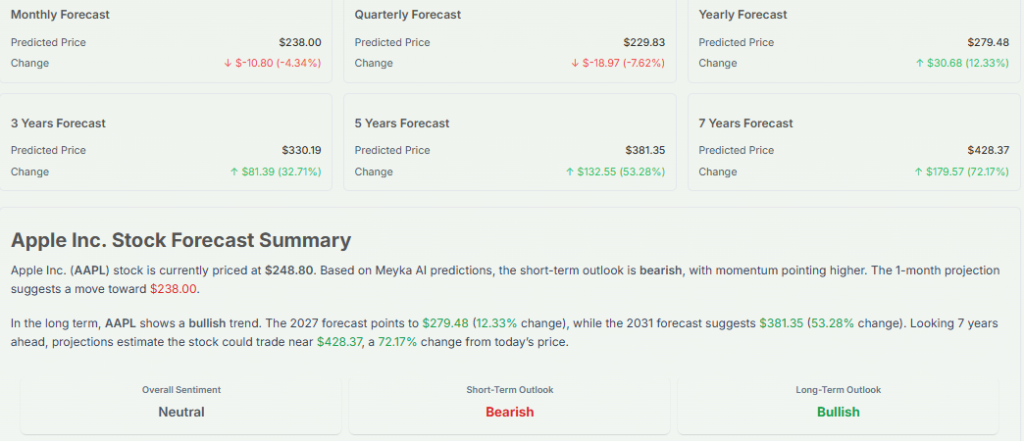
Meyka 2030 Forecast Highlights:
- Forecasted price near $381.35 by 2030, implying long‑term upside.
- Stock sentiment remains neutral overall, with mixed short‑term technicals.
Technical Analysis Summary – Meyka
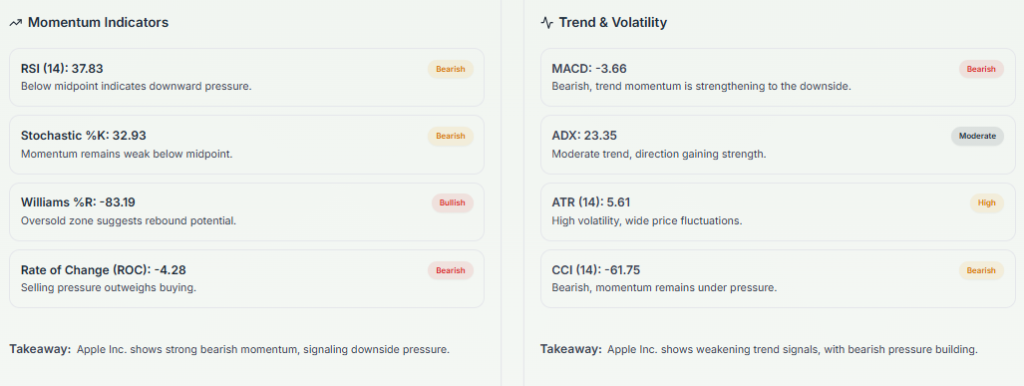
Meyka’s technical indicators show a stock currently under neutral to slightly bearish pressure, without clear dominance from buyers or sellers. Momentum oscillators like RSI and MACD lean toward weakness, and volatility remains moderate. This suggests consolidation rather than breakout strength for now.
Apple Performance: What does this mean for Investors?
Investors looking at Apple through the lens of the Magnificent Seven need to balance caution with the company’s proven strengths. Apple’s ecosystem, strong cash flows, and product appeal remain powerful advantages. At the same time, diversification within the tech sector may help investors position for growth trends driven by AI and cloud computing.
Key considerations include:
- Monitoring Apple’s progress in AI and services monetization.
- Tracking Magnificent Seven peers that may lead growth through cloud and software.
- Assessing portfolio exposure to sectors beyond traditional Big Tech.
Supporting Insights from Analysts
Market commentary shows mixed views on the Magnificent Seven outlook. Some notes argue that the group is broadening and evolving, while others caution that performance dominance may dim if AI spending inefficiencies and valuation risks persist.
Recent technical rotations and sector rebalancing have also highlighted that stock selection within the Magnificent Seven matters more than the group as a whole, especially as investors weigh growth opportunities outside traditional mega‑cap tech.
Apple remains a market leader, but analysts see it potentially trailing other Magnificent Seven stocks through 2030. Slower AI adoption, mature product cycles, and valuation pressures could limit its upside. Investors should balance Apple’s stability with higher-growth peers to capture long-term tech trends and diversify risk.
Frequently Asked Questions (FAQs)
Analysts note Apple’s growth is slower in AI and cloud areas, while peers drive earnings with new tech trends in 2026.
As of early 2026, several Magnificent Seven stocks gained more than Apple, showing mixed returns across tech giants.
Many experts call Apple a long‑term hold, but suggest balancing with growth stocks to reduce risk by 2030.
Disclaimer:
The content shared by Meyka AI PTY LTD is solely for research and informational purposes. Meyka is not a financial advisory service, and the information provided should not be considered investment or trading advice.
Search
RECENT PRESS RELEASES
Related Post