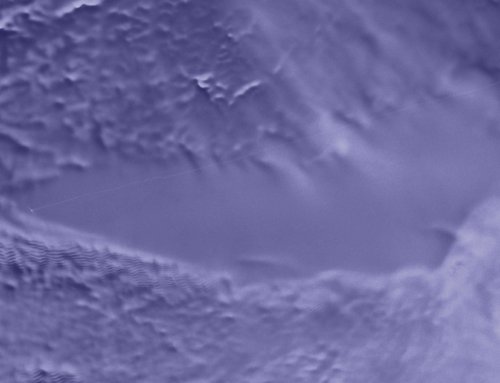
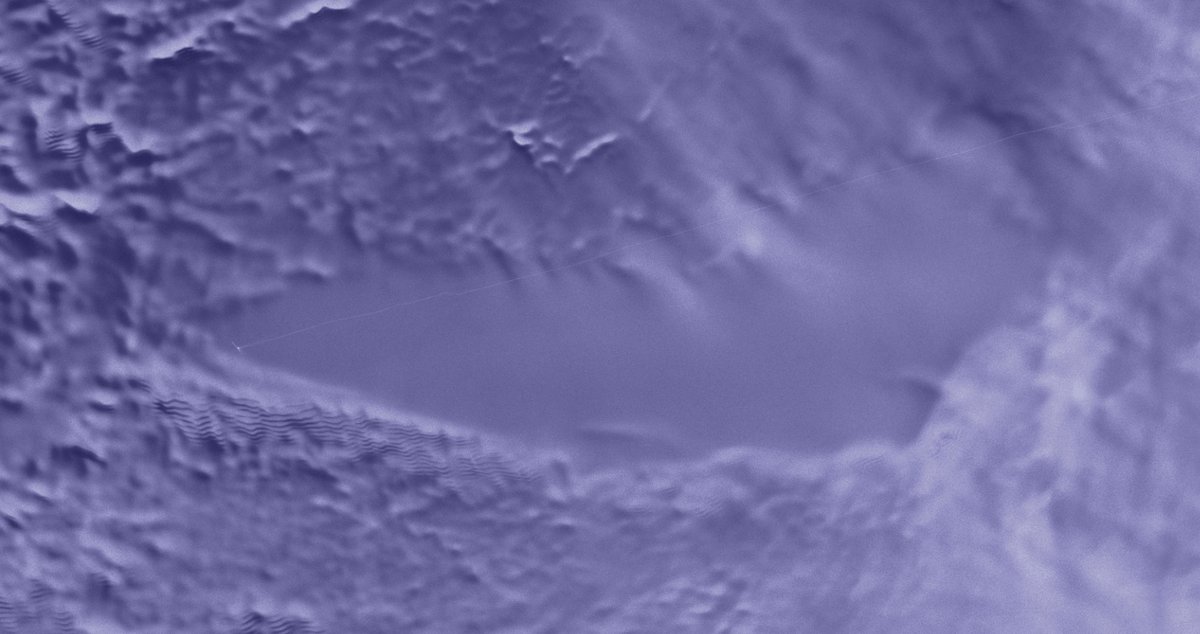
At a staggering 3500m below sea level, this frozen abyss is the deepest, darkest and least explored place on land…
May 17, 2026
The deepest place on Earth is the Marianas Trench. Far out in the Pacific Ocean, this 2550km long crescent-shaped canyon on the seabed falls, at its deepest, to a mind-boggling 11,000m below sea level.
But what about the deepest place on land? It’s tempting to plump for the Yarlung Tsangpo Grand Canyon in Tibet, which scars the Earth’s surface for over 500km. Carved by a river, the canyon has an impressive average depth of 2,268m but reaches a yawning maximum depth of 6,009m. However, for all of its mighty plunge from top to bottom, none of the canyon is below sea level.
To find the greatest and deepest canyon on land, we have to go to Antarctica. Buried beneath the 20km-wide Denman Glacier in Eastern Antarctica, scientists have discovered and measured the Denman Canyon or Valley, which is completely filled with solid ice built up over tens of thousands of years to a depth of 3500m below sea level. (The lowest exposed land is on the Dead Sea shore in Israel, Jordan and the Palestinian West Bank and descends just 413m below sea level.)
Of course, nobody has been down into the ice to measure the Denman Canyon. Instead, other methods have been deployed. Radar has been used to trace much of the bedrock beneath Antarctica’s ice but it isn’t accurate enough to explore the canyon’s depths.
Instead, in 2019, Dr Mathieu Morlighem, a glaciologist at the University of California, Irvine, used maths and physics to work out the depth of the ice. By calculating how much ice is entering the valley and how fast it is moving, he could determine the volume of the ice (a process he describes in a 2022 TED talk. He found that the shape of the bedrock beneath the ice holds clues as to how fast it melts.
With climate change, many of the world’s great glacial systems have begun to melt, some faster than others. The Denman Glacier is melting swiftly – NASA has found that is has retreated over 5km since 1996. This is worrying as it has been calculated that the mass of water held in the vast glacier is enough to raise global sea levels by 1.5m.
At the moment, meltwater from Denman is raising global sea levels by 0.33mm a year. It doesn’t sound much but over time it adds up and could accelerate. Therefore, scientists continually monitor the glacier. For instance, Dr Maria Costanza of the Australian Antarctic Program, has been using a geophysics technique called magnetotellurics. This allows her to study the Earth’s natural electric and magnetic fields to build a picture of what lies beneath the ice and help her understand the forces that are causing it to melt so rapidly.
It’s unlikely that many organisms can survive locked in the deep, dark ice of the Denman Canyon but in 2025 the Australian research vessel RSV Nuyina was able to examine life on the seafloor beneath the glacier’s edge or foot, a cold and dark region that had previously thought to be almost completely lifeless. Using a special trawling technique, the team collected many species of marine invertebrate, including starfish, sea cucumbers, molluscs and octopuses, including some new to science.
It’s clear that the Denman Glacier and the vast canyon beneath it still hold many secrets – secrets that we urgently need to understand in order to build a clearer picture of the threat of melting glaciers and what we can do to slow and even reverse the process.
And finally, how did the Denman Glacier get its name? It was named in 1912 in honour of the British aristocrat Lord Thomas Denman, who was Governor-General of Australia in 1911 when it was still a British colony. At the age of 36, he was the youngest person to ever hold the role and was patron of the 1911-1914 Australasian Antarctic Expedition when it discovered the glacier.
Search
RECENT PRESS RELEASES