At Carver Military Academy, students will help bring solar energy to campus
April 22, 2026


The two teens huddled around their science teacher, eyes wide as he held a tiny solar panel beneath a fluorescent lamp. As light glinted off the device, a miniature, solar-powered fan whirred to life.
“This mimics the heat of the sun, and we can use it to generate electricity,” said Jamiu Sokoya, a physics and environmental science teacher at Carver Military Academy.
The demonstration is just a small-scale preview of the project the students will tackle this summer.
Juniors LaShawn Jones, 16, and Sebastian Rojas, 17, have been selected for Carver’s first green jobs pathway program — a paid, two-month internship focused on installing solar panels at their high school. Alongside four other students, they’ll help design and build renewable energy systems on campus.
“It’s a great opportunity. Great experience,” Jones said. “I feel like not a lot of opportunities come up like this, around this area. It’s a blessing.”
The initiative is part of the Healthy Green Schools Pilot Program, which allocated $10 million for clean energy projects across Chicago Public Schools. It’s part of a broader push to modernize CPS’ aging infrastructure: The average building is more than 85 years old, and the district has a backlog of nearly $4 billion in critical repairs.

Carver serves about 400 mostly low-income students in the Riverdale neighborhood, abutting grassy, sloping wetlands on the Far South Side.
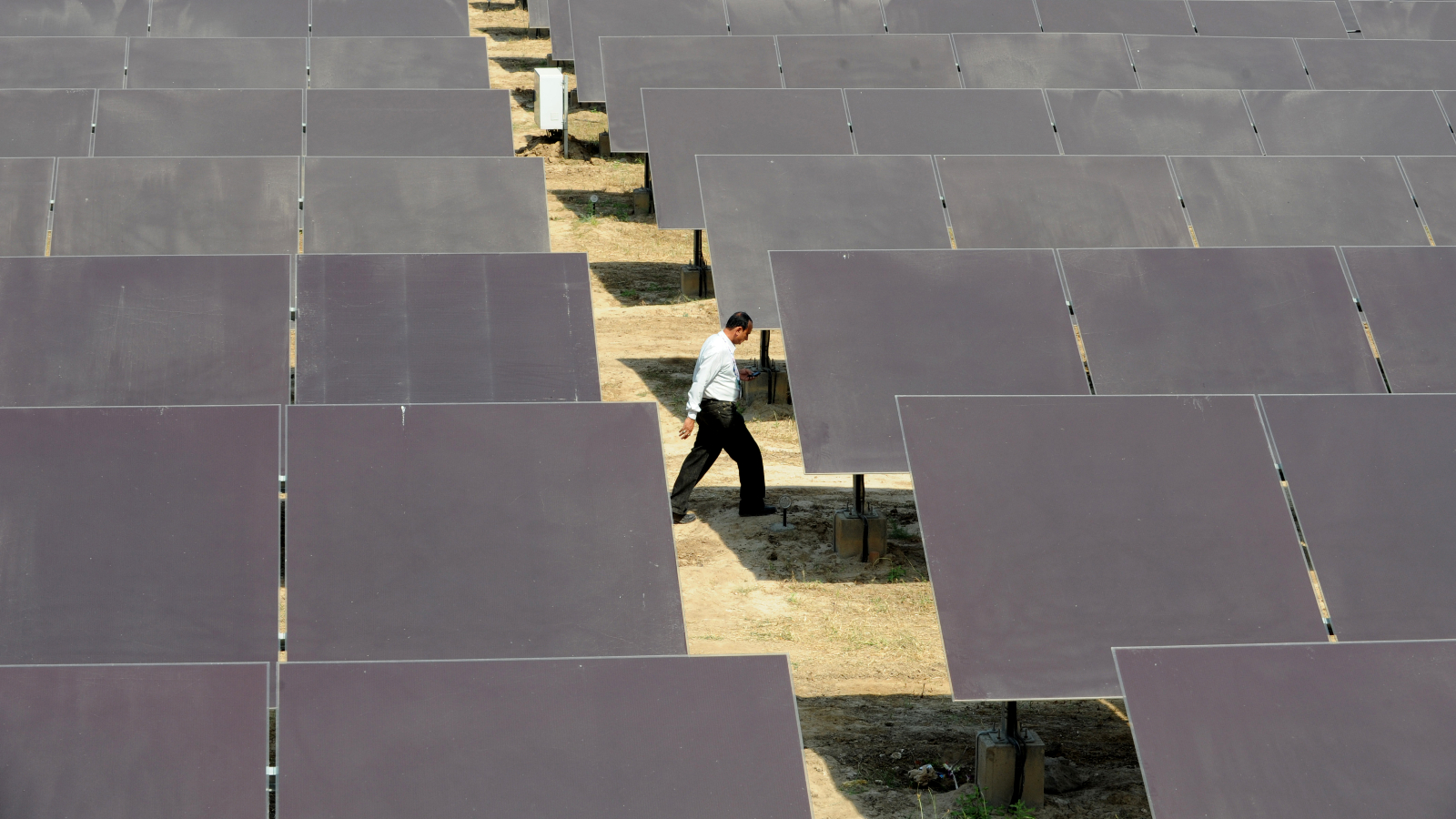
This summer, three additional schools on the South and Southwest sides will begin installing rooftop and ground solar systems, including Hubbard High School, Chicago High School for Agricutural Sciences and Pershing Elementary.
In his physics classroom earlier this week, Sokoya surveyed a row of cardboard houses, soon to be fitted with miniature solar panels. For five years, he’s had students build solar models as a class exercise. But he never expected full-scale green infrastructure to arrive at Carver.
Sokoya is a member of the Chicago Teachers Union Climate Justice Committee and helped advocate for sustainable facilities during contract negotiations last year.
“It’s a dream come true,” said Sokoya, a 26-year veteran of CPS. “Our students at Carver, they’re going to be benefitting, so that they can actually go and get a career in solar panel installation. That’s the exciting part for me.”
Though Sokoya won’t be directly involved with the project, he’ll informally mentor students while leading summer camps on campus. Jones and Rojas, who have become friends in physics class, were both eager to apply for the $20-an-hour jobs. The program is run by CPS; installation will be handled by a third-party contractor.
Jones, an aspiring HVAC technician, said their physics class “exploded” when they learned Carver would receive solar panels. “Then Mr. Sokoya told us the details of how big and serious it was going to be, and we ended up locking in,” he added.
Rojas has never had a summer job before, though he has long been drawn to construction. He enjoys hands-on work and hopes to pursue trade school after graduation.
“It’s a big opportunity,” he said. “It brings attention, resources and new ideas to our school, and it shows how we deserve investment and clean energy programs, just as anybody could.”

Carver opened in 1947, near a corridor of the Calumet River clustered with heavy industrial companies. Nearby facilities handle bulk materials such as metals, petroleum coke and cement, and have drawn scrutiny from regulators and community groups over their environmental impact.
Just half a mile away sits Altgeld Garden Homes, a sprawling public housing complex — often described as the birthplace of Chicago’s environmental rights movement. There, resident Hazel M. Johnson challenged the city’s housing authority to address poor water and air quality.
“We really feel that this project is a victory that is trying to build on that legacy of Black-led environmental justice organizing in this part of Chicago,” said Lauren Bianchi, CTU’s green schools organizer.
Living in a Far South Side ‘toxic doughnut,’ Hazel Johnson fought for environmental justice
CTU’s four-year, $1.5 billion contract, ratified last April, sets a goal to install solar panels and heat pumps at 30 schools. The contract also includes provisions such as requiring each school to receive a monthly summary of reported facilities’ concerns and expanded air-quality monitoring.
Two months later, the Chicago Board of Education unanimously passed a resolution launching the green schools pilot program, which aims to invest in at least 12 clean energy projects at neighborhood schools by the end of the fiscal year in June.
CPS faces a projected deficit of at least $520 million this budget season, forcing it to prioritize urgent repairs across its 803 buildings on 522 campuses. The annual cost to maintain the aging infrastructure has increased $100 million since 2019, while the district’s deferred maintenance now exceeds more than $14 billion.
That’s why green upgrades are all the more important, according to board member Anusha Thotakura, the resolution’s chief sponsor. She said the district now expects to complete only half of the amount of projects initially laid out in the resolution due to funding constraints.

“We have a lot of fiscal challenges. Being able to make clean, great investments upfront is going to save our district millions of dollars in the future,” said Thotakura, who represents District 6A. “We also have something that we project onto … What would it look like to expand solar to hundreds of CPS schools?”
Back in Carver’s physics classroom, Jones and Rojas listened as Sokoya prepared a lesson on magnets. The two said they are eager to apply their math and science skills through the summer. Earlier, Rojas had asked to read from a prepared note from his phone about green energy.
“Solar power is good for our future because it’s clean, it doesn’t run out and it helps cut down on pollution,” Rojas said in a measured voice. “It can lower energy costs and create new jobs, like the internship I applied for, and using solar energy now helps make the world safer and healthier for the next generation.”
More in Education


Search
RECENT PRESS RELEASES
Related Post