Atlanta’s Cherry Street Acquires 16 Operating Solar Sites, Expanding Its Renewable Power A
January 16, 2026
Want more tech stories in your inbox? Sign up for our newsletter to get the latest news from across the Southeast. Subscribe here.
Surging electricity demand from data centers, electric vehicles, and onshore manufacturing sites have brought big opportunities for Cherry Street, the Atlanta-based solar technology company that provides distributed power generation.
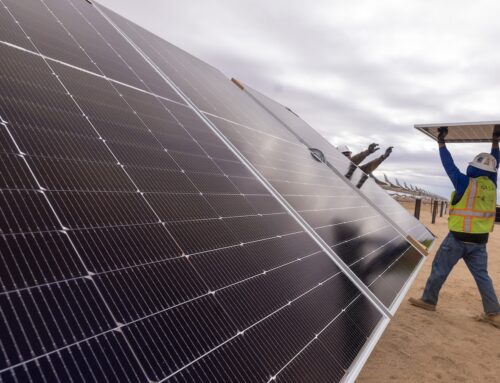
Cherry Street is primed to capitalize on those opportunities following a new acquisition of 16 operating distributed generation projects from fellow Atlanta company Inman Solar.
The acquisition, announced this week, brings an additional 12.7 megawatts of capacity across Georgia, Florida, Washington D.C., South Carolina, and Michigan under Cherry Street’s umbrella. This matters because that has the potential to power thousands of homes.
Most of the acquired projects are in the State of Georgia. Their energy and renewable attributes are sold to Georgia Power as part of the utility’s Georgia Public Service Commission approved solar programs, according to a company press release.
Financial information around the site acquisition were not disclosed, but the acquisition of the sites “present excellent opportunities for future battery storage integration, which will enhance their value to the grid and support the continued economic development across the Southeast,” Chanin added in a press statement.
The relationship between Cherry Street and Inman Solar goes back over a decade, CEO Michael Chanin told Hypepotamus, as the two grew and scaled in Atlanta’s renewable energy space. Dan Fossitt has served as Inman Solar’s President and CEO since 2009. The transaction proved mutually beneficial: Inman Solar is refocusing on its core EPC (Engineering, Procurement, Construction) services and development business, while Cherry Street expands its portfolio of long-term generating assets.
“We’re going to continue to need to expand the availability of reliable and affordable electricity, and so these solar fields are going to enable flexibility and durability in our system,” Chanin told Hypepotamus.

The State of Solar Energy
Early Cherry Street customers included municipalities and universities, schools, houses of worship, and hospital networks. The company has Emory University, the Atlanta Airport, Gulfstream, and Porsche as some of its clients. But recently, Chanin said that Cherry Street has been seeing more interest from industrial and manufacturing companies, particularly in the Southeast region.
“Historically, we would not have been able to be in a place to provide competitively priced electricity. Because of such material growth in the market, the supply and demand economics make our electricity very competitive,” Chanin said.
He added that he remains optimistic about the future of solar energy in the Southeast and its “ability to serve the communities where we are.”
“[In the Southeast] we have abundant and incredible natural resources from the sun,” he added. “[Solar power] technology has existed for quite a long time. It’s incredibly reliable and what it produces is very predictable.”
Related Stories
–
Featured photo from Unsplash
Search
RECENT PRESS RELEASES