Australia Power Grids Market: Renewable Integration, Grid Modernisation & the Future of En
November 30, 2025
According to IMARC Group, the Australia power grids market reached USD 7.00 Billion in 2024. It is expected to grow to USD 14.83 Billion by 2033, exhibiting a CAGR of 7.80% during 2025–2033. This growth highlights Australia’s accelerated push to modernise aging energy infrastructure, integrate large-scale renewable energy, and build a more resilient electricity system capable of supporting future electrification.
Why is the Australia Power Grids Market Growing?
Large-scale Renewable Integration Across the Country
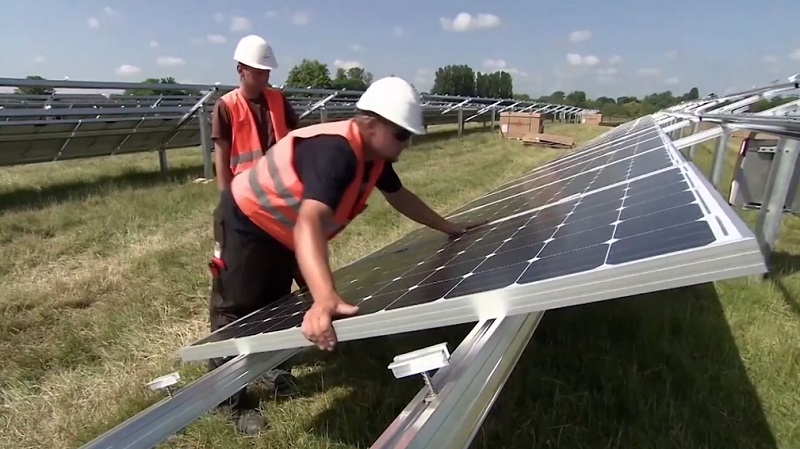
Australia is rapidly expanding its solar and wind capacity — with states such as NSW, Victoria, WA and SA increasing renewable penetration year after year. Integrating this variable energy into the grid requires significant upgrades: transmission lines, smart inverters, grid-forming technologies and battery storage. IMARC notes that renewable expansion is one of the biggest demand drivers for grid investment.
Aging Transmission & Distribution Infrastructure Needing Upgrades
Much of Australia’s grid infrastructure is decades old. As electricity demand grows — especially in urban corridors — utilities must replace outdated transmission lines, substations and control systems. These upgrades aim to reduce outages, boost reliability and ensure grid resilience against heatwaves, storms and increased energy loads.
Electrification of Transport, Homes & Industry
Electric vehicles (EVs), electric heating, industrial electrification and large-scale batteries increase electricity demand and complexity. Power grids must handle two-way flows of electricity — not only from large power stations but from rooftop solar, home batteries and EV charging networks. This drives investment in advanced transformers, digital monitoring and load-balancing technologies.
Government Policies & Renewable-Energy Zones (REZs)
Federal and state governments are funding transmission corridors, interconnectors and Renewable Energy Zones that require modernised, high-capacity grid links. These strategic zones are designed to connect massive renewable projects to consumers, creating stable long-term demand for grid expansion.
Digitalisation & Smart-Grid Technologies
Australia is adopting smart meters, AI-driven grid management, real-time monitoring and automated fault detection. These digital upgrades improve reliability, prevent blackouts and help operators respond quickly to supply-demand fluctuations. IMARC identifies digitalisation as a priority investment area.
Component Insights: Power Generation, Transmission Lines, Distribution Networks, Consumer Use
Energy Source Insights: Solar, Wind, Natural Gas, Coal, Others
Regional Insights: Australia Capital Territory & New South Wales, Victoria & Tasmania. Queensland, Northern Territory & Southern Australia, Western Australia
Key Players: Ausgrid, TransGrid, Powerlink Queensland, Western Power, ElectraNet, Endeavour Energy, Siemens Energy, GE Vernova, Schneider Electric
Recent News & Developments in the Australia Power Grids Market
May 2025: A major grid-upgrade program received over AUD 1 billion in new federal funding targeting transmission lines in Renewable Energy Zones across NSW and Victoria. Early project data showed improved renewable-connection capacity — a crucial step to reduce congestion and integrate more solar and wind output into the national grid.
August 2025: One of Australia’s leading energy operators deployed next-generation digital substations with AI-enabled predictive maintenance tools. Initial results showed a 17% reduction in outage frequency, showcasing how advanced monitoring and automation significantly boost reliability and efficiency across high-load regions.
October 2025: New interconnector expansion plans revealed Australia’s grid will see a 25% increase in transfer capability over the next five years. This is driven by rising renewable penetration and the need to move electricity between states more efficiently, improving both energy security and price stability for consumers.
Why Should You Know About the Australia Power Grids Market?
Because the grid is the backbone of Australia’s entire clean-energy transition. Without modernised transmission and distribution systems, renewable-energy growth stalls, electrification slows, and energy reliability suffers.
From USD 7.00 Billion in 2024 to USD 14.83 Billion by 2033, steady investment is reshaping the national power network — enabling everything from rooftop solar and battery storage to offshore wind and electric vehicles.
For policymakers and infrastructure planners, the grid determines the success of Australia’s energy transition.
For utilities and technology providers, it represents billions in opportunities across digital systems, hardware upgrades and renewable integration.
For households and businesses, a stronger grid means fewer outages, lower costs and faster access to clean electricity.
Search
RECENT PRESS RELEASES
Related Post