Automakers Are Investing In AI, But No One’s Seeing Any Benefit Yet
December 1, 2025
Happy Monday! It’s December 1, 2025, and this is The Morning Shift — your daily roundup of the top automotive headlines from around the world, in one place. This is where you’ll find the most important stories that are shaping the way Americans drive and get around.
In this morning’s edition, we’re looking at automakers’ enthusiasm for unproven AI, as well as the one nation on Earth that still likes Tesla. We’ll also look at Stellantis and Germany teaming up in favor of climate change, and European countries that want to shift their supply chains away from China.
1st Gear: Ford and Hyundai are hoping AI can improve car quality, somehow
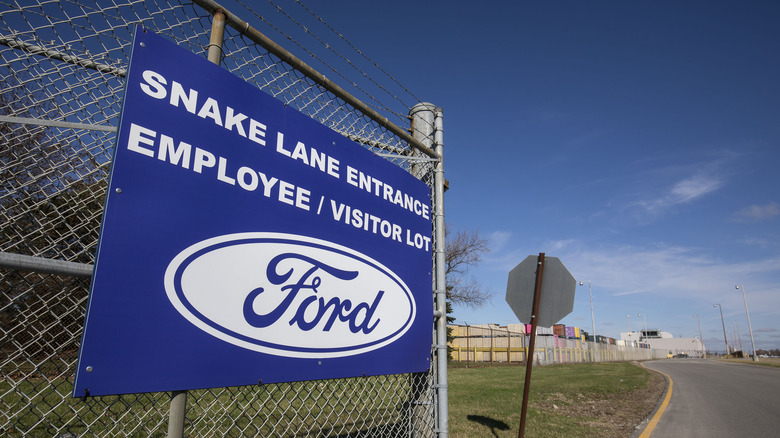 Bill Pugliano/Getty Images
Ford and Hyundai are investing in AI, but it’s not quite the ChatGPT we’re all used to. Instead, the automakers are hoping to use AI to up their quality, and reduce the amount they spend on recalls. From Automotive News:
Automakers are pouring billions into artificial intelligence-powered factory systems, promising better quality and fewer recalls, but the technology’s payoff remains unclear.
Ford and Hyundai have led the industry in deploying AI manufacturing systems, touting the technology’s potential to catch defects before vehicles reach customers. Improving quality and reducing recalls is of crucial importance for Ford. The Dearborn, Mich., automaker has already set a full-year U.S. recall record and is on pace to lead the industry in callbacks for the fourth time in five years.
The company reported spending $450 million on warranty expenses during the third quarter of this year. But Ford is looking to continue reducing the warranty costs and recall numbers and has touted AI as a potential solution.
“The goal is to design a product that can’t be installed wrong, that can’t go through the process incorrectly,” Jeff Tornabene, a technology manager for Ford’s Manufacturing Technology and Development Center, told Automotive News in a July 6 interview about the company’s AI systems.
Artificial intelligence, as we know it, is actually very good at pattern recognition — this is why it works well in the medical world, despite how terrible it is at generating text. That pattern recognition may well be useful in building cars, to determine if something went wrong with an established process (say, a tired worker sent a car through their station too quickly, without taking the time to properly fasten bolts) but it’s not likely to cure all recalls. Especially all of Ford’s recalls, of which there are many.
2nd Gear: Norway still loves Tesla
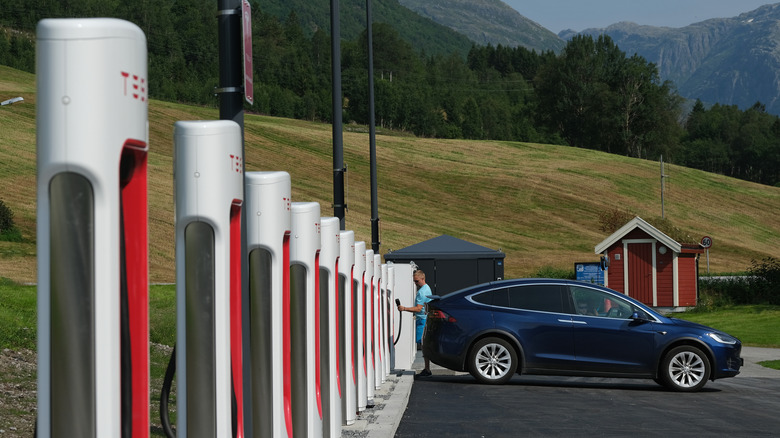 Sean Gallup/Getty Images
Pretty much every country on Earth has soundly rejected Tesla in recent months and years, with the automaker’s sales dwindling as its executive suite shifts focus from “updating its many-years-old vehicles” to “spreading white supremacist conspiracy theories on Twitter,” but there’s an exception: Norway, apparently, is pretty fine with suspensions as stiff as Elon’s right arm. From Reuters:
Tesla registrations in several key European markets plunged in November from a year earlier as the U.S. EV maker continued to struggle to stem market share losses despite rolling out new versions of its best-selling Model Y.
Norway however bucked the trend with record sales in the month. The country, Tesla’s first market outside of North America more than a decade ago, has been the company’s second biggest European market after Britain so far this year.
Monthly registrations, a proxy for sales, slumped by 58% in France to 1,593 vehicles sold, by 59% to 1,466 cars in Sweden, by 49% to 534
cars in Denmark, by 44% in the Netherlands to 1,627, and by 9% in Spain to 1,523, official data showed.But in Norway, they almost trebled to 6,215 cars, beating the country’s annual sales record with one month to spare.
Norway’s enthusiasm for Tesla cars is probably entirely unrelated to the fact that the United Nations has called the country out for racial prejudice. I assume these are just two facts that happen to both exist with absolutely zero connective tissue.
3rd Gear: Stellantis and Germany join the war on climate change, on the side of climate change
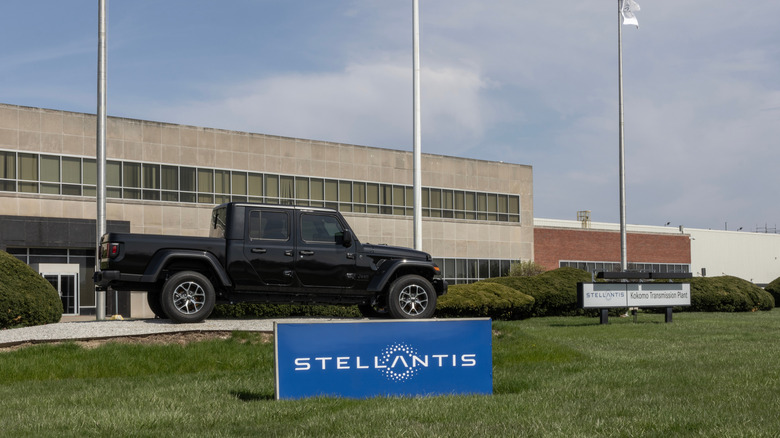 Jonathan Weiss/Shutterstock
Much of Germany’s economy comes from the country’s automaking endeavors. Much of Stellantis’ market cap is based on sales of Jeeps and Rams. The two are natural allies against causes like “breathable atmosphere on the only planet we know can sustain life,” because what’s a habitable biosphere matter when you could have quarterly profits? It makes perfect sense that, now, Germany and Stellantis have teamed up to push back against EU emissions regulations. From Reuters:
Stellantis Chief Executive Antonio Filosa on Monday welcomed Berlin’s call to soften European Union car emissions rules, saying Germany’s proposals aligned with industry demands to revive growth in the struggling sector.
The European Commission is due to unveil proposals for a package to support the auto sector on December 10, including for a review of carbon-emission targets amid mounting pressure from governments and manufacturers to be more flexible and allow plug-in hybrids and new fuel-powered cars beyond 2035.
“We welcome the German government’s support for revisions to the European regulations,” Filosa said in a statement, adding it built on auto lobby ACEA’s package of proposals, “all of which are urgently needed to return the European auto industry to growth”.
German Chancellor Friedrich Merz last week urged Brussels to allow exemptions for plug-in hybrids and highly efficient combustion engines, arguing that automakers need more flexibility as they battle slow electric-vehicle uptake and fierce competition from China.
4th Gear: European companies want to stop sourcing parts from China
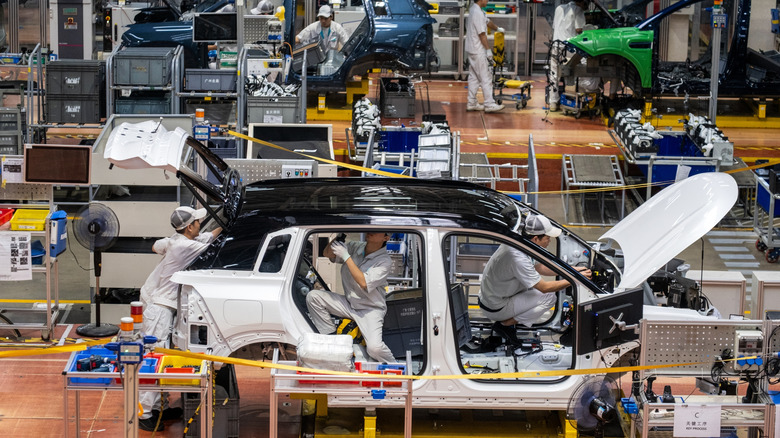 Ringo Chiu/Shutterstock
Recently, China locked down exports on chips from Nexperia, which sent automakers scrambling. Now those companies fear the Chinese government could do so again for other products, and they’re taking steps to avoid such problems in the future — mainly, by diversifying supply chains away from China. From Reuters:
China’s tightening export controls are pushing European firms to explore new supply chain capacity outside of the world’s second-largest economy, a European lobbying group said on Monday, seeking cover from the U.S.-China trade war.
The European Union Chamber of Commerce in China said one in three member companies was looking to shift sourcing away from China due to Beijing’s export control regime, with 40% of its flash survey’s respondents reporting that the commerce ministry is processing export licences more slowly than promised.
“China’s export controls have increased the uncertainty felt by European businesses operating in the country, with companies facing the risks of production slowdowns or even stoppages,” said Jens Eskelund, the chamber’s president.
The curbs have “added more pressure to a global trade system that was already under a great deal of stress,” he added.
Some 130 companies participated in the survey, the chamber said, which counts German automakers BMW and Volkswagen, Finnish telecommunications maker Nokia and French oil major TotalEnergies as members.
China has locked down exports on chips and magnets, but no one’s sure what comes next. Sounds like we’re in the age of just messing with international trade for no real reason, and hurting every nation in the process. I wonder what country started that.
Reverse: Rosa Parks wasn’t just tired
Everyone knows the elementary school version of the story, where Rosa Parks was tired and didn’t want to stand to make room for a white passenger. Parks was tired, yes, but not just physically — she was tired of Jim Crow laws, and had long been an activist against them. Civil rights groups in Alabama at the time had been looking for a flashpoint around which to act against bus segregation laws, and Parks was part of those discussions. She knew what she was doing, she knew her rights, and she knew her actions would lead to the Montgomery Bus Boycott. Do a bit of research into the civil disobedience that fueled the civil rights movement, and you’ll find a lot of it was more educated, more organized, and more planned than you were taught as a kid. It takes organization to change things. Get in touch with the organizations looking to change things around you.
On The Radio: DJ Shadow – ‘Nobody Speak’ feat. Run The Jewels
Picture this.
Search
RECENT PRESS RELEASES
Related Post





Comment(s)