Ayrshire energy research centre plans scaled back
March 6, 2026
Ayrshire energy research centre plans scaled back
 East Ayrshire Council
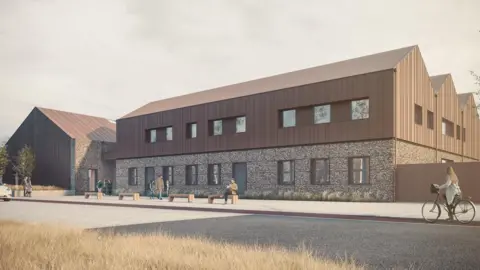
Plans for a major renewable energy research centre in East Ayrshire have been significantly scaled back, with councillors now being asked to approve a new multi-site training model instead of the original plan.
Funding slated for the Community Renewable Energy (CoRE) project will go towards meeting a potential £5m overspend at another Ayrshire Growth Deal project – the Ayrshire Innovation Park.
The park, at Moorfield in Kilmarnock, will include advanced manufacturing units and a food and drink centre of excellence.
However, it is expected to face an overspend due to inflation, ground conditions and additional infrastructure requirements, such as utilities and road networks.
Officials said the change to the CoRE project reflects rising construction costs and evolving demand from project partners.
When the project was first developed, it included proposals for a £16m Centre of Excellence in renewable energy at Knockroon near Cumnock.
It was intended to bring together researchers, businesses and students and then develop new energy technologies and solutions.
The facility was planned to include laboratories, research spaces and demonstrator homes to showcase low-carbon technologies and support innovation in renewable energy systems.
Council officers now propose replacing the single research hub with a multi-site vocational training academy focused on developing skills for the low-carbon economy rather than research.
Revised model for Cumnock energy centre
The revised model would deliver training across three locations – the Cumnock Juniors Community Enterprise, Emergency One in Cumnock and Skills and Learning 99 in Dalmellington.
The report states: “The combined impacts of the global pandemic, the cost-of-living crisis, supply-chain disruption and post-Brexit market pressures resulted in increased construction inflation and interest rates.
“These factors rendered the original building design financially unviable. In parallel, changes in working practices and delivery models meant the key project partner, the University of Strathclyde, no longer required physical occupancy within a standalone innovation facility.”
The report added that a multi-site approach would ensure “a wider geographical coverage of the thematic hubs as it now includes a facility in Dalmellington as well as Cumnock.”
Council officers say the new approach will support the wider aims of the project, such as helping communities transition to net zero and tackling fuel poverty, but at a lower cost and with a stronger focus on local job opportunities.
Search
RECENT PRESS RELEASES
Related Post