Behind CISCE with Jason: Inside a hardcore automobile manufacturer and its supplier networ
June 8, 2026
BEIJING, June 8, 2026 /PRNewswire/ — This is a report from China.org.cn
Video Link: https://youtu.be/9NLo7nKtGo8

The China International Supply Chain Expo, or CISCE, showcases not only finished products but also the networks of companies behind them. To understand how they all fit together, Jason traveled from exhibition booths to factories and test tracks, tracing the supplier network of one of China’s leading car manufacturers, Dongfeng.
His journey began at Dongfeng’s MHERO test track, where the MHERO II demonstrated its off-road capabilities by tackling steep inclines and deep water crossings. Beneath its rugged exterior lies a “cage armor” body structure, largely constructed from high-strength and ultra-high-strength steel supplied by the Baowu Steel Group. According to MHERO, the vehicle’s front roof beam can withstand more than 20 tons of pressure.
Later, Jason learned that strength alone is only part of the story. Thousands of components work together beneath the surface, including the insulated-gate bipolar transistor (IGBT) module. This automotive-grade power semiconductor is responsible for power conversion and energy management.
For years, such components were heavily dependent on imports. To strengthen domestic production, Dongfeng Motor and China Railway Rolling Stock Corp. (CRRC) established Intelligent Power Semiconductor Co. Ltd., a joint venture focused on automotive-grade power semiconductors. Drawing on expertise developed in China’s high-speed rail industry, the company now manufactures chips for the automotive sector. According to company representatives, the annual production capacity is around 700,000 units, with the potential to reach 900,000 units at peak output.
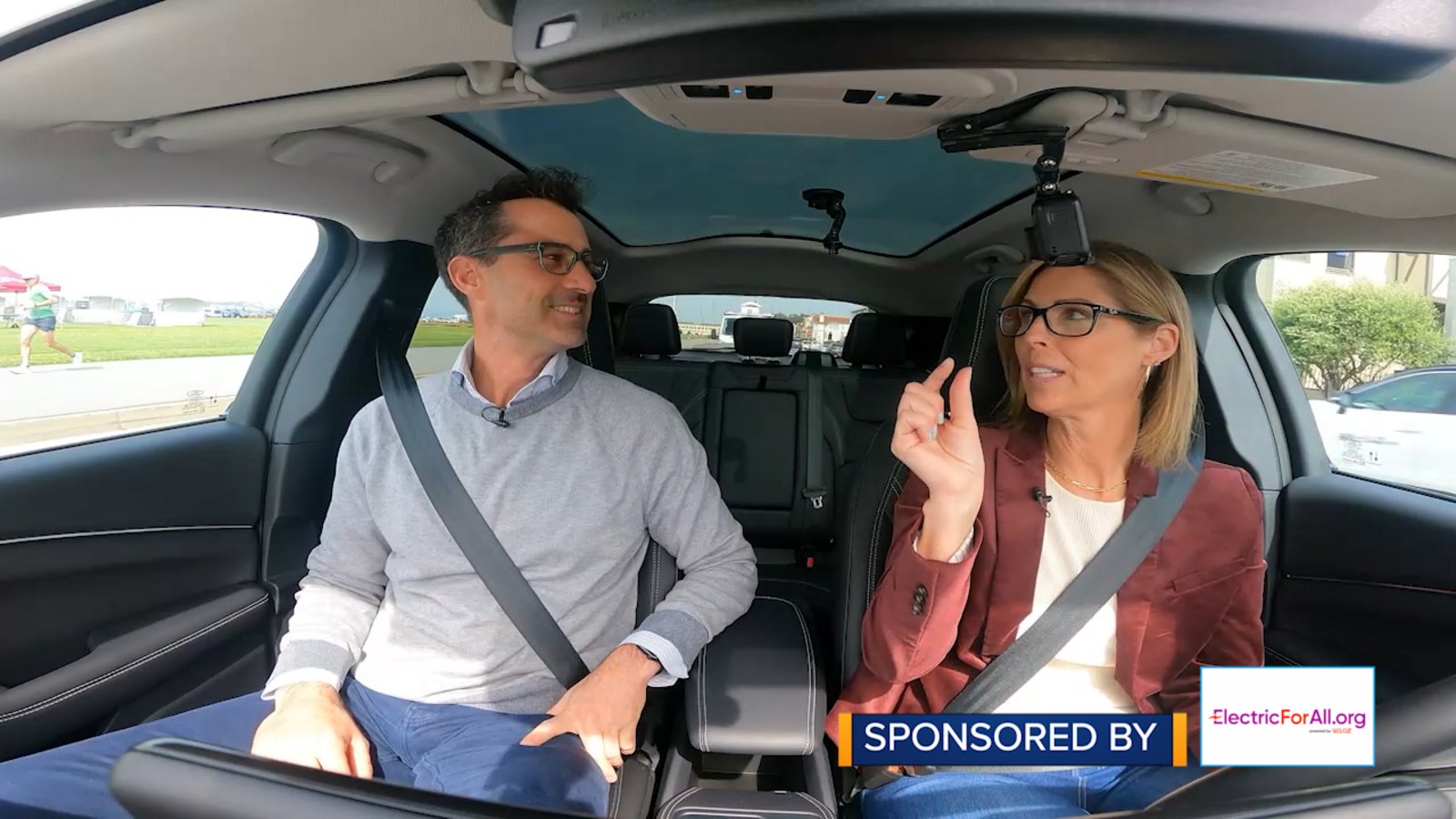
Next was the Voyah Dreamer, a premium electric MPV with advanced intelligent driving and voice interaction technologies. Jason adjusted the seats, controlled the cabin functions, and explored the vehicle’s AI-powered interface using simple voice commands. According to Voyah, the company is collaborating with technology partners, including iFlytek, to expand the capabilities of its in-car interaction system and offer a wider array of intelligent features in the future.
During the test drive, Jason experienced the Dreamer’s intelligent driving features, including automated lane changes and parking assistance. According to Voyah, the Dreamer is built on its Tianyuan intelligent driving architecture and incorporates technologies supplied by partners such as Bosch. The latter’s integrated power brake system (IPB) helps improve response times during intelligent driving operations.
The tour concluded at Voyah’s Huangjin Plant, where digital twin technology enables real-time monitoring of the manufacturing process. Jason watched robots perform tasks ranging from fastening chassis components to installing tires. Following a recent upgrade, the factory expects to produce one vehicle every 40 seconds. Before delivery, each vehicle undergoes automated inspections through a cloud-based testing system that requires minimal human intervention.
For Jason, the most striking takeaway was not any single vehicle or technology. It was the network behind them. Companies across the supply chain contribute specialized expertise, from steelmakers and chip manufacturers to software developers and intelligent-driving suppliers. The collaboration showcased at CISCE extends far beyond the exhibition floor and into the factories, laboratories, and production lines that power China’s automotive industry.
Behind CISCE with Jason: Inside a hardcore automobile manufacturer and its supplier network
http://www.china.org.cn/2026-06/08/content_118537206.shtml
SOURCE China.org.cn

Search
RECENT PRESS RELEASES
Related Post