Between the US and China, the battle of hydrocarbons versus electrons
January 3, 2026
Subscribers only
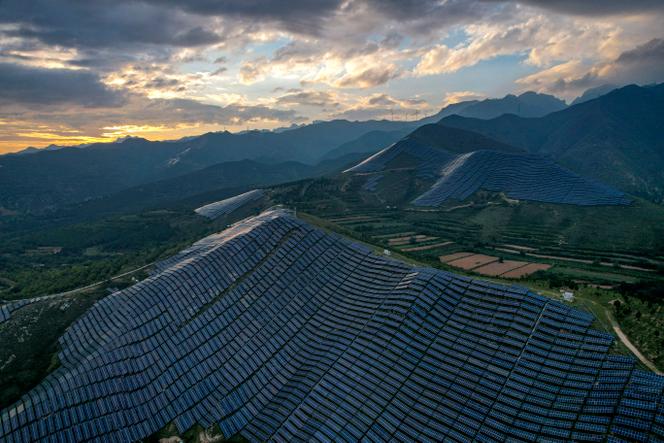
A new rivalry has emerged between Beijing and Washington: hydrocarbons versus electrons. The year 2025 marked the height of this energy divergence between the United States – the world’s leading producer of oil and gas – and China, sometimes dubbed the first true “electrostate” for its massive investments in clean technologies and the electrification of its economy.
On one side, Donald Trump’s America has approved a series of liquefied natural gas (LNG) export terminal projects, while opening up millions of square kilometers for drilling in the Gulf of Mexico, off the coasts of California and Alaska. As for renewable energy? “A green scam,” claimed the US president, who in recent months has cut dozens of subsidies and tax credits for the sector. At the end of December, his administration suspended five major offshore wind projects in the Atlantic, citing “national security risks.”
On the other side, China has taken a diametrically opposite path. Fossil fuels still play a dominant role there – coal, gas and oil continue to account for 80% of the country’s energy consumption. But renewables are expanding at a breakneck pace. For example, in just the first half of 2025, around 210 gigawatts (GW) of solar capacity were added – more than the entire solar capacity already installed in the US (about 153 GW). The previous year, $625 billion (€530 billion) was invested in clean technologies, nearly a third of the global total.
You have 80.77% of this article left to read. The rest is for subscribers only.
Subscribe now to read the full story. Already a subscriber ? Sign in
Card Apple Pay Google Pay
Search
RECENT PRESS RELEASES
Related Post