Cannabis Can Make You Remember Things That Never Happened
May 8, 2026

THC may not just erase memories. It can rewrite them.
Cannabis may do more than make memories fuzzy. It may actually change how memories are formed and recalled.
A new study from Washington State University found that people who consumed THC were more likely to report words they had never seen before and had difficulty with everyday memory tasks, such as remembering to do something later.
Cannabis and Memory Disruption
Published in the Journal of Psychopharmacology, the research offers one of the most detailed looks so far at how cannabis affects memory. The results suggest that cannabis can interfere with both basic recall, like remembering a list of words, and more complex forms of memory used in daily life. These include keeping track of conversations, remembering appointments, and identifying where information came from.
Researchers were also surprised to find little difference between participants who consumed 20 milligrams of THC and those who consumed 40 milligrams. This suggests that even moderate doses may significantly disrupt memory.
“Most previous studies have only looked at one or two types of memory, like recalling lists of words,” said Carrie Cuttler, senior author of the study and an associate professor of psychology at WSU. “This is the first study to comprehensively examine many different memory systems at once, and what we found is that acute cannabis intoxication appears to broadly disrupt most of them.”
Inside the Study Design
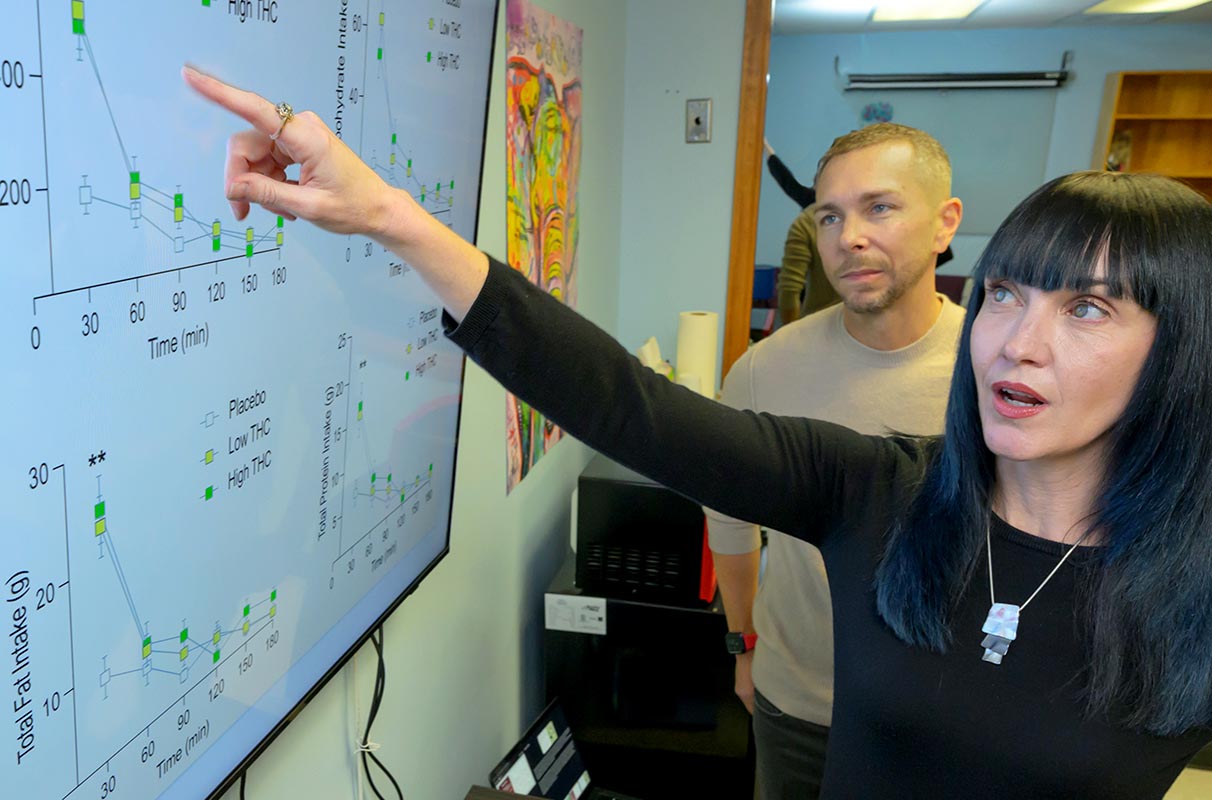
To investigate these effects, Cuttler and co-author Ryan McLaughlin, an associate professor in the Department of Integrative Physiology and Neuroscience at WSU, recruited 120 regular cannabis users. Participants were randomly assigned to vaporize placebo cannabis, 20 milligrams of THC, or 40 milligrams of THC in a double-blind experiment.
Afterward, participants completed about an hour of tests designed to measure different types of memory. These included verbal, visuospatial, prospective, source, false, episodic content, and temporal order memory.
Participants who used cannabis performed significantly worse than those in the placebo group on most measures. In total, cannabis affected the majority of the tests, with significant differences observed in 15 of the 21 measures.
THC Linked to False Memories
The most noticeable effects were seen in false memory and source memory, which help people accurately remember information and determine where it came from.
In one experiment, participants listened to lists of related words that shared a common theme, but the central word connecting them was never included. Later, those who had consumed cannabis were more likely to say they remembered hearing words that were never presented.
“I found it was really common for people to come up with words that were never on the list,” Cuttler said. “Sometimes they were related to the theme of the list, and sometimes they were completely unrelated.”
Researchers also found that cannabis users had more trouble identifying the source of information they had learned earlier. Problems with source memory can make it harder to tell whether something came from a reliable source, a conversation, or something seen online.
These types of memory errors could have real-world consequences in situations where accuracy matters, such as eyewitness interviews. In those cases, memory distortions or leading questions can shape how events are recalled.
Effects on Everyday Memory Tasks
The study also identified problems with prospective memory, which is the ability to remember to carry out tasks in the future. This includes everyday responsibilities like taking medication, attending meetings, or stopping at the store on the way home.
“These are things we rely on constantly in our day-to-day lives,” Cuttler said. “If you have something you need to remember to do later, you probably don’t want to be high at the time you need to remember to do it.”
One type of memory, episodic content memory, which involves recalling personal experiences, did not show a significant effect. Cuttler noted that more research is needed before drawing firm conclusions about that finding.
Growing Use and Ongoing Questions
The study comes at a time when cannabis use is becoming more common in states like Washington. Despite expanding legalization across North America, many of the short-term effects on thinking and memory are still not fully understood.
One reason is that cannabis remains classified as a Schedule I substance under federal law, which has limited research opportunities.
“We’re living in a state where cannabis use is very common, but there’s still a lot we don’t know about its acute effects,” Cuttler said. “The goal is to help people make informed decisions about the risks and benefits.”
Reference: “Mapping the acute effects of cannabis on multiple memory domains: A randomized, double-blind, placebo-controlled study” by Carrie Cuttler and Ryan J. McLaughlin, 24 February 2026, Journal of Psychopharmacology.
DOI: 10.1177/02698811261416079
Never miss a breakthrough: Join the SciTechDaily newsletter.
Follow us on Google and Google News.
Search
RECENT PRESS RELEASES
Related Post