Carroll leaders say solar is taking up farmland. Here’s what the numbers say.
January 13, 2026

After another Carroll County community solar project got its permit approved by the state last week, the county’s commissioners vowed to look into ways that the county can try to block solar projects from being built on farmland.
Maryland law prevents the county from blocking solar through local zoning laws — and solar projects in Carroll take up just a fraction of a percent of the county’s overall agricultural zoning district. But the commissioners remain firm that too many solar projects could shrink the supply of local farmland and impact the county’s food production.
“We need to come up with some other ideas … so that we can save some of our farmland,” Commissioner Susan Krebs said at the Thursday meeting. “It’s not just about use. It’s about farming. That’s why we do these things. It’s about having food and having farmland to be able to feed our people.”
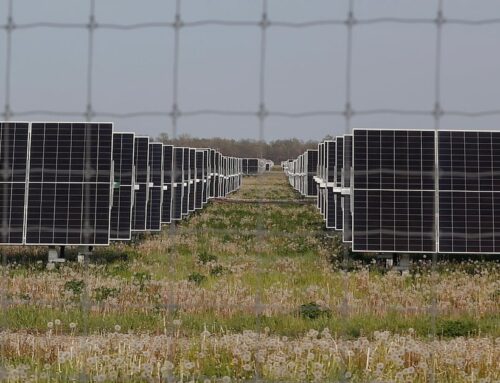
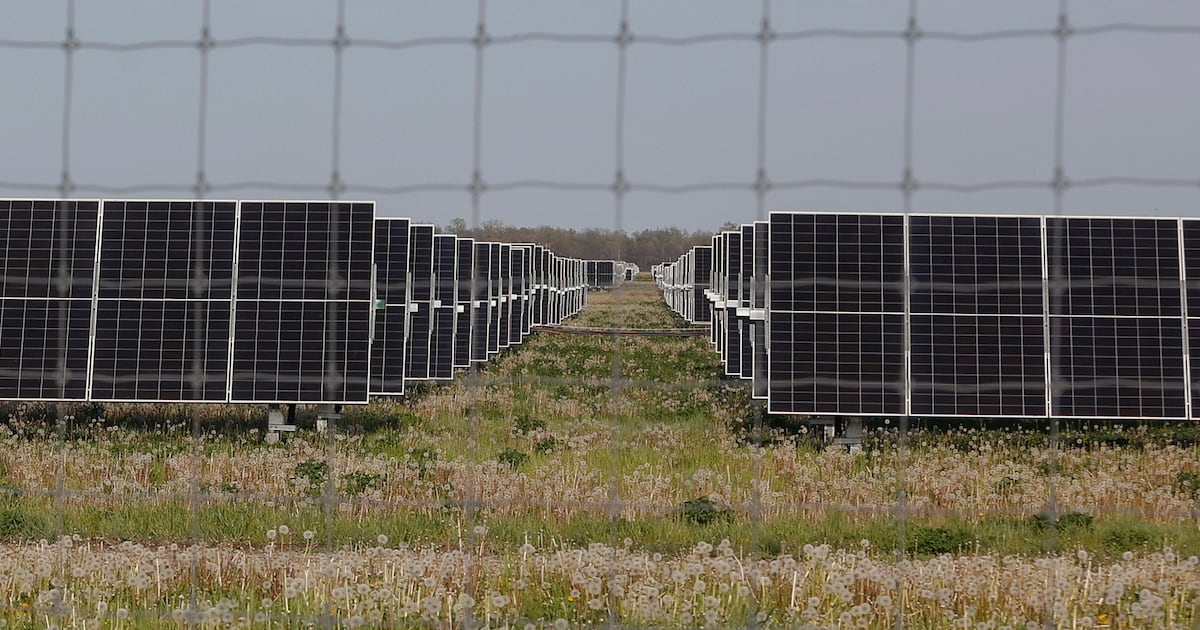
The project that received final approval for its permit last week, Elk Development’s Brown Road Solar farm in Taneytown, will take up about 20 acres in Carroll County’s agricultural zoning district. The state’s Public Service Commission has granted permits to four solar projects in the past four years, and is considering seven more.
If all of these projects are ultimately approved, they will take up about 264 acres of farmland, according to site plans submitted to the state. That’s about 0.002% of Carroll County’s total recorded farmland, which spans over 130,000 acres, and an even smaller slice of the 186,000 acres of land that the county has zoned for agriculture.
Some of these are built on “prime farmland” — a designation used by the U.S. Department of Agriculture for types of soil that are best suited for agriculture. While not every developer provides the exact number of acres of prime farmland that its project will cover, the 11 solar farms that are either approved or proposed in Carroll would cover at least 96 acres of prime farmland altogether.
Carroll ranks 11th for agricultural production of Maryland’s 23 counties, and contributes about 4% of the state’s agriculture sales, according to the U.S. Department of Agriculture’s 2022 census. The county had a GDP of about $7.8 billion in 2022, and generated about $138 million in agricultural sales.
Still, agriculture is central to the culture of Carroll County. The county leads Maryland with its Agricultural Preservation Program, under which the county government purchases land easements for parcels of farmland. Carroll has spent over $250 million to preserve over 81,000 acres of land over the past 40 years. No solar farms have been built on land that is under easement.
“I’m, I guess I’d use the word fascinated, by the state’s mindset on this in some ways,” Commissioner Tom Gordon said to Krebs. “We talk about food insecurity … and that crosses all sides of the political spectrum. But to your point, [the state is] eroding that.”
The state enacted the Renewable Energy Certainty Act in 2025, which prevents municipalities — including Carroll — from banning solar projects in any zoning district. Advocates for the law said it would help Maryland build more solar energy generating stations, which will provide power to fill the gap created by coal and nuclear plant retirements. While the Public Service Commission already had a history of approving solar projects on farmland, this law made it impossible to ban that.
Carroll’s commissioners said Thursday that they want to hold a work session in the coming weeks to take a closer look at their legal strategy for opposing solar farms.
“I think we should sit down and say, ‘Is there a way that we could better position ourselves doing some of these cases?’ [There are] possibly some ways,” Krebs said. “We need to figure out what, read the opinions with what the judges are saying.”
Have a news tip? Contact Lily Carey at LCarey@baltsun.com.
RevContent Feed
More in Politics


Search
RECENT PRESS RELEASES
Related Post