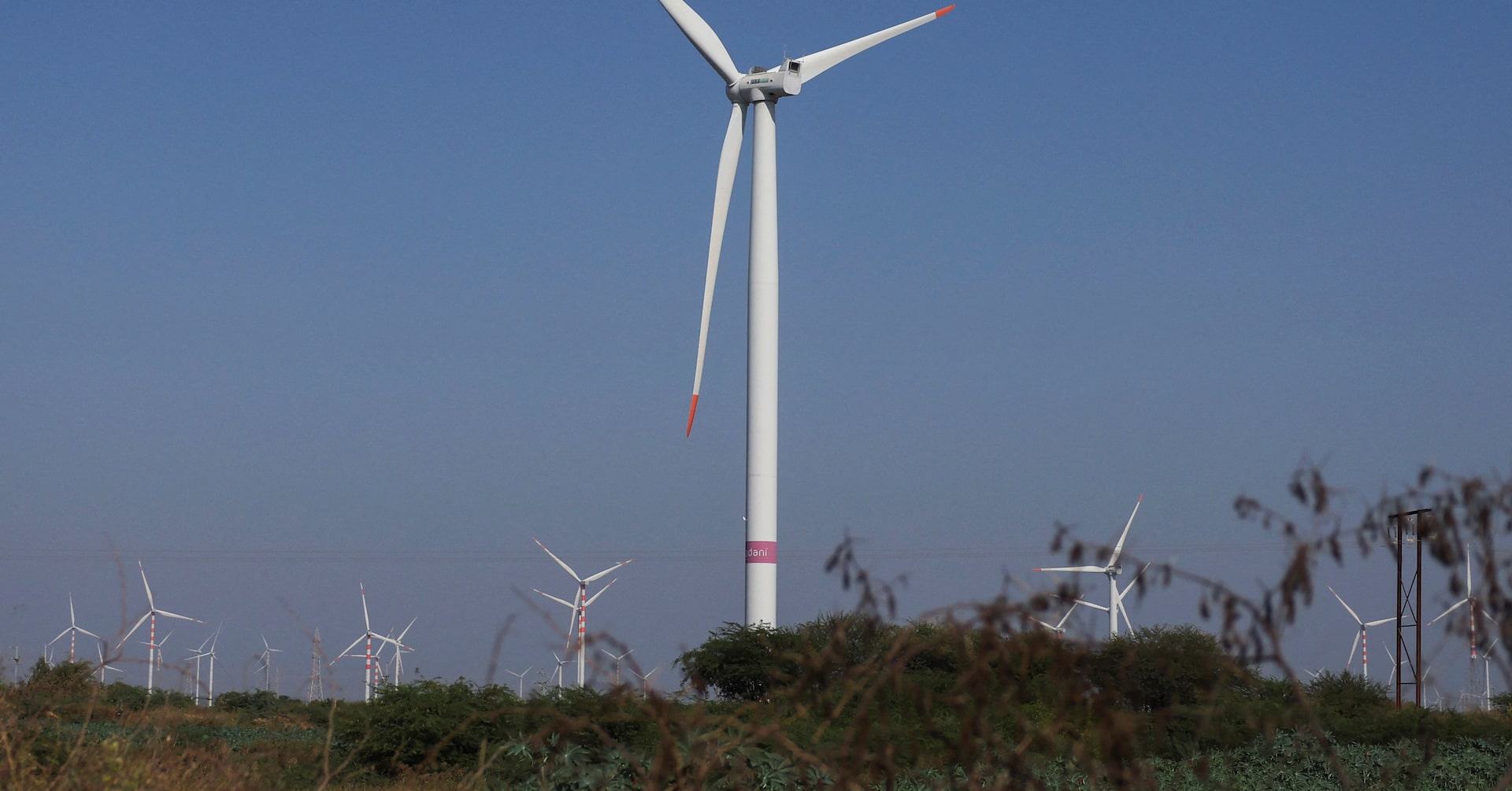
But, Fox adds, his office would have advised against accepting such a lucrative deal with Amazon at the start of a new administration because of the extensive business Bezos had before the federal government: “It just looks like it’s buying access and buying favor.” Amazon Web Services is a giant federal contractor supporting numerous government agencies including the Department of Defense, and Bezos’ aerospace company, Blue Origin, has NASA contracts worth billions of dollars.
A spokesperson for Amazon MGM Studios denied that the studio had any ulterior motives, telling Rolling Stone: “We licensed the film for one reason and one reason only — because we think customers are going to love it.”
“People were worked really hard. Really long hours, highly disorganized, very chaotic,” one person who worked on the set said. “It wasn’t easy money,” another added. “It was very difficult because of the chaos that was around everything. … Usually [for a documentary] it’s like, ‘Oh, follow the subject.’ Well, it’s Melania Trump. With the first lady and Secret Service, you can’t just do things you usually do.”
A full-time travel coordinator was brought on to deal with logistics issues that would invariably arise when, for example, members of the crew would board the Trump Organization’s Boeing 757 to film the first lady on a flight en route to Mar-a-Lago and end up without a ride home.
One person familiar estimated that some two-thirds of the crewmembers who worked on the film in New York had requested not to have their names formally credited on the film. A separate person who will be credited on the film said that, after experiencing the first year of Trump’s presidency, they now wish they had not put their name on it. “I’m much more alarmed now than I was a year ago,” that person said.
People who worked on the film said they had fewer problems working with Melania Trump herself, who was described as friendly and very engaged in the process, than they did with the film’s director, Brett Ratner. (“She was totally nice,” one person said. “She was the opposite of Brett Ratner.”)
Melania is the first movie Ratner — who is known for directing the Rush Hour movies and X-Men: The Last Stand — has made since he was publicly accused of sexual harassment and assault by six women in 2017.
Actress Natasha Henstridge told the Los Angeles Times Ratner forced her to perform oral sex on him when she was 19, while Olivia Munn recalled Ratner masturbating in front of her when she visited the set of one of his films as a young aspiring actress. Ratner denied the accusations and was never charged. More recently, a photograph of a shirtless Ratner with model scout and Epstein associate Jean-Luc Brunel appeared in the newly unclassified Epstein files. (On the day the Los Angeles Times’ investigation into Ratner was published, Epstein sent an email to his personal lawyer that reads “brett ratner now. Oy.”) Through an intermediary, Ratner denied ever meeting Epstein to Rolling Stone.
“I feel like a little bit uncomfortable with the propaganda element of this,” one member of the production team said, “But Brett Ratner was the worst part of working on this project.” That person said they weren’t aware Ratner’s involvement until just days before filming began, and they would not have accepted the job if they’d known.
Another confirmed: “There was more talk about Brett being slimy than there was about Melania.”
Ratner left a trail of detritus — discarded orange peels, gum wrappers — wherever he went on set. “He did actually chew a piece of gum and throw it in a coffee cup on my cart,” one said, [but] “didn’t acknowledge my existence for even one nanosecond.”
Another recalled a long day of filming during which the crew wasn’t allowed to break for meals, and no outside food was allowed to be brought into the space where filming was taking place. Everyone was starving. “Brett, unknowingly or maliciously, got his own food, went up there, was just eating it and just licking his fingers in grubbiest way possible, either being a dick or [having] no awareness whatsoever to the fact that everybody else is working and no one’s eating,” one person recalled.
A third person involved in the production defended Ratner, and praised his contributions. “He’s an intuitive, incredible, emotional, intelligent director, and you will see that on the screen,” this person said. “It’s not just a documentary, it’s a film — he’s a filmmaker that can go long shots, big shots. He sees everything from a different point of view [than a documentarian].”
It’s not clear how Trump and Ratner initially connected, but the director has become close with Trump and his wife: He is reportedly living in a villa at Mar-a-Lago and has continued to film the first lady after production of the documentary concluded.
A review of his political contributions indicates Ratner never donated to any of Trump’s three presidential campaigns. (To the contrary, records show multiple contributions to Hilllary Clinton during the 2016 race as well as gifts to Kamala Harris, when she was still a California senator.)
Despite the unfettered access to the first lady — described as extraordinary by people involved — and the exorbitant sums of money that went into the film, viewers shouldn’t expect huge revelations about the first lady, who has remained larger cipher despite decades in the spotlight. “Some people are boring,” one crewmember said. “Some people also never let their guard down.”
Amazon has declined to share the film ahead of its release. But, having spent $40 million to acquire the rights to film, the streamer is now spending an additional $35 million to promote it, according to Puck News, with a campaign that includes TV spots airing during NFL broadcasts and a takeover of the Las Vegas Sphere. Whether or not the studio’s investment will pay off in ways other than goodwill from the Trump administration remains to be seen.
Forecasts for how the film will perform vary: BoxOffice.com has predicted Melania could take in as little as $1 million its opening weekend, while National Research Group’s estimate pegs it around $5 million. But there are a few recent examples of films that cater to conservative audiences outperforming expectations: Dennis Quaid presidential biopic Reagan was panned by critics, but took in $30 million in 2024, and the similarly-pilloried Daily Wire-produced film Am I Racist?, brought in $12 million, making it the highest-grossing documentary that year.
“Unfortunately, if it does flop,” one member of the Melania production team said, “I would really feel great about it.”