China Isn’t Copying Cars Anymore—It’s Reinventing Them
May 17, 2026
In 2023, China’s mammoth automaker BYD unveiled the Yangwang U8, an SUV with four independent electric motors that can do a ‘tank turn’ and spin 360 degrees on itself. The Zeekr 001 FR, made by Geely, can do the same. Then, last year, the Yangwang U9 Xtreme reached 308 mph to become the world’s fastest road-legal production car, while the Xiaomi SU7 Ultra Prototype secured its place as the fastest four-door car on the planet by setting a lap record of 6 minutes 46.8 seconds around the famed Nürburgring Nordschleife in Germany. And these are just some of China’s achievements.
For decades, the global auto industry operated according to a familiar hierarchy. Germany built the best luxury cars, Japan built the most reliable cars, America dominated trucks and muscle cars, while the UK and the US defined automotive culture itself.
The biggest threat to established carmakers now is China
China, meanwhile, largely built copies. Not anymore. In 2026, the biggest threat facing the world’s carmakers is no longer Tesla. It is China itself.
Chinese automakers are rapidly transforming from low-cost manufacturers into global technology powerhouses, and the pace at which they are advancing is sending shockwaves through Detroit, Stuttgart, Tokyo and Seoul. Companies such as BYD, Xiaomi, XPeng, Geely, Chery and NIO are now producing electric vehicles that in many cases outperform Western rivals in software integration, battery technology, charging speeds and in-car artificial intelligence. And they also, in most cases, undercut their Western rivals in price.
That represents a dramatic upheaval of the car industry’s status quo.
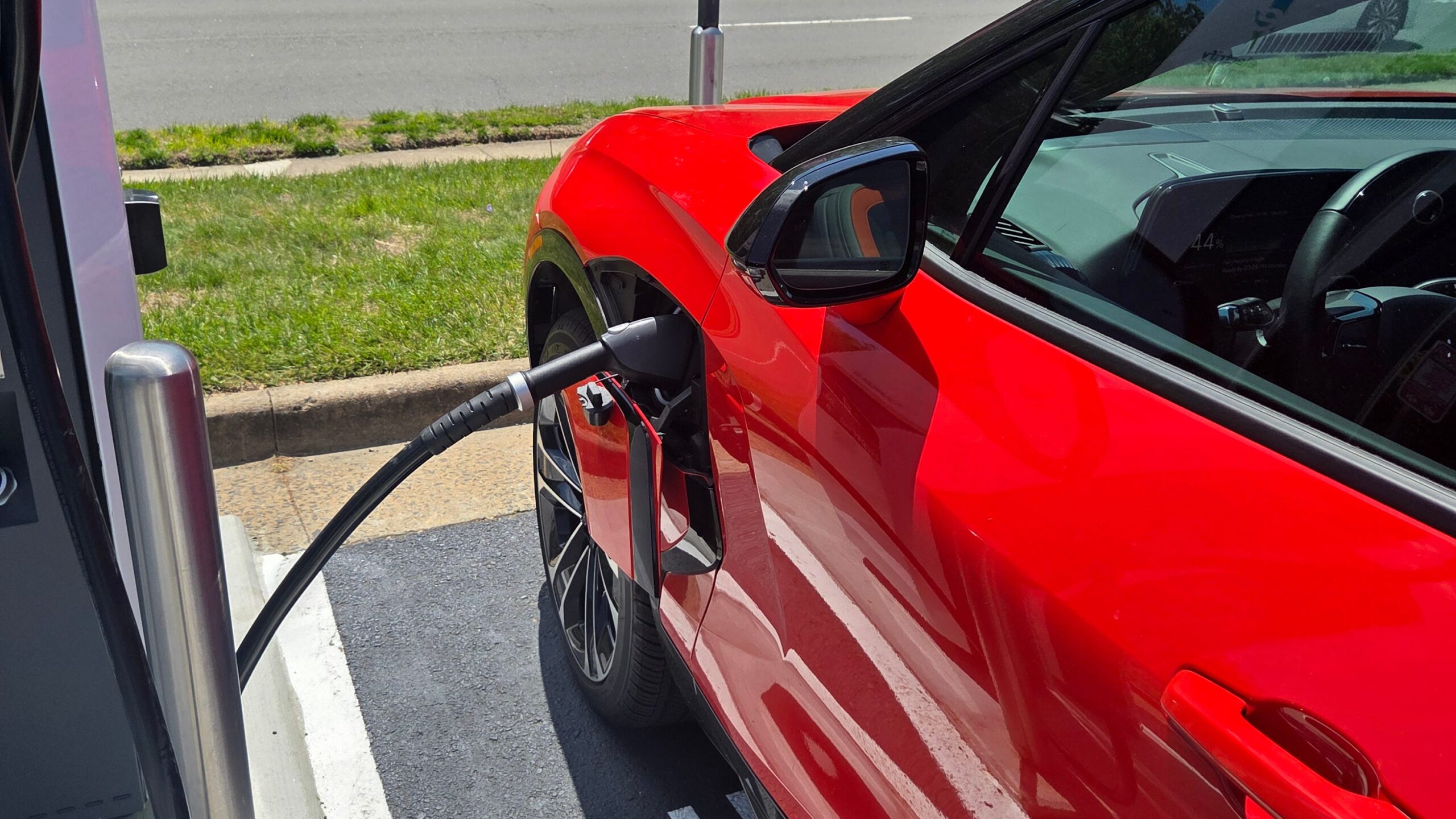
Only 15 years ago, Chinese cars were often criticized for poor quality, weak safety standards and uninspiring copycat design. Today, some Chinese EVs makers like BYD and Geely feature ultra-fast charging systems capable of adding hundreds of miles of range in minutes, advanced AI-powered voice assistants and sleek interiors that make many established automakers look outdated.
And unlike many Western rivals, Chinese companies are moving with extraordinary speed. Nissan’s Senior Vice President of design, Alfonso Albaisa, told me recently that the established carmakers, including Nissan, traditionally take 36-55 months to design and build a new car, depending on the car. In China today, some EV makers are doing that in just 24 months. They are redefining the landscape.”
At this year’s Auto Shanghai 2025 and Beijing Auto Show, Chinese automakers unveiled wave after wave of highly advanced vehicles while traditional manufacturers struggled to generate similar excitement. The mood inside the industry has shifted noticeably. China is no longer trying to catch up. It has already taken the lead in many respects, especially EV technological innovation and manufacturing.
For Tesla, the implications are enormous.
Tesla once dominated China’s EV market thanks to its Shanghai Gigafactory and strong brand appeal. But Chinese consumers are increasingly embracing domestic brands instead. Tesla’s sales momentum in China has weakened as local rivals, like BYD, introduce more affordable models with fresher styling and more advanced infotainment systems.Tesla’s share of the Chinese new-energy vehicle (NEV) market has dropped to approximately 3%, down from roughly 8% at the end of last year.
In some areas, Chinese automakers are now moving faster than Tesla itself.
The rise of Chinese EVs also helps explain why governments in Europe and North America are becoming increasingly nervous. The United States has already moved aggressively to limit Chinese EV imports through tariffs and trade restrictions, while Europe is debating similar protective measures. Chinese EV imports into America currently face tariffs of 125%, effectively excluding them from the US market.
The fear is not simply that China could sell cheap electric cars overseas. The fear is that China could dominate the future of mobility altogether.
China also controls the battery supply chain
Chinese firms now control large portions of the global battery supply chain, from mining and refining to battery-cell production itself. Chinese companies such as Contemporary Amperex Technology Co. Limited—better known as CATL—have become critical suppliers to the global industry. China also holds major advantages in rare-earth processing and EV component manufacturing. The country is essentially the only large-scale producer and processor of heavy rare-earth elements, such as dysprosium and terbium, which are critical for building high-power, high-torque EV motors.
This increasingly resembles what Japan accomplished in consumer electronics during the 1970s and 1980s—but on a much larger scale.
The difference is that cars are far more economically and politically important than televisions or cassette players ever were.
Millions of jobs across the United States, Germany and Japan depend directly or indirectly on the automotive sector. Entire industrial regions were built around established automakers like Toyota and Volkswagen. If Chinese manufacturers begin dominating global EV markets in the same way Japanese companies once dominated consumer electronics, the consequences could reshape economies.
Traditional automakers are already scrambling to respond.
Toyota has doubled down on hybrids rather than committing fully to battery-electric vehicles, believing many consumers still prefer gasoline-electric flexibility and no range anxiety. German luxury brands are rapidly accelerating software development and EV rollouts, while American companies are investing billions into battery plants and domestic EV production.
But there is growing evidence that China’s advantage may no longer be limited to manufacturing scale or low labor costs. Increasingly, the advantage appears technological.
Many Chinese EVs now function more like smartphones on wheels than traditional cars. Advanced AI systems, facial recognition, over-the-air software updates and integrated digital ecosystems are becoming standard features. Some younger consumers are now choosing Chinese vehicles for the same reason buyers once chose Japanese electronics: they simply feel more modern.
That may ultimately be the most dangerous development of all for established automakers.
Brand loyalty in the auto industry traditionally lasted generations. But technology industries move differently. Consumers quickly abandon older platforms once newer, more user-friendly ecosystems emerge.
That is precisely what Detroit, Germany and Japan now risk facing.
None of this means established carmakers are doomed. Established brands still possess enormous strengths, including global dealer networks, engineering expertise, manufacturing experience and decades of consumer trust.
But for the first time in modern automotive history, the industry’s center of gravity appears to be China-bound at breathtaking speed.
The global car industry spent years worrying about Tesla disrupting the market. It may now discover that China represents a far larger—and far more permanent—challenge.
Search
RECENT PRESS RELEASES
Related Post