Chinese Electrotech is the Big Winner in the Iran War
April 14, 2026
An energy-hungry world is being pushed away by America and into China’s arms
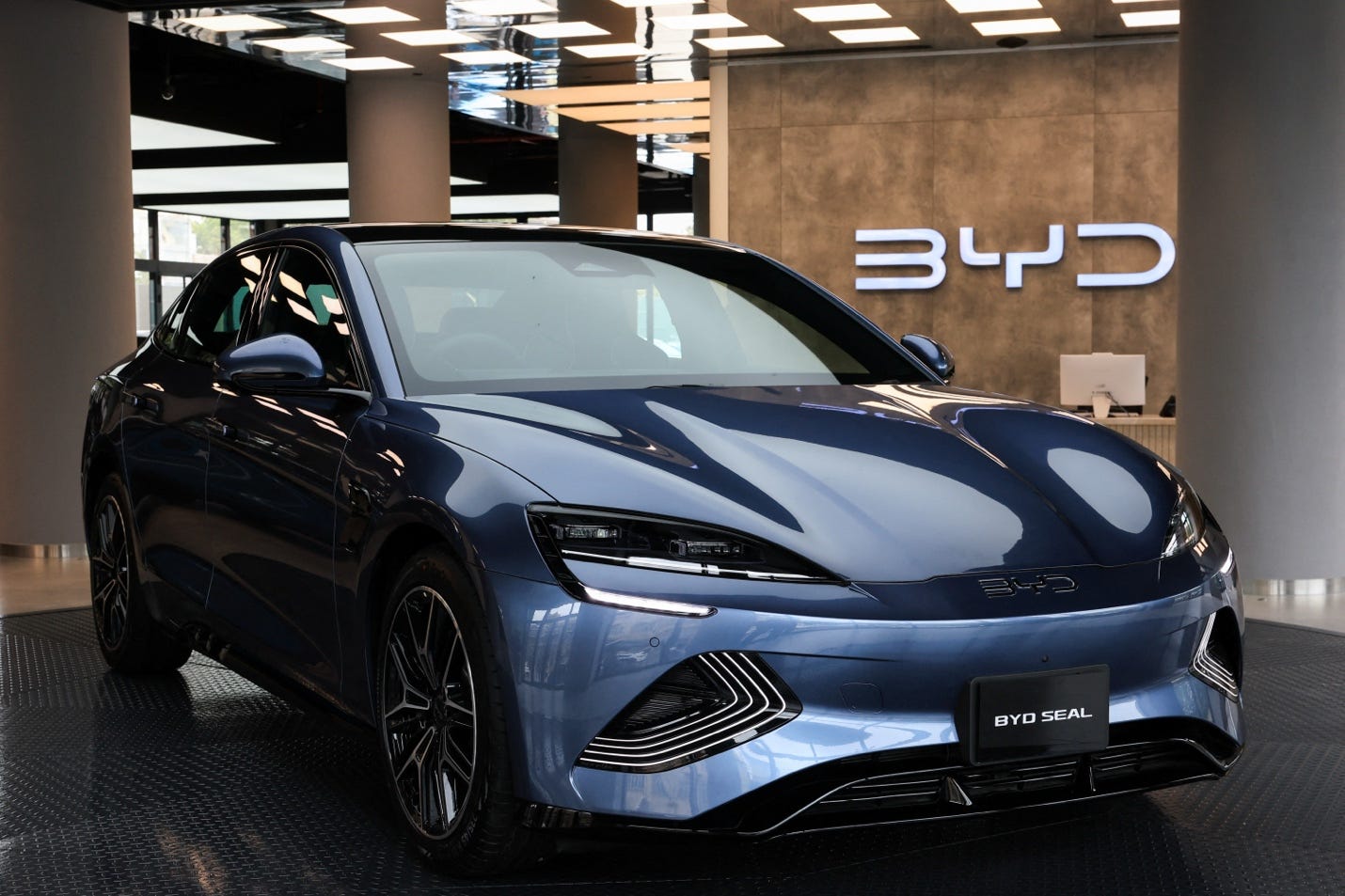
Donald Trump wants to stop the renewable energy revolution. But he can’t — it will continue to advance around the world because the economics and the science are compelling. Trump can, however, ensure that the revolution passes us by. And the big geopolitical winner from Trump’s hostility to the energy revolution will be China, which dominates the production of renewable-energy infrastructure.
Furthermore, the China-led energy future will arrive ahead of schedule thanks to the debacle in Iran.
Soaring oil and gas prices, combined with the threat of shortages, have driven home the riskiness of relying on fossil fuels. The New York Times had a striking graphic about electricity prices in Europe:
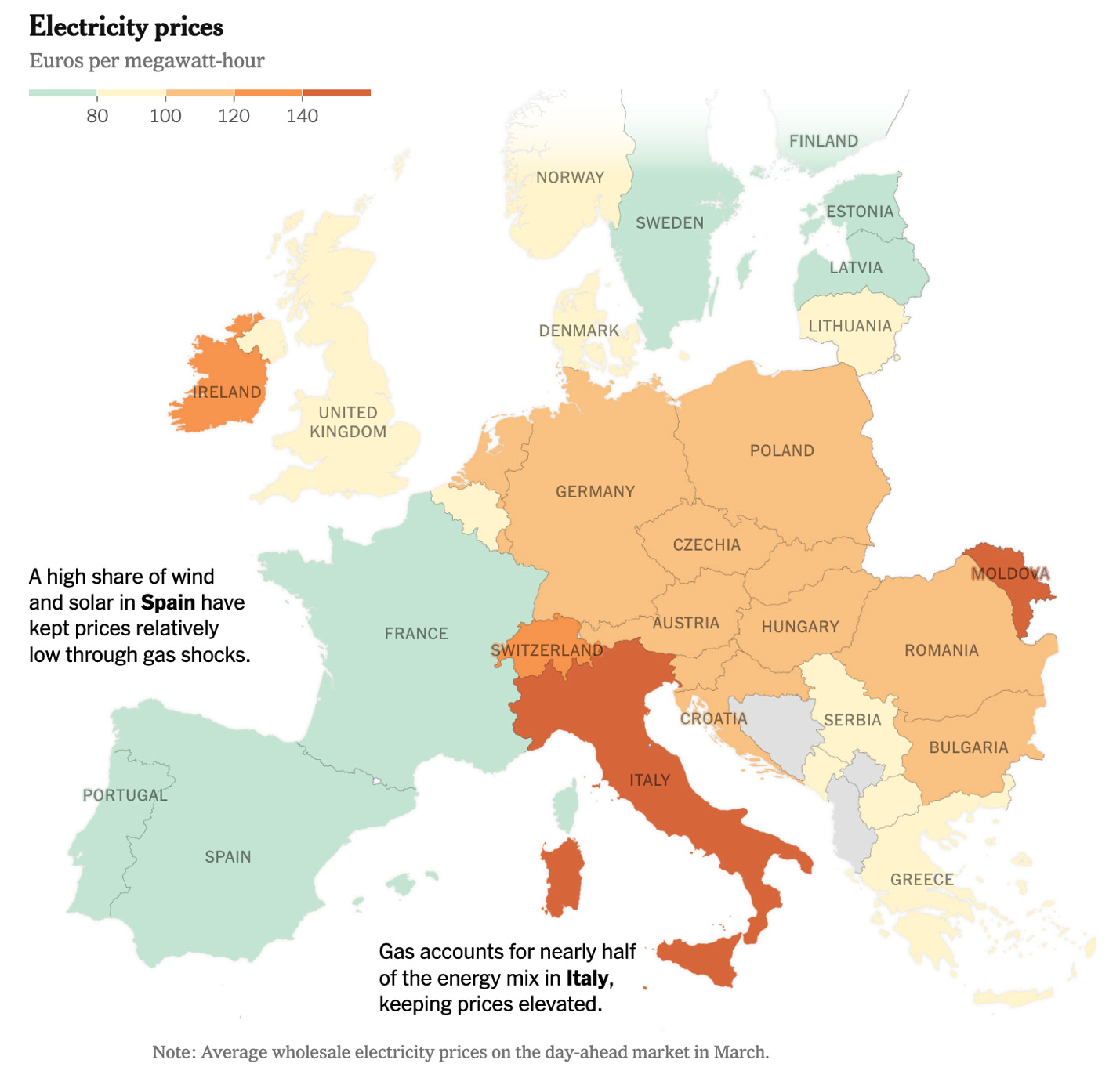
France and Spain, which mostly generate electricity from non-fossil sources (including nuclear power in France), have been partially insulated from the war’s side effects. Italy, heavily reliant on gas, has suffered badly.
Also, Trump’s decision to counter Iran’s blockade of the Strait of Hormuz by blockading the Strait of Hormuz surely adds to the perception that relying on U.S. oil and LNG, which is what countries will have to do if they don’t turn to solar and wind, isn’t safe. Who can guarantee that an erratic America won’t try to weaponize other countries’ dependence on our energy?
So Trump’s adventurism in Iran has sparked a global rush to invest in solar power, wind power, and the batteries that make renewable energy work 24/7.
And where will the world procure most of the renewable energy equipment it seeks? From China. China is the workshop of the world. Its manufacturing sector is larger than those of the U.S., Japan, Germany and South Korea combined.
While China is strong in many industries, it is utterly dominant in electrotech, the cluster of industries — solar panels, wind turbines, batteries and electric vehicles — at the heart of the renewables revolution. Or as the Wall Street Journal puts it, China’s “green industrial complex” rules. China accounts for more than 80 percent of global production in all these sectors with the exception of wind turbines. In the wind turbine sector, China’s share is “only” 60 percent because Europe retains a significant role.
Why does China dominate electrotech? Industrial policy — deliberate government promotion of these industries — is part of the answer. But a key driver of China’s success has been the speed with which the Chinese themselves have been adopting renewable energy, creating a huge domestic market that provides their electrotech industries with big advantages even in foreign markets.
There’s a widespread, completely erroneous belief among opponents of renewable energy that China produces electrotech equipment but doesn’t use the stuff itself. Speaking at the World Economic Forum three months ago, Trump declared that
China makes almost all of the windmills and yet I haven’t been able to find any wind farms in China. Did you ever think of that? That’s a good way of looking at it. They’re smart, China’s very smart. They make them, they sell them for a fortune. They sell them to the stupid people that buy them, but they don’t use them themselves. They put up a couple of big wind farms, but they don’t use them, they just put them up to show people what they could look like. They don’t spin; they don’t do anything. They use a thing called coal mostly.
China does, in fact, still burn a lot of coal. But its use of wind and solar power is rising rapidly. The demand for solar panels, wind turbines and batteries depends on the increase in renewable generation rather than its level. And China’s growth in renewable energy, both wind and solar, has been larger than that of the rest of the world combined:
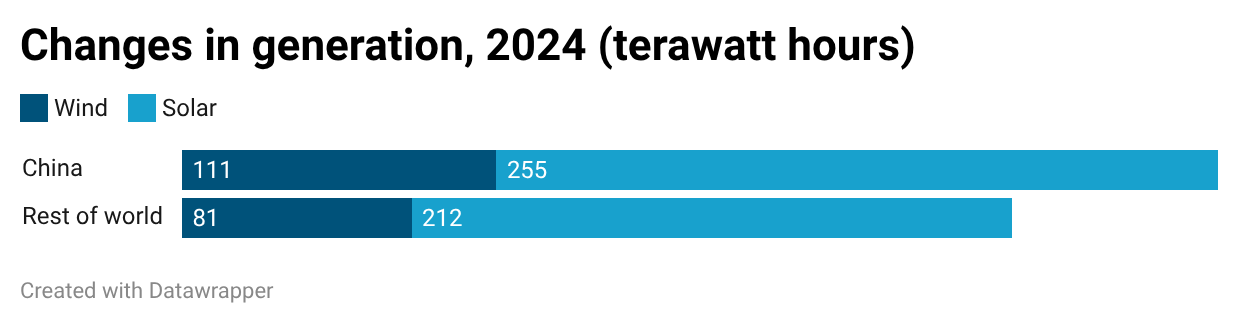
Source: Our World in Data
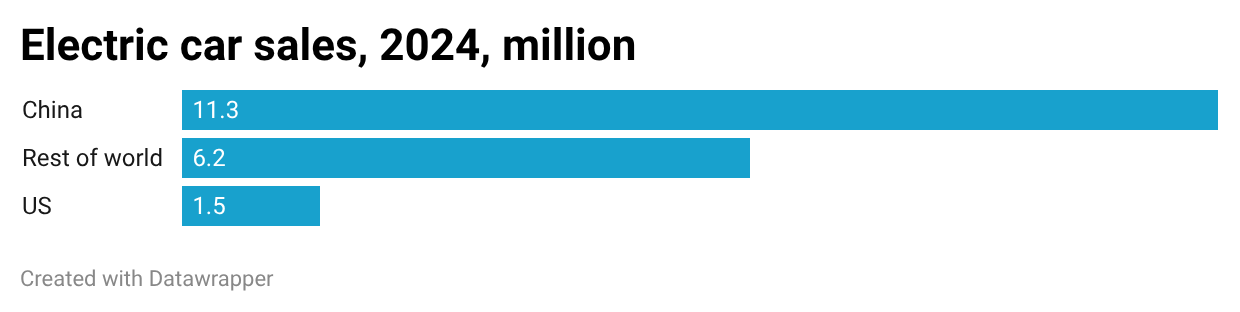
China also accounts for more than 60 percent of world sales of electric cars:
Source: Our World in Data
And electrotech is exactly the kind of industry in which a large domestic market translates into success at exporting into other markets. For all of the component industries of electrotech are marked by steep learning curves: the more a country produces, the better it gets at producing. By dominating electrotech now, China is gaining experience and know-how that no other country can match. It is also creating an industrial ecosystem of specialized suppliers that, again, no other nation will be able to rival. And the low costs generated by this industrial ecosystem gives China a huge advantage in global markets.
Under President Biden the United States took much needed steps toward developing its own electrotech sectors, notably batteries and electric vehicles. It also sought to accelerate the growth of renewable energy in general. But not only has the Trump administration canceled all of Biden’s renewable energy programs, it is also actively trying to block private commercial investments in renewable energy.
By the time America frees itself from Trump’s fossil fuel obsession, if it ever does, China’s lead in the manufacture of renewables will probably be insurmountable.
Now, a world that relies on China for solar panels and batteries isn’t necessarily a bad thing. It’s certainly less risky for most nations, politically and economically, than relying on LNG imports from Qatar — or, at this point, the United States.
Furthermore, although the Trump administration is full of climate denialists, climate change is continuing. March was a record warm month in the United States:
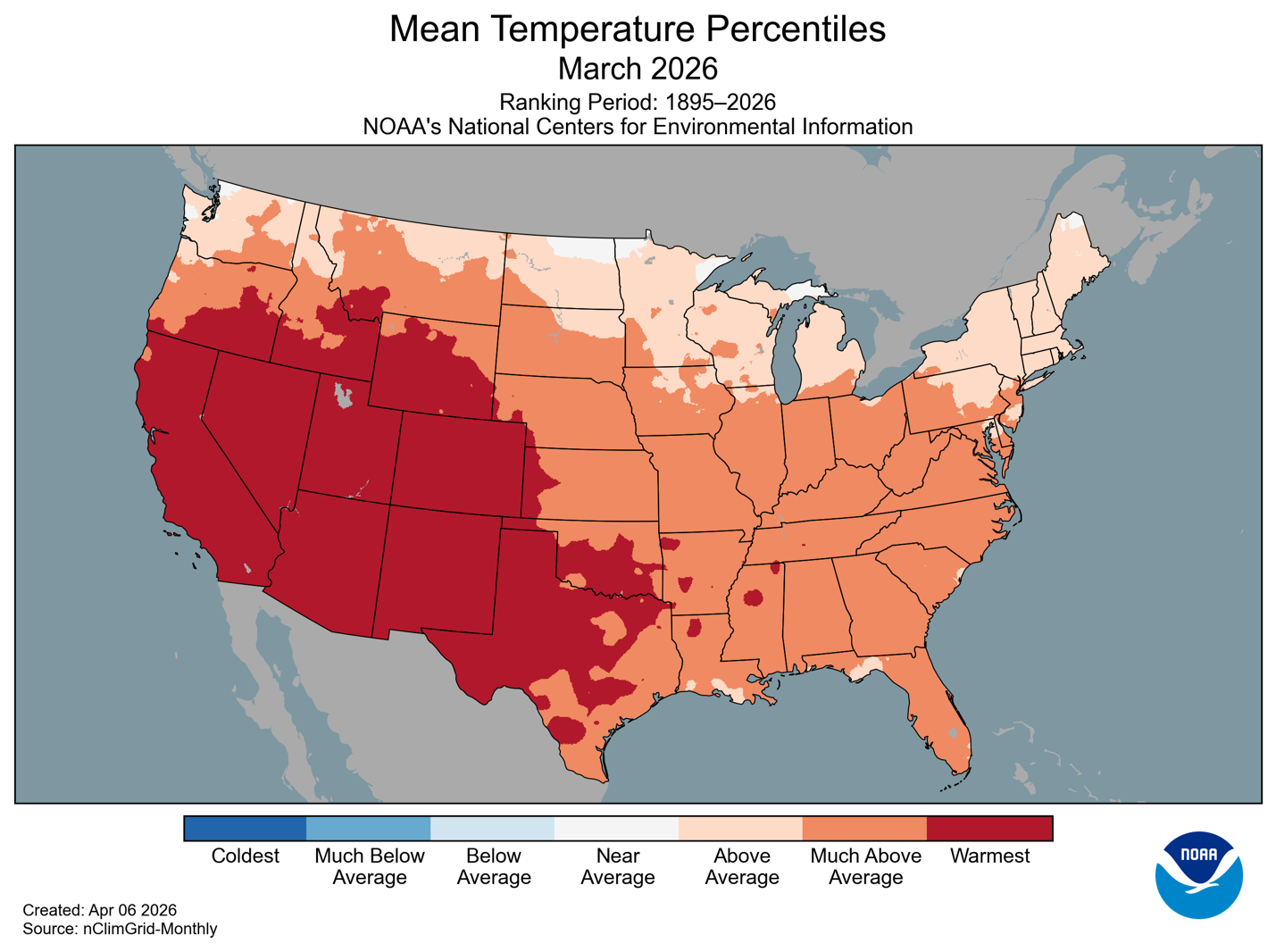
Given the rate at which the planet is warming, a shift away from fossil fuels can’t come fast enough. Where the equipment needed to make that shift happen was manufactured is a secondary issue.
Yet it’s sad to watch this country sabotage itself and cede the most important industry of the future to China. In doing so, we make ourselves poorer, technologically backward, and less influential in a world that is speeding towards the energy revolution. In the end, we aren’t just burning fossil fuels; we’re also burning our future.
MUSICAL CODA
Search
RECENT PRESS RELEASES
Related Post