Chinese EVs surge, Japan retreats in Korea’s shifting auto rivalry
May 4, 2026
Honda’s exit opens door as BYD rises, Zeekr, Xpeng go premium in Korea
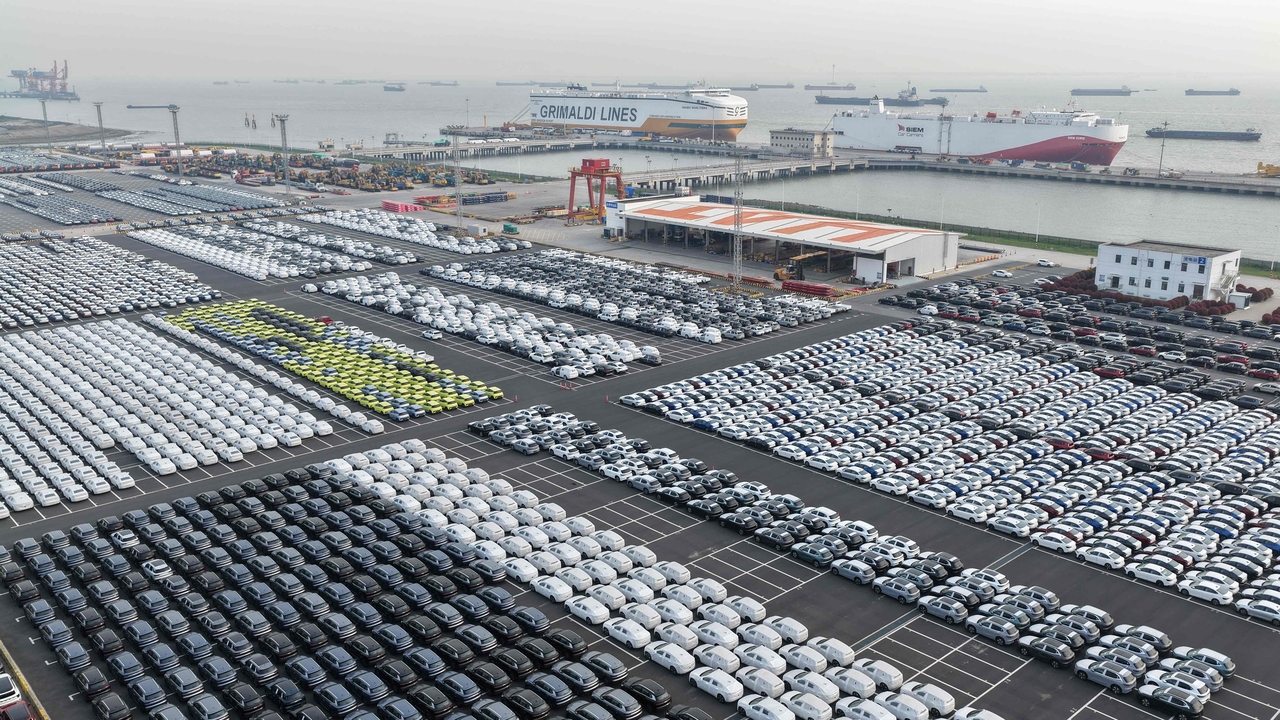
South Korea’s import vehicle market is experiencing a dramatic reshuffle, as Chinese electric vehicle manufacturers expand aggressively while Japanese carmakers retreat, reshaping competition in one of the world’s most demanding auto markets.
Honda Motor announced on April 23 that it will discontinue automobile sales in South Korea after more than two decades, citing the changes in the global and local automotive environments. The move follows the exits of other Japanese stalwarts, including Nissan Motor and Infinity’s withdrawal in 2020, leaving Toyota and Lexus as the only remaining Japanese brands in the market.
Observers say a lack of electric models, limited powertrain options and narrow lineups, amid intensifying competition from other foreign luxury and domestic brands, have eroded their competitiveness.
Meanwhile, Chinese brands are rapidly expanding their market footprint, led by BYD, China’s largest EV maker. Since its official Korean launch in January 2025, the EV giant has become one of the fastest-growing imported brands in Asia’s fourth-largest economy. Now, other major Chinese brands are preparing to follow suit.
The converging shifts — Japanese pulling back and Chinese pushing forward — point to a structural realignment rather than a simple replacement, according to industry officials.
Chinese automakers have moved beyond competing on price alone to differentiating themselves through technology and advanced software capabilities. Companies such as BYD produce their own batteries, giving them tighter cost control and faster innovation cycles compared to many global rivals.
In addition, Chinese EVs are often loaded with features that appeal to younger, tech-savvy consumers, including the AI-driven infotainment and advanced driver assistance systems. Analysts note that this blend of affordability and cutting-edge user experience is closing the gap between Chinese manufacturers and established global brands.
Rise of Chinese EVs
BYD has led that charge. The Shenzen-based automaker surpassed 10,000 cumulative sales within roughly 11 months of entering the Korean passenger EV market, buoyed largely by strong sales of its affordable compact hatchback, the Dolphin. Priced in the 20 million won ($13,489) range, the model has attracted younger, price-sensitive buyers, in a sign of early traction for Chinese EVs.
Sales data reflects the momentum. Sales of Chinese-made EVs — including Tesla models produced in Shanghai —surged to 25,000 units in the first quarter of 2026, a 286.1 percent jump from the same period a year earlier, according to the Korea Automobile & Mobility Industry Association.
Chinese-built EVs accounted for 33.9 percent of newly registered EVs in South Korea, up sharply from just 4.7 percent in 2022. Over the same period, domestic brands’ EV share fell from 75 percent to 57.2 percent.
The figure is expected to increase further as a slew of carmakers prepare to enter the market. From Zeekr, the premium EV marque under the country’s second-largest EV maker, Geely Automobile, to Chery Automobile and Xpeng, many plan to target the premium segment.
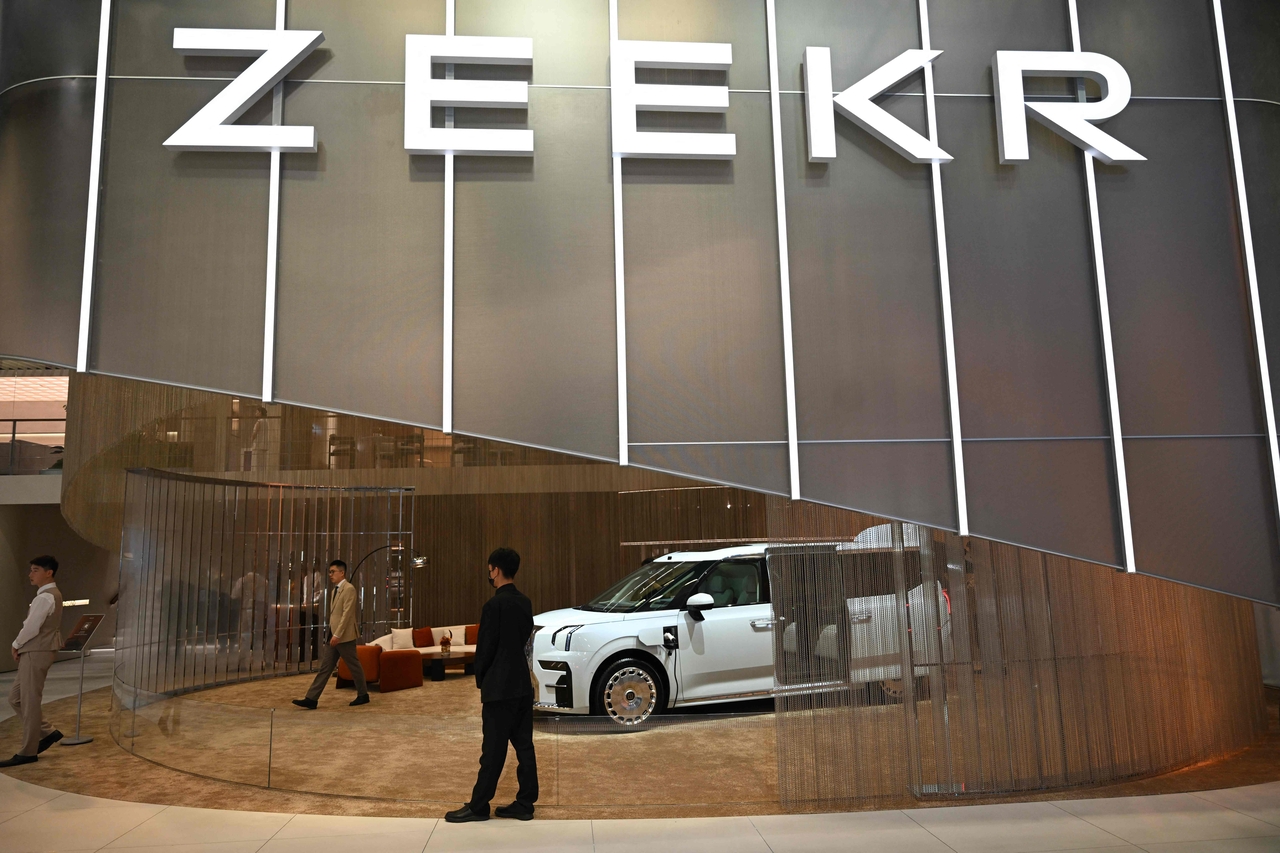
Zeekr set up its Korean unit, Zeekr Intelligent Technology Korea, early this year, and is expected to roll out its midsize electric SUV, the 7X, in the second half. The model is likely to compete with vehicles such as Tesla Model Y, Hyundai Ioniq 5 and Kia EV5. Sources say the Hangzhou-based brand is also preparing showroom locations in key areas across Korea, including Seoul’s Daechi and Seocho districts, as well as Busan and Daejeon.
Xpeng, often dubbed the “Tesla of China,” is a technology-focused EV-maker known for its high-tech software and advanced driver-assistance systems. Industry sources say the company could enter South Korea with models such as the P7 sedan and G6 coupe-style SUV, positioning itself in the premium segment.
Replacement of Japanese cars?
Amid an influx of Chinese EVs, analysts caution against viewing Chinese brands as a direct substitute for departing Japanese carmakers.
Most Japanese brands that exited Korea relied heavily on internal combustion engine sedans and hybrids, while Chinese newcomers mostly focus on battery electric vehicles. This fundamental difference in product mix means demand segments do not fully overlap.
“Chinese EVs are not directly replacing Japanese cars,” said an industry official. “The core demand base for Japanese brands, particularly hybrid buyers, remains distinct from the early adopters buying EVs.”
EV sales in Korea are still concentrated among young consumers and early adopters, while mainstream buyers continue to favor hybrids, observers say.
“Rather than Chinese brands fully replacing Japanese automakers, the vacuum left by Japanese exit is likely to be divided among existing imported brands,” said Kim Pil-soo, an automotive engineering professor at Daelim University.
But as electrification accelerates and EVs move toward the mainstream, Chinese manufacturers are poised not just to benefit from the shift but to actively drive it, hastening the very transition.
“Now we are in the transition phase, where hybrids, including plug-in hybrids, are growing their share,” said Kim. “In the next three to four years, the market could change dramatically, where EVs could become mainstream and Chinese brands could play even larger roles.”
sahn@heraldcorp.com
Search
RECENT PRESS RELEASES
Related Post