Clean energy and efficiency spared in Rhode Island budget process
June 10, 2026
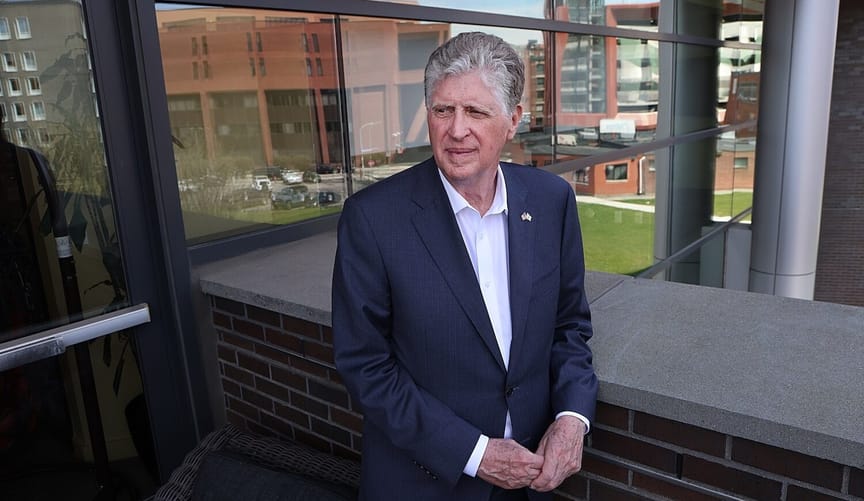
Rhode Island Gov. Dan McKee’s efforts to slash funding for energy efficiency and roll back renewable energy targets appear poised to fail after the legislature advanced the state budget on Tuesday evening.
Earlier this year, McKee, a Democrat, proposed significant cuts to energy-efficiency programs in an attempt to offset what are some of the highest utility bills in the U.S. He also proposed delaying and weakening the state’s ambitious renewable energy goals.
Lawmakers in the state’s Democratic-controlled House and Senate opposed McKee’s changes. The budget passed Tuesday restores energy-efficiency funding but does slightly loosen renewable energy standards.
McKee is one among a slew of prominent blue state lawmakers who are reconsidering decarbonization goals and policies in light of surging energy bills. Late last month, for example, New York’s Democratic Gov. Kathy Hochul succeeded in rolling back the state’s nation-leading emissions targets, citing concerns about affordability.
McKee also pitched his proposals as an affordability package. In January, he recommended capping Rhode Island’s three-year energy-efficiency plan at $75 million per year, down from the $95 million previously approved. That would have shaved a few dollars off the average monthly utility bill.
The governor’s budget would also have scaled back the state’s aggressive goal of reaching 100% renewable energy generation by 2033, delaying the target date to 2050 and allowing up to 25% of the requirement to be met by existing resources, including nuclear and hydro. The state estimated these changes would save consumers more than $500 million over five years, though environmental advocates argued that the climate and economic costs would outweigh the short-term savings.
The spending bill would still require the state to hit 100% zero-emission power by 2033, but expands the definition of clean energy to include existing nuclear and hydro resources. In 2027, up to 14% of the energy supply can come from these sources; this proportion will increase every year until it hits 20% in 2033.
“The most important win for the environmental community was just maintaining the timeframe for the renewable energy standard to 2033,” said Emily Koo, senior policy advocate and Rhode Island program director for the nonprofit Acadia Center.
Rhode Island’s efficiency offerings include rebates on heat pumps and other energy-saving appliances, weatherization assistance, and related measures. These incentives save money for both participants and all other utility customers by reducing energy use — and thus reducing the need to fire up expensive peaker plants or invest in maintaining and upgrading the power grid.
Since 2009, Rhode Island has spent more than $2 billion on efficiency offerings, yielding more than $6 billion in societal benefits, according to a state report from June 2025. Efficiency programs also lowered electricity use by 5% between 2005 and 2024, per the report; without those measures, power use would have jumped by 15%.
Rhode Island has historically been among the national leaders on efficiency. Still, this wasn’t the state’s first flirtation with shrinking funding for the sector. Rhode Island Energy, the state’s biggest utility, reduced its energy-efficiency spending by 18% last September, claiming it would save residents an average of $1.87 per month.
Such efficiency cuts, their critics say, are not justified by these modest savings. But the programs have proved politically vulnerable anyway, in part because they provide lawmakers a rare way to directly reduce energy bills.
Other states are also looking to walk back energy-efficiency commitments in the name of lowering costs for consumers. In May, Maryland’s Democratic Gov. Wes Moore signed a sweeping law that softened the state’s emissions-reduction target through 2035, enabling utilities to invest less in efficiency measures as a result. The law could save residents a total of $150 per year, or about $12.50 per month, only in part due to the efficiency cuts.
In Massachusetts, a fight over energy-efficiency funding is still playing out. A bill approved by the state’s House of Representatives in February would cut $1 billion in spending from the final year of the state’s three-year, $4.5 billion energy-efficiency budget. State utility regulators already ordered a $500 million reduction in the plan last year. The bill is now under consideration in the Senate.
In Rhode Island, it’s unclear whether McKee will approve the bill. Last year he declined to sign the state budget, letting it take effect without his signature.
Should the budget become law in its current form, it would ultimately represent a victory, given the more far-reaching rollbacks that were on the table at the start of the year, according to Tina Munter, Rhode Island policy advocate for the Green Energy Consumers Alliance.
“Everything that passed in the upcoming fiscal year budget is definitely a win because the starting point was just so dire,” she said.
{
if ($event.target.classList.contains(‘hs-richtext’)) {
if ($event.target.textContent === ‘+ more options’) {
$event.target.remove();
open = true;
}
}
}”
>
Dan McCarthy
is a senior editor at Canary Media.
Sarah Shemkus
is a reporter at Canary Media who is based in Gloucester, Massachusetts, and covers New England.
Search
RECENT PRESS RELEASES
Related Post