Coal is Not the Future of Asia’s Energy Security
May 9, 2026
Most Asian countries’ dependence on fossil fuel imports is unsustainable, and the government will be forced to pay a steep price for energy to preserve energy security.
The Iran War has temporarily halted oil and gas supplies through the Strait of Hormuz, inevitably creating a price crisis for energy fuels tied to key economic sectors. Key Asian economies are dependent on Middle Eastern gas supply for their power generation mix. Following the crisis, the price of gas spiked to almost double in the weeks following the start of the war. For other countries that are not dependent on Middle East gas supply, there is potential exposure to fluctuations in energy prices in the international fossil fuel market, which will affect the domestic cost of energy use in the electricity, transportation, and petrochemical sectors.
For many Asian economies, this vulnerability is structural. Oil, gas, petrochemicals, fertilizer feedstocks, and shipping routes linked to the Middle East remain deeply embedded in the region’s economic system. When flows through the Strait of Hormuz are severely disrupted or restricted, the impact does not stop at the energy sector. It spills over into electricity tariffs, transport fuels, Liquefied Petroleum Gas (LPG) for cooking, aviation fuel, fertilizers, food prices, logistics costs, and industrial competitiveness.
This is particularly challenging for developing economies. Countries with limited fiscal space cannot absorb higher fuel prices indefinitely through subsidies, import-duty relief, or emergency procurement. Such measures may protect consumers in the short term, but they quickly become fiscal liabilities. Governments are then forced into difficult trade-offs: protecting households, maintaining industrial output, preserving macroeconomic stability, and keeping the energy transition on track.
This is why the current crisis should not be treated as a temporary disruption to be addressed only after it ends. It should trigger an immediate and long-term redesign of Asia’s energy-security architecture.

The Iran War began as a price shock, but quickly evolved into a systemic supply-chain and energy-security shock. In Asia so far, gas has been supplied by state-owned enterprises and private companies from Malaysia, Indonesia, Thailand, Vietnam, the Philippines, Brunei, and other countries. International oil companies also maintain a strong presence in Asia, collaborating with national companies for large-scale projects. However, a reduction in oil and gas supply from the Middle East will necessitate countries to seek other, more expensive sources.
Coal May Be Used as an Emergency Buffer
In moments of crisis, coal can appear to be the easiest answer. It is familiar, dispatchable, and domestically available in several Asian economies. This was evident after Russia’s 2022 invasion of Ukraine, when surging gas prices pushed several countries to rely more heavily on coal as gas use declined. In today’s context, existing coal plants may again serve as an emergency buffer, particularly in power systems where gas is expensive, grids remain weak, or variable renewable energy cannot yet be fully absorbed.
This reality should not be ignored: a responsible energy transition cannot be built on wishful thinking. In many Asian systems, coal cannot disappear overnight without jeopardizing reliability, affordability, and industrial stability. In the short term, it may still serve as an adequacy resource, helping maintain system reliability during periods of fuel-market stress.
However, that does not justify a return to coal dependence. Expanding long-lived coal infrastructure would deepen dependence on a single source, deepen carbon lock-in, increase stranded-asset risk, worsen pollution, and weaken competitiveness as global supply chains become more carbon-sensitive. Coal mining and coal-fired power also carry significant social and environmental risks, including local pollution, weak enforcement of environmental standards in some areas, and growing community opposition.
Coal projects also have long lead times and, once operational, are difficult to retire early—creating substantial economic risk. One study estimates that potential losses from stranded coal assets could reach $85–106 billion by 2060. Coal infrastructure is also exposed to physical and climate-related risks, including damage from extreme weather and natural disasters, which can be costly and difficult to repair.
The right question, therefore, is not whether Asia can eliminate coal immediately—it cannot. The real question is how coal can be managed as a declining adequacy resource, rather than expanded as the backbone of future energy security. Coal may help buffer today’s crisis, but treating it as a long-term solution would undermine resilience, sustainability, and economic competitiveness.

Diversifying Asia’s Energy Security Beyond Coal
Asian countries should not wait for this crisis to end before rethinking energy security and resilience. The current disruption should accelerate investment in various energy technologies, including domestic renewable energy, stronger clean-energy supply chains, and the structural conditions needed for these markets to scale. Market forces can support adoption, but policy, finance, infrastructure, and regional cooperation must provide the enabling environment.
One practical pathway is to optimize biomass use to gradually reduce dependence on coal. Many ASEAN countries have significant biomass potential from agricultural residues, plantation waste, forestry residues, municipal waste, and other local resources. If properly governed, biomass can support coal co-firing, industrial heat, distributed generation, and island energy systems, creating a bridge from coal-based adequacy towards cleaner, more localized energy systems.
However, biomass must be used sustainably. Deployment should avoid competition with food, deforestation, excessive land-use change, and weak traceability. Priority should go to residues, waste streams, and locally available feedstocks that meet sustainability standards and are economically viable.
Gas also needs a more nuanced framing. Imported gas remains exposed to external shocks, but it can still support reliability as renewables scale up, especially where flexibility is limited. Its future role should be reshaped through diversified supply, strategic reserves, more flexible contracts, regional coordination, and decarbonization options such as CCUS or low-carbon fuels. Gas should sit within a transition architecture, not become another source of long-term import vulnerability.
Clean Energy Technologies Could Shield Asian Countries from Future Energy Volatility
Clean energy technologies can help shield Asian countries from future energy volatility, but only if they are deployed with the right system conditions. Many Asian countries have ambitious renewable energy targets, while ASEAN’s long-term scenarios show a much larger role for renewables by 2050. Battery policy is also advancing, supported by critical mineraldevelopment, storage needs, and electric vehicle (EV) growth, as seen in Indonesia’s first EV battery plant, Battery Energy Storage System (BESS) projects in Thailand and Malaysia, and similar initiatives in the Philippines.
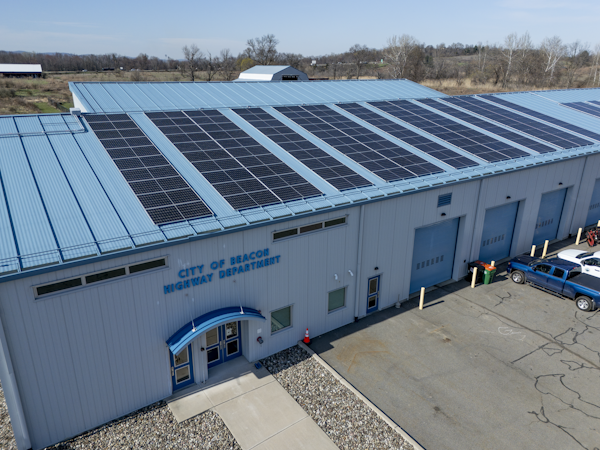
However, renewables alone cannot guarantee energy security. Solar, wind, hydropower, geothermal, batteries, and electric vehicles are all important, but installed capacity is not the same as system resilience. Clean energy becomes a real shield only when supported by grids, storage, flexible generation, digital dispatch, regional power trade, and sound market design. In many systems, large-scale solar or wind may not yet be cheaper than coal or gas once grid expansion, balancing, storage, land, and integration costs are considered. Energy planning must therefore move beyond simple generation-cost comparisons and assess the full value and cost of electricity within the system.
This is increasingly urgent as rapid industrialization and data center expansion drive electricity demand across Asia. External energy shocks, including prolonged disruptions in Middle Eastern supplies, could intensify competition for alternative fuels, raise fossil-fuel prices, put pressure on currencies and trade balances, and trigger inflation, higher interest rates, and weaker industrial output. For developing economies, sustained volatility reinforces the need to accelerate the development of a resilient and diversified energy supply and system, anchored in indigenous resources, regional cooperation, and cleaner technologies.
About the Authors: Dr. Dinita Setyawati and Dr. Nuki Agya Utama
Dr. Dinita Setyawati is a senior energy analyst Asia at Ember, analyzing electricity policy across Southeast Asia and promoting the use of clean power in electricity, transportation, and industrial sectors. She holds a PhD in Global Environmental Studies from Kyoto University in Japan, and a Master’s in Southeast Asian Studies from SOAS, University of London. She is often consulted and has published on topics related to energy justice, energy policy, and energy transition in Asia. She is an author of peer-reviewed publications and a book, State-of-the-Art Indonesia Energy Transition.
Dr. Nuki Agya Utama is the director for energy policy and head of the Asia Zero Emission Center at the Economic Research Institute for ASEAN and East Asia (ERIA). Previously, he was the Executive Director of the ASEAN Center for Energy (ACE). In this role, he played a pivotal part in advancing regional energy cooperation and sustainability through high-impact collaborations with international organizations such as the Green Climate Fund (GCF), USAID, the World Bank, and governments from Norway, the US, Japan, Germany, Russia, and France. His expertise encompasses renewable energy, energy efficiency, and green design, and he holds advisory positions at the Asia Pacific Energy Research Center (APERC) and the UN ESCAP.
With a PhD in Environment and Energy Technology, Nuki Agya Utama has held key positions in both academia and industry, including a role at NIKE Inc. He has also completed a post-doctoral fellowship at Kyoto University and, early in his career, worked with the UN Environment Programme and the UN Development Programme.
Search
RECENT PRESS RELEASES
Related Post