Colombian Fund Veronorte Secures Stakes in SpaceX, OpenAI, and Anthropic
April 16, 2026

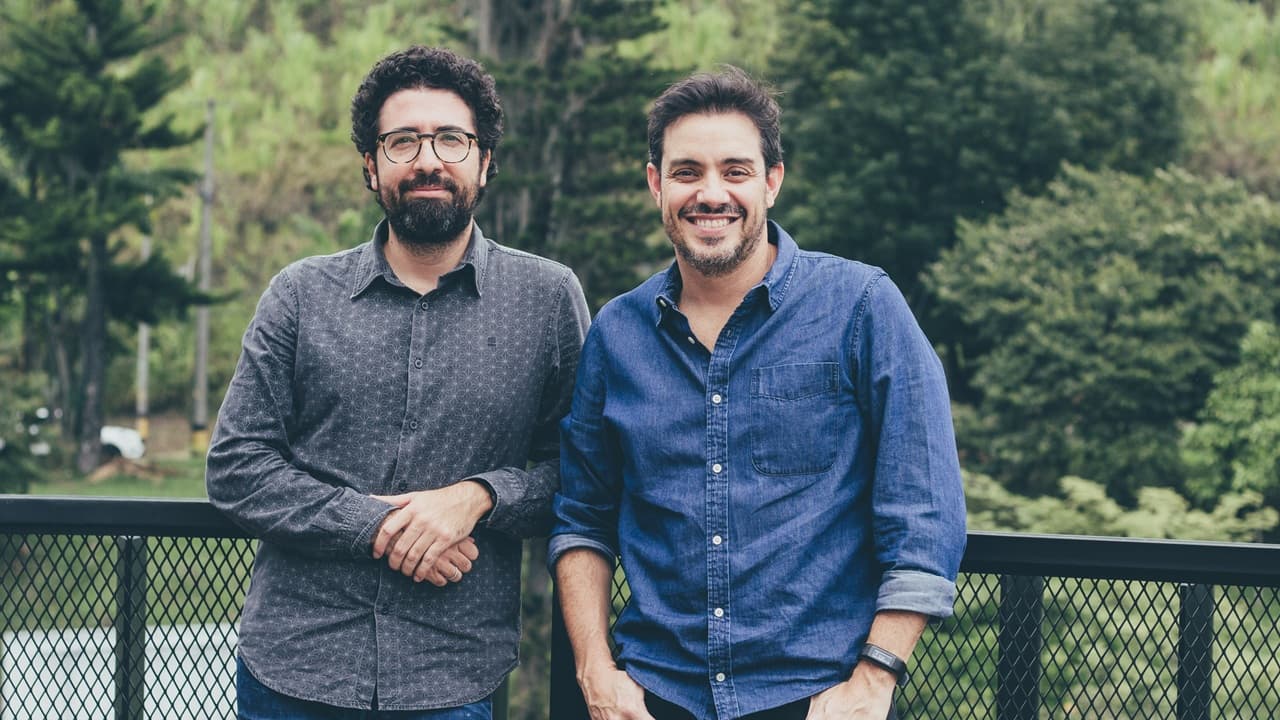
Veronorte, a Medellín-based investment firm that Camilo Botero and Felipe Valencia founded in May 2012, secured positions in SpaceX, OpenAI, Anthropic, and Databricks through its fund-of-funds structure (a vehicle that pools capital from investors to buy stakes in multiple venture capital funds, rather than investing directly in individual companies) and in January 2026 launched its second vehicle with a US$35 million target, raising more than US$17 million in its first close at three times the pace of its predecessor fund, according to Forbes Colombia.
The milestone matters to Colombia because Veronorte operates from Medellín, directs capital from Colombian and Latin American family offices (wealthy families that manage their investments through a dedicated internal team) into the top tier of US venture (early-stage, high-growth private companies), and does so through a structure most regional managers cannot access; Botero describes the current moment as “the greatest wealth creation of our generation,” concentrated in private markets that a portfolio built exclusively around public equities and real estate will systematically miss.
Veronorte’s positioning inside top-tier US funds came not from bank introductions or technology conferences but from the quality of work it delivered in early co-investments; in 2019, Valencia joined the board of a California company alongside the founder of a prominent Silicon Valley VC firm after leading technical due diligence on a biotech co-investment that was rigorous enough to earn him a seat at the table, an episode that converted from a US$2 million limited partner (a passive investor in a fund who contributes capital but does not manage the fund’s decisions) position into a relationship spanning multiple fund cycles.
Before launching the fund-of-funds model, Botero and Valencia ran three corporate venture capital (CVC) programs (internal investment arms that large companies use to fund startups aligned with their industry) simultaneously: Sura Ventures, Grupo Argos Ventures, and Grupo Nutresa Ventures; Sura Ventures completed 12 investments with two portfolio IPOs (Initial Public Offering), and Veronorte’s own Capital vehicles ranked among the top performers of their vintage years (the year a fund makes its first investment, used to compare funds launched in similar market conditions).
When Argos and Nutresa suspended their CVC programs for internal reasons, Veronorte exited cleanly and returned capital to investors, a track record that Grupo Cibest/Bancolombia and the Universidad EAFIT endowment fund found credible enough to anchor Fondo de Fondos I at US$19.6 million alongside 58 family offices, mostly from Medellín.
The core of Veronorte’s thesis rests on three converging data points: the number of US public companies fell from 8,000 in 1996 to approximately 4,000 in 2025 according to research by Professor Jay R. Ritter of the University of Florida; the median time from founding to IPO extended from eight to 12 years; and S&P Capital IQ data show that 87% of US companies with revenues above US$100 million now remain private (their shares do not trade on any public stock exchange and ordinary investors cannot buy them), meaning companies like Airbnb, Uber, and Rappi created more than 90% of their value before any public investor could participate.
Global private markets assets under management (the total value of capital that private investment firms actively oversee on behalf of their investors) reached US$13 trillion in 2025, quadrupling over the prior decade, while the number of investors admitted to top-tier VC funds fell 43% from 2022 levels, compressing earned access into an increasingly narrow channel; Botero frames the consequence plainly: a portfolio with no private market exposure is not a neutral position but an invisible risk, because the industries that will define the next decade (artificial intelligence, autonomous systems, synthetic biology, and space) will build most of their value inside private companies, not on public stock exchanges.
Fondo de Fondos II organizes its portfolio around eight technology categories across three fund maturity profiles (established, emerging, and frontier), and Veronorte anticipates 2026 liquidity events (moments when investors can convert their stakes into cash, typically through a company going public or being acquired) from its current positions.
SpaceX filed confidentially with the SEC (the US Securities and Exchange Commission, which regulates public markets) on April 1, 2026, targeting a June roadshow (a series of presentations to large institutional investors ahead of a public listing) at a valuation of up to US$1.75 trillion, while OpenAI plans a Q4 2026 public offering at approximately US$1 trillion and Anthropic aims for an October debut targeting over US$60 billion, a combined IPO window that Fortune and TradingKey describe as the most consequential listing period since 2021.
However, earned access does not guarantee returns, and Veronorte’s record includes a full write-off (an investment whose entire value was lost) on Justo, the Mexican online grocery platform, where six years of market presence produced no captured value; Botero acknowledged the loss directly, noting that the opportunity itself remained large and that another operator would capture it.
Meanwhile, analysts at The Conversation cautioned in February 2026 that late-stage private positions (stakes purchased when a company is already large and well-established, rather than at its early, riskier founding phase) in SpaceX and OpenAI are unlikely to replicate the early compounding (the process by which returns generate further returns over time, multiplying the original investment many times over) that Amazon and Apple investors experienced, given that most value creation at those companies already occurred in rounds that closed years before any public or fund-of-funds entry was possible.
Search
RECENT PRESS RELEASES
Related Post