Connecticut’s Path Forward for Offshore Energy
December 1, 2025
As the U.S. debates the future of renewable energy, Connecticut stands at a crossroads. Once seen as a key player in the nation’s offshore wind boom, the state now faces uncertainty following the federal government’s recent pullback on wind energy projects. For Connecticut — where state leaders have invested heavily in ports, transmission infrastructure, and clean energy partnerships to drive both economic growth and emissions reductions — the shift raises urgent questions about what comes next.

YSE News spoke with Daniel Esty, the Hillhouse Professor of Environmental Law and Policy, and Kenneth Gillingham, the Grinstein Class of 1954 Professor of Environmental and Energy Economics, about how wind power development has evolved in Connecticut, the state’s strategies for advancing renewable energy in a shifting federal landscape, and what will be needed to sustain momentum .
Q. How has wind power development in Connecticut evolved, and what strategies or policies do you see as most effective for maximizing its benefits while minimizing environmental and social impacts?
Esty: Wind power development in Connecticut, and everywhere else, requires a policy framework that creates incentives for investment and an attractive opportunity for wind generation developers. These incentives can be based on federal laws, regulations, and subsidies or on state programs. Some of the critical rules relate to siting and permit requirements, which need to ensure both that (1) potential environmental and social concerns are addressed and (2) these processes move expeditiously. The second critical policy dimension centers on ensuring that public money and incentives are used to leverage private capital at speed and scale.

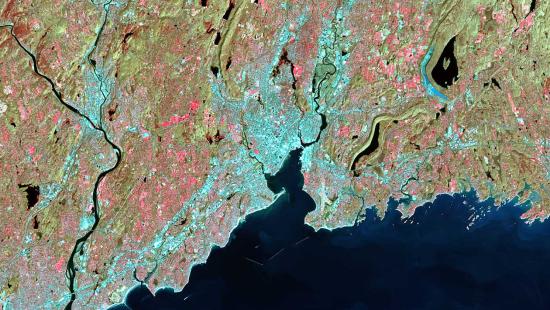
Gillingham: Connecticut has very limited onshore wind resources, so for many years, there were only a handful of wind turbines in the state. In fact, one of these is right in New Haven Harbor. But the Long Island Sound is blessed with extensive offshore wind resources. As offshore wind prices have declined over the years, there has been increasing interest in tapping this resource. Offshore wind also came along with the promise to provide jobs in some of the working-class shoreline communities in Connecticut. The state of Connecticut has gone to great lengths to encourage the staging of offshore wind development in cities like Bridgeport and New London, and this is a sensible strategy to try to make sure that offshore wind provides economic benefits to the state.
Maximizing the benefits of offshore wind while minimizing environmental and social impacts generally requires both analysis and deep collaboration with stakeholders, and in particular the fishing community.
Q. With pullback at the federal level, how can CT and other states who have invested in wind projects continue to move them forward?
The key is to make these projects attractive from a perspective of predictability and cost-effectiveness, thus engaging for those deploying capital in the clean energy arena.”
Gillingham: With the pullback at the federal level, there is only so much that Connecticut and other states can do to continue to move wind projects forward. They can expedite state permitting and provide state support. But if offshore wind is not permitted at the federal level, it will certainly hinder development.
Q. What are the main challenges or disadvantages of wind energy, and how do you see it advancing relative to other renewables?
Esty: Wind power faces a number of challenges — notably, the need to be paired with strategies to promote investment in batteries or other approaches for electricity storage to overcome the reality of the intermittency of wind power. Wind power also requires that projects proceed on a basis that results in cost effective power generation. Success in this regard depends on siting and permitting processes that move forward with speed but also care. The key is to make these projects attractive from a perspective of predictability and cost-effectiveness, thus engaging for those deploying capital in the clean energy arena.
Newsletter
Subscribe to “YSE 3”
Biweekly, we highlight three news and research stories about the work we’re doing at Yale School of the Environment.
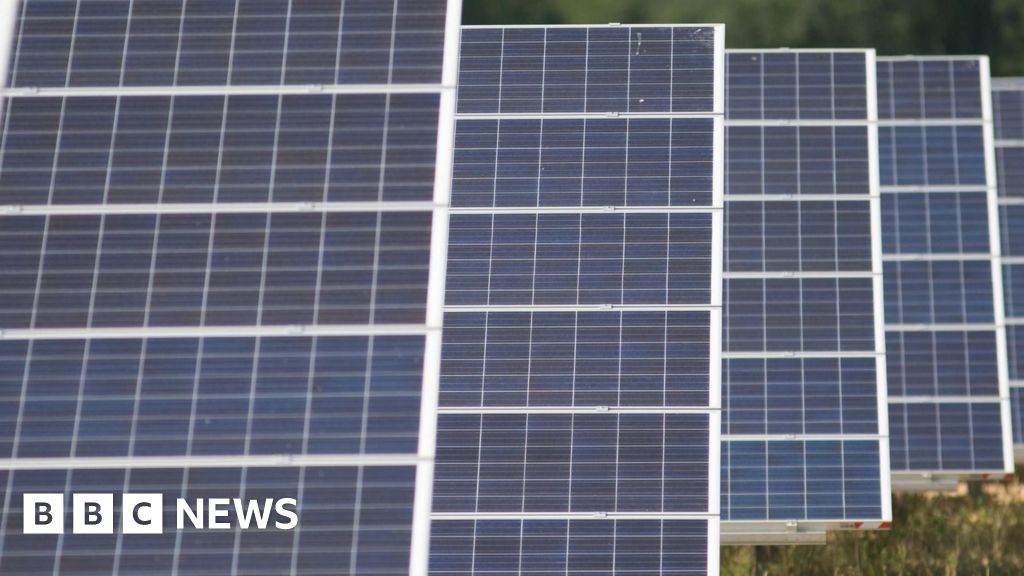
Gillingham: Onshore wind energy is quite cost-effective in many locations and is often more economic than using fossil fuels. Offshore wind is more expensive but is valuable due to the consistency and timing of the winds just offshore. Importantly, the winds often very consistently blow in the evening hours, just after the sun goes down when demand for electricity is commonly the highest. This makes wind an ideal resource to complement solar energy, which is now less expensive but without storage cannot generate electricity once the sun goes down.
There are some other disadvantages of wind power. While new wind turbines are designed to minimize bird loss, some birds do fly into the turbines and perish. In addition, the newest wind turbines are extremely large, which makes them more efficient and cost effective. But some people find them unsightly and prefer unspoiled landscapes. For offshore wind in particular, the construction of the wind turbines can disrupt fishing and breeding grounds. Fishers also will have to be more careful around the turbines. But over time, offshore wind turbines can serve as artificial reefs and in some cases can lead to more fish than there would have been otherwise.
Search
RECENT PRESS RELEASES
Related Post