Could Investing $10,000 in United Parcel Service (UPS) Stock Make You a Millionaire?
December 30, 2025
The courier services giant needs to overcome some tough near-term challenges.
UPS (UPS +0.17%), one of the world’s largest shipping companies, went public in November 1999 at $50 per share. It was valued at $60.2 billion, making it the largest U.S. IPO of the 20th century.
UPS joined the S&P 500 in 2002, and its stock reached a record high of 192.88 in February 2022. A $10,000 investment in its IPO would have grown to $38,576. That stable growth, along with its consistent dividend hikes, made it a reliable blue chip stock for conservative investors.
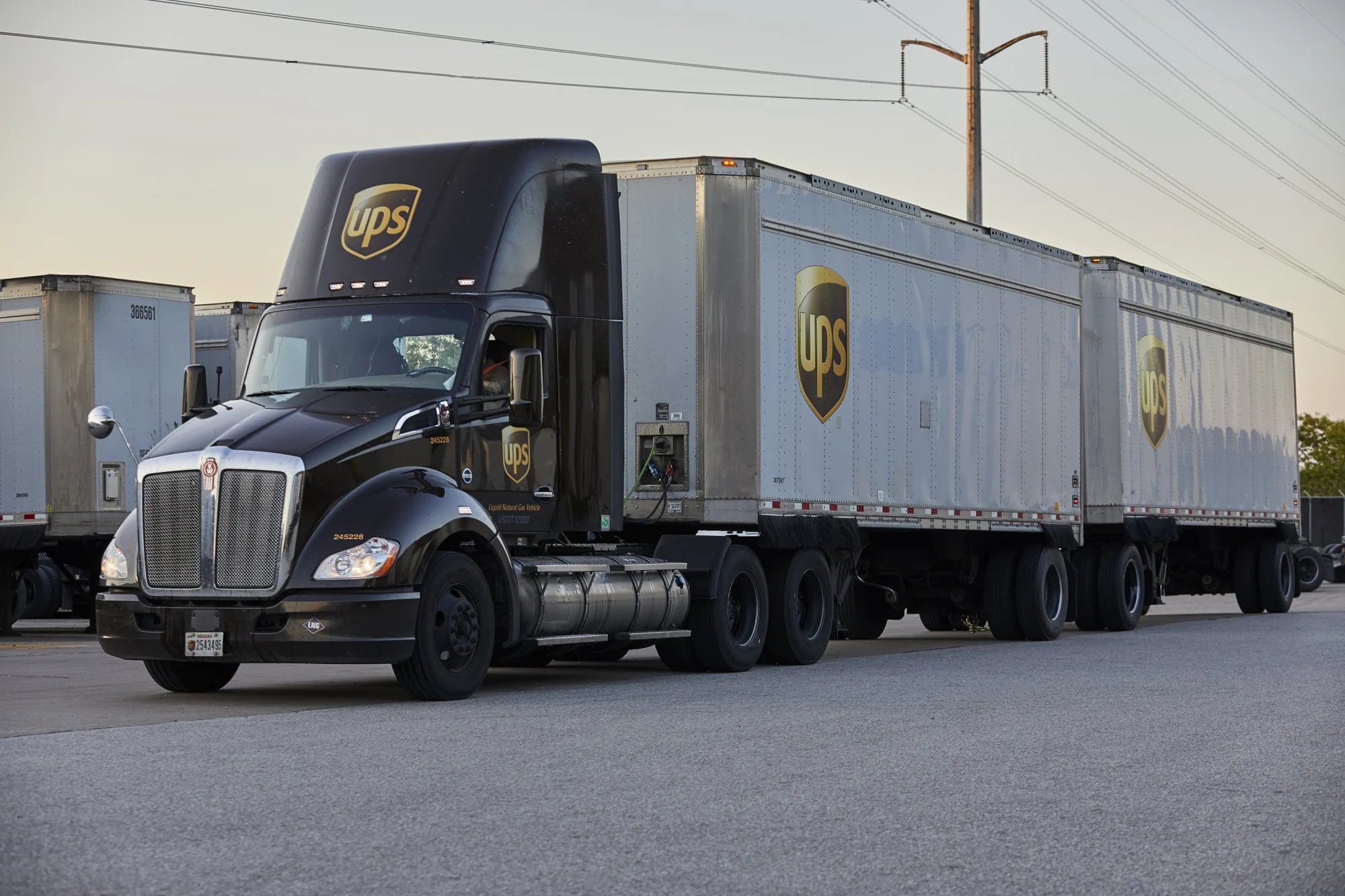
Image source: UPS.
Yet UPS’ stock now trades at about $100 — so that investment would have shriveled back to about $20,000. Its investors retreated as the company struggled with stiff competition from FedEx (FDX 0.29%) and other courier services, messy labor negotiations, and macroeconomic headwinds, which throttled its shipping volumes across multiple industries.
That’s a disappointing long-term return compared to the S&P 500, which has risen more than 400% since UPS’ IPO. However, could UPS merely be a late bloomer that could turn a fresh $10,000 investment into more than $1 million over the next decade?

United Parcel Service
Today’s Change
(0.17%) $0.17
Current Price
$99.85
Why did UPS struggle over the past few years?
From 2019 to 2021, UPS’ average daily package volume increased from 21.88 million to 25.25 million, and its average revenue per piece rose from $10.87 to $12.32. Its total revenue grew from $74.09 billion to $97.29 billion, its adjusted operating margin expanded from 11% to 13.5%, and its diluted earnings per share (EPS) nearly doubled from $7.53 to $14.68.
Advertisement
The pandemic, which drove consumers to buy more products online, generated strong tailwinds for UPS throughout 2020 and 2021. It also offset its rising operating costs with its higher fees.
|
Metric |
2021 |
2022 |
2023 |
2024 |
9M 2025 |
|---|---|---|---|---|---|
|
Average Daily Package Volume |
25.25M |
24.29M |
22.29M |
22.42M |
19.97M |
|
Average Revenue Per Piece |
$12.32 |
$13.38 |
$13.62 |
$13.60 |
$14.46 |
|
Total Revenue |
$97.29B |
$100.34B |
$90.96B |
$91.07B |
$64.18B |
|
Adjusted Operating Margin |
13.5% |
13.8% |
10.9% |
9.8% |
6.8% |
|
Diluted EPS |
$14.68 |
$13.20 |
$7.80 |
$6.75 |
$4.46 |
Data source: UPS.
After the pandemic passed, UPS’ shipments slowed down. At the same time, rising inflation curbed consumer spending, and the threat of a strike from the Teamsters Union (which represented roughly 330,000 UPS workers) drove businesses to shift their deliveries to FedEx and other courier services to avoid potential disruptions. UPS tried to offset that pressure by raising its prices, but higher labor and fuel costs still crushed its operating margins.
In 2024, UPS’ package volumes stabilized as the macro environment improved, and it signed a new contract with the Teamsters to avoid a strike. However, the higher labor and pension costs from that new agreement, its divestment of Coyote Logistics, regulatory fines in the U.S. and Italy, impairment charges, and its ongoing digital investments — all reduced its EPS.
For 2025, analysts expect UPS’ revenue and EPS to decline 3% and 4%, respectively. It’s deliberating reducing its mix of lower-margin orders — especially to its top customer, Amazon (AMZN 0.31%) — as it tries to fill that void with higher-margin orders from its healthcare and small-to-medium business (SMB) customers. It’s also pruning its workforce, investing in new logistics technologies, and automating more tasks to streamline its business. However, those strategies will likely reduce its near-term revenues and earnings before bearing any fruit.
From 2025 to 2027, analysts expect UPS’ revenue and EPS to grow at a CAGR of 2% and 10%, respectively, as those turnaround efforts pay off. At $100 a share, UPS’ stock looks cheap at 14 times next year’s earnings. It also pays a hefty forward dividend yield of 6.6%.
Could UPS stock generate millionaire-making gains?
UPS’ low valuation and high yield should limit its downside potential; however, it is unlikely to generate millionaire-making gains over the next decade. Even if UPS stabilizes its business, matches analysts’ estimates through 2027, grows its EPS at a steady CAGR of 10% over the following eight years, and trades at a more generous 20 times earnings, its stock would only rise to about $340 by 2035. That would turn a $10,000 investment into around $34,000.
UPS probably won’t ever become a millionaire-making stock, but it could become a reliable blue chip stock for long-term investors again. However, investors should consider whether it can successfully decouple itself from Amazon and stabilize its business before betting on a full recovery.
Search
RECENT PRESS RELEASES
Related Post