Counting The Growing Cost of President Trump’s Environmental Policy
March 23, 2026
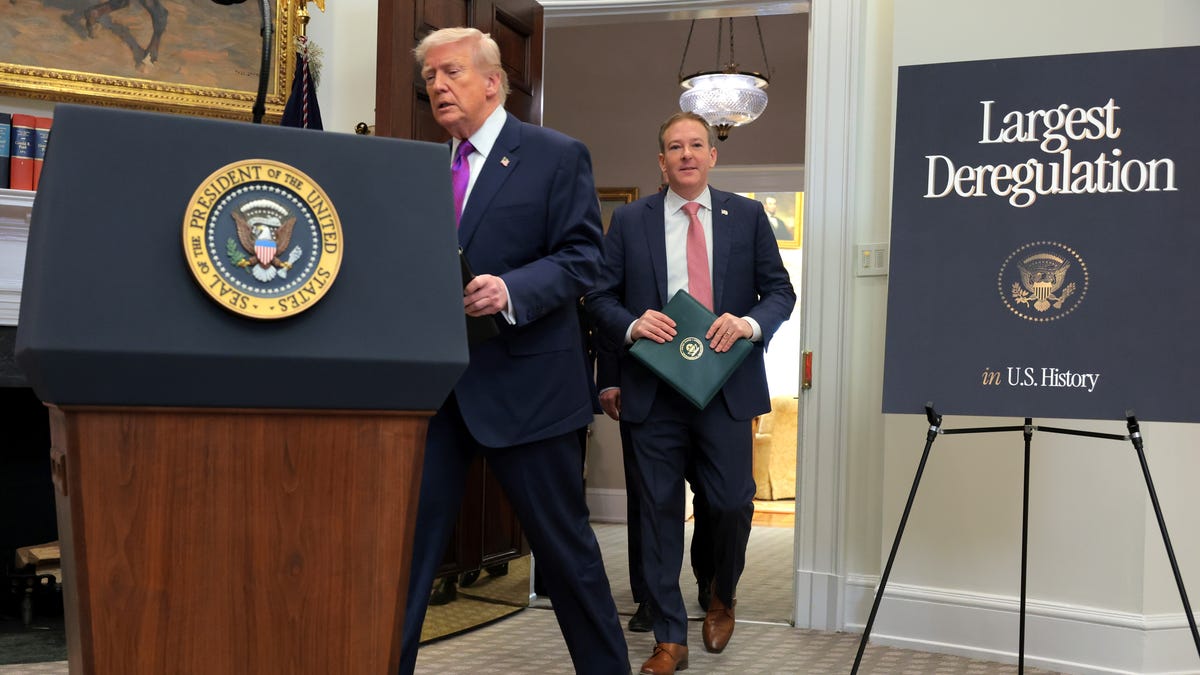
On February 12, 2026, EPA Administrator Lee Zeldin stood next to President Trump and called the repeal of the 2009 Endangerment Finding “the single largest deregulatory action in the history of the United States.” He was likely correct. With this move, the legal basis for all federal greenhouse gas regulation for cars, power plants, and oil fields was removed at once.
This headline-making move was just the most visible part of 14 months of steady rollbacks of U.S. environmental and public health protections, often couched in language about saving tax dollars and reducing regulation, but ignoring the rising cost of healthcare, insurance, and environmental damage caused by the policies. Since Inauguration Day 2025, the Trump administration has issued many executive orders and regulatory actions affecting air quality, water protections, toxic chemicals, wildlife habitat, and climate and health science.
Scientists, former EPA officials, and public health researchers have documented the consequences, which include more cases of childhood neurological damage and tens of millions of acres of wetlands left unprotected from pollution. Earth911 assembled this timeline of major actions and what research says about their likely effects.
January 20, 2025: Inauguration Day Shock and Awe
On his first day in office, Trump signed 26 executive orders, several of which quickly changed U.S. environmental policy. Experts in environmental law called this a “flood the zone” strategy, meant to overwhelm environmental groups and courts so they could not respond to every action at once.
Key Day-One actions included:
- EO 14154, “Unleashing American Energy”: Declared a national energy emergency, directed the EPA to review and potentially revoke the Endangerment Finding, ordered a moratorium on all new offshore and onshore wind leases, instructed agencies to expedite fossil fuel permitting, and directed the Council on Environmental Quality (CEQ) to rescind its NEPA implementing regulations within 30 days.
- EO 14148, “Initial Recissions of Harmful Executive Orders”: Revoked nearly 80 Biden administration executive orders, including all climate-focused orders and the Justice40 environmental justice initiative.
- EO 14151, “Ending Radical and Wasteful Government DEI Programs”: Directed each federal agency to “terminate, to the maximum extent allowed by law, all DEI, DEIA, and ‘environmental justice’ offices and positions,” effectively shuttering EPA’s environmental justice programs overnight.
- Paris Agreement withdrawal (EO 14162): Trump formally directed the UN to begin withdrawal proceedings from the Paris Agreement, repeating his first-term move. The U.S. withdrawal took effect in January 2026. According to the UN Environment Programme’s 2025 Emissions Gap Report, the U.S. withdrawal from the Paris Agreement is projected to add an additional 0.1°C of warming to global temperature trajectories—in a world already tracking toward 2.3–2.8°C of warming this century.
- “Unleashing Alaska’s Extraordinary Resource Potential“: This executive order directed agencies to maximize oil, gas, mineral, and timber extraction in Alaska, reconsider Arctic National Wildlife Refuge protections, and expedite LNG permitting. Later followed by Interior Secretary Burgum announcing plans to open 13 million acres of ecologically sensitive Alaskan lands for drilling.
Dan Esty, a professor of environmental law and policy at Yale University, told ABC News that the administration had a clear strategy: “There are a number of more subtle actions that the Trump administration has taken that also have considerable corrosive effect on our efforts to promote action on climate change and a sustainable future more broadly.” He warned that less visible rollbacks, such as regulatory delays, staff cuts, and limiting science, would add to the impact of the major executive orders in ways the public might not notice.
January 21–31, 2025: Building the Deregulatory Machine
January 21: EO 14173, “Ending Illegal Discrimination and Restoring Merit-Based Opportunity” revoked EO 12898, the 1994 Clinton-era executive order requiring federal agencies to identify and address disproportionate environmental burdens on communities of color and low-income communities, which was the cornerstone of federal environmental justice policy for three decades.
January 28: EPA delayed the effective dates of four rules to March 21, 2025, including a Toxic Substances Control Act rule on trichloroethylene (TCE), a carcinogen linked to cancer, liver damage, and Parkinson’s disease, and revisions to air quality model guidance that states depend on for pollution planning.
January 31: EO 14219, “Ensuring Lawful Governance and Implementing the President’s ‘DOGE’ Deregulatory Initiative” required federal agencies to identify 10 existing rules to eliminate for every single new rule promulgated. This “10-to-1” deregulation mandate structurally incentivized agencies to gut established protections regardless of their public health record.
February–March 2025: EPA’s Demolition Agenda Goes Public
On March 12, 2025, EPA Administrator Lee Zeldin announced that EPA would formally reconsider the 2009 Endangerment Finding and simultaneously unveiled plans to review 31 major environmental regulations for rollback.
“Today is the greatest day of deregulation our nation has seen,” Zeldin said in a press statement. “We are driving a dagger straight into the heart of the climate change religion.” It would be another year before, again, Zeldin touted an even bigger deregulatory move.
The 31 targeted regulations included:
- Carbon pollution standards for coal and gas power plants
- Mercury and Air Toxics Standards (MATS) for coal-fired power plants
- National ambient air quality standards for particulate matter (soot)
- Methane emissions rules for oil and gas operations
- Vehicle greenhouse gas and fuel economy standards
- Wastewater discharge limits for coal plants
- Wetlands and waterway protections under the Clean Water Act
Responding to Zeldin’s announcement, Harvard T.H. Chan School of Public Health researchers Mary Rice and Amruta Nori-Sarma warned in public commentary that repealing the Endangerment Finding alone would eliminate legal obligations to cut emissions from the transportation sector—the largest single source of U.S. greenhouse gas pollution—with cascading effects on climate-related public health harms including heat illness, worsening wildfires, and more severe flooding.
Also in March, EPA began dismantling its Office of Research and Development (ORD), removing all career scientific leadership and halting the publication of internal research. The Environmental Protection Network (EPN), a nonpartisan group of hundreds of former EPA staff, later warned in a February 2026 report that “political leadership is steering the agency away from its responsibility to protect human health and the environment.”
The ORD’s closure eliminated the internal scientific capacity to assess pollution risks for mercury, PFAS, air toxics, and wildfire smoke.
April 2025: Coal Revival, Mercury Exemptions, and Public Lands
April 8: Trump signed executive orders aimed at reviving the coal industry, expediting coal mining permits on federal land and directing federal agencies to maximize coal extraction. This directly contradicts global energy market trends: the International Energy Agency reports that renewable electricity is now cheaper than new coal in every major market.
April 2025: EPA solicited exemption applications from coal- and oil-fired power plants seeking waivers from the Mercury and Air Toxics Standards (MATS) via email—an unprecedented process that environmental groups called an open invitation for polluters to self-select out of public health rules. By May, EPA had granted exemptions to 68 power plants covering facilities in 45 states.
The health risks of weakening MATS are well known. Coal-fired power plants are the largest source of mercury in the U.S., a dangerous neurotoxin that harms brain development in fetuses and young children. The Sierra Club found that going back to pre-2024 MATS standards would let the dirtiest coal plants release 50% more mercury. Arsenic and chromium, which are also covered by MATS, are linked to cancer, heart disease, and birth defects. Moms Clean Air Force director Dominique Browning put it simply, saying that “No amount of mercury is safe for babies’ developing brains.”
On April 17, Trump signed a proclamation that opened parts of the Pacific Islands Heritage National Marine Monument to commercial fishing. This 500,000-square-mile area west of Hawaii is home to protected turtles, whales, and endangered Hawaiian monk seals. Research shows that marine protected areas usually help fishermen by letting overfished stocks recover, which is the opposite of how the administration described the change.
May–July 2025: PFAS Rollbacks, NEPA Gutted, Wetlands Threatened
May 14: EPA announced plans to eliminate drinking water standards for four short-chain PFAS chemicals (PFHxS, PFNA, PFBS, and GenX), reversing Biden-era standards designed to protect millions of Americans. The agency also proposed extending compliance deadlines for the two standards it retained (PFOA and PFOS). According to the Environmental Working Group, an estimated 41 million people will drink PFAS-contaminated water for at least two additional years due to these delays. PFAS chemicals are linked to cancer, immune suppression, thyroid disruption, and developmental harm in children.
May 2025: EPA terminated more than $15 million in PFAS research grants—including grants to universities studying PFAS contamination of agricultural land and drinking water—even as the agency publicly claimed commitment to addressing the PFAS crisis. ProPublica’s investigation found the EPA had also requested three court delays in litigation over PFAS Superfund designation, signaling unwillingness to enforce the designation that would make major polluters financially liable for cleanup.
May 28: The Council on Environmental Quality formally withdrew all NEPA guidance dating back to 1977, revoking the regulatory framework agencies had used for 50 years to assess environmental impacts of federal projects. Under the rollback, federal agencies are no longer required to assess climate impacts, cumulative pollution burdens, or environmental justice considerations when approving oil, gas, and mining projects. Earthworks described the change as eliminating the public’s right to know about pollution in their communities before projects are approved.
June 11: EPA Administrator Zeldin proposed to repeal the Carbon Pollution Standards for fossil fuel-fired power plants, which were finalized in 2024. Power plants are a top source of both greenhouse gas emissions and co-pollutants—including soot and smog-forming nitrogen oxides—that directly harm respiratory health.
July 29: EPA formally proposed to reconsider the 2009 Endangerment Finding, releasing a draft rule that cited a five-scientist Department of Energy “Climate Working Group” report as scientific support. The report was subsequently rebutted point-by-point by 86 scientists from academia, government, and industry, who concluded the DOE report “exhibits pervasive problems with misrepresentation” and does not meet standards appropriate for policy support. A federal judge later ruled the DOE violated the Federal Advisory Committee Act in convening the group.
July 18: EPA exempted three additional coal plants—in Ohio, Illinois, and Colorado—from MATS compliance deadlines, expanding the exemption program that now covers a substantial share of the nation’s remaining coal fleet. Texas data cited by NRDC found that six power plants that received presidential exemptions collectively increased their sulfur dioxide emissions by 48 percent in a single year.
August–October 2025: Staffing Gutted, Science Suppressed
By September 2025, EPA employment had fallen from more than 17,000 to 15,166 staff, a reduction of nearly 2,000 employees in less than a year. The Fish and Wildlife Service lost 1,817 staff; the National Park Service lost more than 2,700; and the Bureau of Land Management and Forest Service together shed over 7,000 workers. The Sierra Club documented that a spending bill passed the House cutting the Fish and Wildlife Service’s budget by 44 percent, which advocates warned would hamstring the agency’s ability to list endangered species.
EPA directed its in-house career scientists to stop publishing their research, removed the agency’s scientific integrity policy from its website, and proposed to zero out the budget for ORD’s research functions on PFAS, air pollutants, and wildfire smoke. According to Earthjustice, EPA also created a new office nominally focused on science but placed it directly under the Office of the Administrator, removing independent scientific oversight.
In September, 2025, EPA proposed to eliminate the Greenhouse Gas Reporting Program, which requires approximately 50 categories of large industrial facilities to disclose their emissions annually. The reporting program is the primary source of facility-level emissions data used by researchers, regulators, and investors to track industrial pollution. Without it, independent monitoring of whether industry is reducing emissions becomes functionally impossible.
November–December 2025: Water Protections and Vehicle Standards Targeted
On November 17, 2025, EPA and the Army Corps of Engineers proposed a new “Waters of the United States” (WOTUS) rule that would dramatically narrow which wetlands and waterways receive federal Clean Water Act protection—going further than even the 2023 Supreme Court Sackett decision required. The proposal would exclude groundwater, interstate waters that lack continuous surface flow, and tens of millions of acres of seasonal wetlands and headwater streams from federal jurisdiction.
A 2025 analysis by NRDC found that between 38 million and 70 million acres of wetlands could be at risk of unregulated pollution or destruction under the proposed rule. “This is one of the most significant setbacks to clean water protections in half a century,” said Betsy Southerland, former director of EPA’s Office of Science and Technology. Wetlands help filter drinking water, absorb floodwaters, and support fisheries and biodiversity. These roles are even more important as climate change leads to stronger storms.
December 3: The Department of Transportation proposed rolling back Corporate Average Fuel Economy (CAFE) standards for model years 2022–2031, reversing efficiency targets set under both Obama and the first Trump administration. The proposal would significantly slow the transition to electric vehicles, increasing long-term fossil fuel demand and tailpipe pollution. Transportation represents 30 percent of total U.S. greenhouse gas emissions—the largest single economic sector.
Also, last December, the EPA published a final rule weakening nitrogen oxide standards for new power plants, reducing projected reductions from 2,700 tons per year (as originally proposed) to just 300 tons by 2032. Nitrogen oxides are a primary precursor of ground-level ozone (smog), which aggravates asthma, reduces lung function, and is linked to premature death.
February 12, 2026: The Endangerment Finding Falls
On February 12, 2026, the Trump administration finalized the repeal of the 2009 EPA Endangerment Finding for Greenhouse Gases—the legal determination, developed by 31 climate scientists and reviewed by NASA, NOAA, the USDA Forest Service, and other federal agencies, that greenhouse gases endanger public health and welfare. The repeal simultaneously eliminated vehicle house gas emission standards.
Scientists responded loudly. Benjamin DeAngelo, who led the original 2009 document, told Earth.Org: “Looking back on the original 2009 Endangerment Finding, and all of the supporting science and responses to comments, the entire record still holds up incredibly well.” Professor Andrew Dessler, a climate scientist at Texas A&M, said there is “no legitimate scientific rationale” for the EPA’s decision. The National Academies of Sciences, Engineering, and Medicine independently reviewed the finding in 2025 and concluded it was accurate and stood the test of time.
The Brookings Institution noted that the repeal’s internal logic—that U.S. vehicle emissions alone are too small to justify regulation—could be extended to justify eliminating any individual sector’s emissions rules, effectively making all sectoral climate regulation legally indefensible. The Rhodium Group estimated U.S. emissions would now decline to only 26–35% below 2005 levels by 2035, compared to 32–44% with regulations in place—a gap of hundreds of millions of tons of additional CO2 annually.
Chris Field, director of the Stanford Woods Institute for the Environment, described the repeal’s systemic significance as a loss of “the foundation on which all of the other regulations rest.” A 2025 study cited by TIME magazine found that air pollution from oil and gas operations is responsible for more than 91,000 premature deaths and hundreds of thousands of additional health incidents across the U.S. each year, with Black, Asian, Native American, and Hispanic communities consistently most affected.
February 2026: Mercury Standards Repealed
In the same period, EPA announced the repeal of the 2024 Mercury and Air Toxics Standards, reverting to weaker 2012-era limits. The Environmental Protection Network warned the repeal “will allow hundreds of facilities across 45 states to avoid meeting critical safety standards—jeopardizing public health, degrading ecosystems, and disproportionately harming children, pregnant people, and communities already overburdened by pollution.”
The rollback of mercury standards especially affects subsistence fishing communities, including many tribal nations, and low-income households that rely on fish for protein.
Mercury builds up in fish tissue, so even small increases in mercury in the environment lead to more human exposure. A substantial body of peer-reviewed research, including a 2016 PNAS study and a 2021 Harvard T.H. Chan School of Public Health white paper, has shown that the mercury-related health benefits of MATS are orders of magnitude larger than the EPA estimated in its 2011 analysis, yet the EPA continued to rely on that outdated science to justify weakening the rule.
What Experts Say: The Cumulative Public Health Toll
The Environmental Protection Network’s February 2026 report identified 12 high-risk pollutants that are gaining “new life” due to weakened, delayed, or rescinded regulations. The list includes brain-damaging mercury and pesticides in food, hormone-disrupting phthalates in consumer products, cancer-causing PFAS in drinking water, lead, arsenic, and trichloroethylene in water, and carcinogens benzene, formaldehyde, and vinyl chloride in air, along with heart- and lung-damaging soot and smog.
“Political leadership is steering the agency away from its responsibility to protect human health and the environment,” said EPN senior director Marc Boom. “Making Americans safer is a choice, and EPA’s current leadership has chosen to make Americans sicker.”
“When people of expertise and competence leave the government, you cannot find them and rehire them and reassemble them into teams very quickly,” said former EPA Deputy Administrator Stan Meiburg, cautioning that the scientific case for re-regulating after the current administration ends will be even more difficult than it was in 2009. John Holdren, former White House science advisor, echoed this concern: “It has long been understood that good policy depends on careful analysis and good science, and we’re seeing the capacity to deliver that foundation systematically undermined.”
What You Can Do
Federal protections are now weaker, but actions by individuals, communities, and states can still help reduce exposure and push for stronger protections. Here are steps you can take at each level:
For your household:
- Install a certified water filter (NSF/ANSI 53 or 58) to reduce PFAS, lead, and other contaminants from tap water. The Environmental Working Group’s PFAS filter guide identifies tested filters that achieve near-100% removal of PFAS. For background on what you’re filtering out, see Earth911’s “How to Reduce Your Exposure to Toxic PFAS”.
- Check your local air quality daily at AirNow.gov, particularly if you live near industrial facilities, highways, or coal plants. On high-pollution days, reduce outdoor exercise and keep windows closed.
- Reduce fish consumption from water bodies with mercury advisories. Find your state’s current advisories through the EPA’s fish advisory database before eating locally caught fish. For more on sustainable seafood choices, see Earth911’s “How You Can Help Protect Our Oceans”.
- Reduce household PFAS exposure by avoiding non-stick cookware, water-resistant clothing treated with PFAS finishes, and microwave popcorn bags. Earth911’s “PFAS Contaminants: Where They Came From, Why They Persist & What We Can Do” covers the full landscape of exposure sources and emerging remediation approaches.
For your community:
- Submit public comments on pending EPA rulemakings—including the proposed WOTUS rule and PFAS reporting rollback. Find open comment periods and submit directly at regulations.gov. To understand what’s at stake for wetlands specifically, see Earth911’s interview “Exploring America’s 110 Million Acres of Wetlands”.
- Contact your state environmental agency to understand whether your state has adopted stronger standards. Many states—including California, New York, and Oregon—maintain air and water protections that exceed weakened federal minimums. Find your state agency through the Environmental Council of the States directory.
- Support organizations litigating these rollbacks: Earthjustice, NRDC, the Center for Biological Diversity, and state attorneys general coalitions are all actively challenging these rules in court.
At the policy level:
- Contact your senators and representative through congress.gov and urge them to codify key environmental protections, including the statutory basis for greenhouse gas regulation, removing them from executive discretion.
- Track rollbacks and lawsuits in real time through NRDC’s White House Watch tracker, the Climate Action Campaign’s rollback tracker, and the Harvard Environmental & Energy Law Program’s policy tracker.
Since the 1970s, when democracy functions, the nation has unequivocally emphasized human and environmental protection, which was a product of a bipartisan approach led by a Democratic Congress and Republican presidents, from Nixon to Bush II. Make your voice heard in the 2026 midterm elections.
Search
RECENT PRESS RELEASES
Related Post