Deep Dive: What’s With All the Ethereum FUD?
May 21, 2026
You may have noticed recently that the #2 market cap in crypto has taken quite a nosedive in both market value and its number of patient holders. Over the last 15 days, Ethereum has now seen its market cap decline by -11.6%, potentially threatening to fall below $2,000 for the first time since late March. But have there suddenly been a cascade of negative reports that have led to ETH’s price freefall, or are traders creating bearish narratives as a reaction to prices falling (which is usually the case)? Let’s explore:
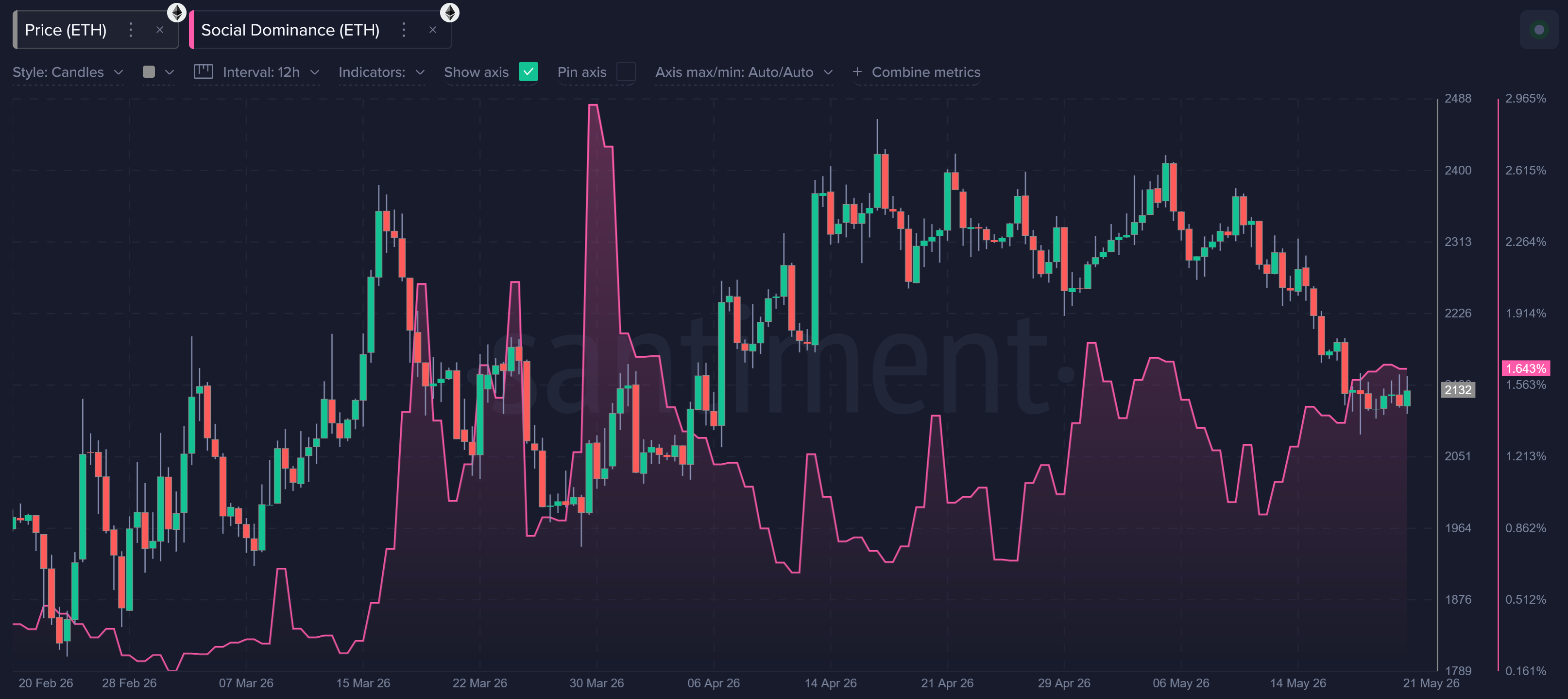
For starters, a few of Santiment’s social metrics can help provide an accurate picture of how the crowd’s mood has shifted toward Ethereum over the past few months. One of the clearest signs of Ethereum’s worsening reputation here in May has been the way its social dominance kept climbing even while its price continued falling. Normally, rising social dominance can be a healthy sign when it accompanies strong bullish momentum. But in ETH’s case, the chart above shows that discussion volume exploded after the April 17th local top, right as the asset began sliding lower. This is often what happens when traders become emotionally locked onto an asset for negative reasons rather than optimistic ones. Instead of excitement about new highs, the conversation shifted toward frustration, disappointment, and fear of further downside.
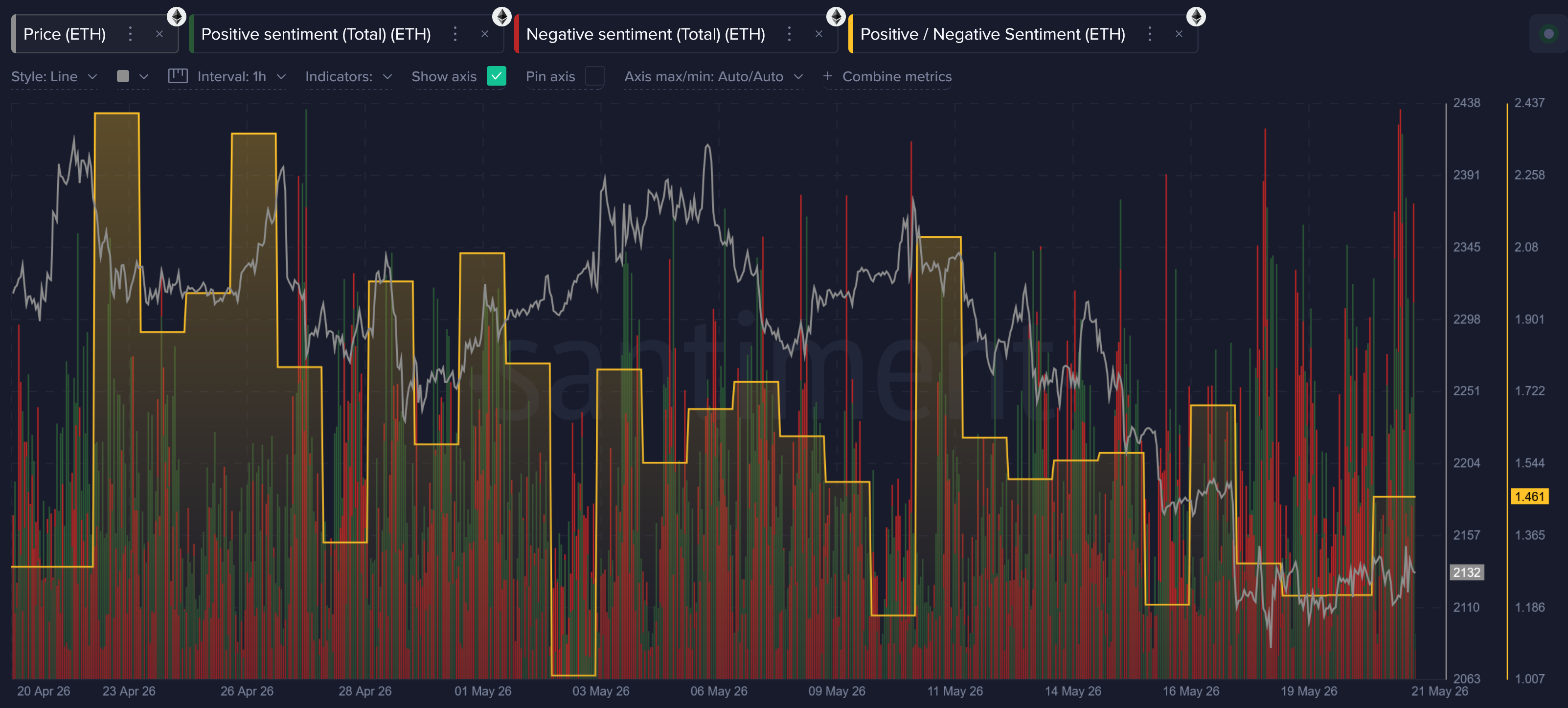
And when we look at the context of how many bullish comments compared to bearish comments about ETH are pouring in on social media every day, the decline in this ratio is undeniable. For much of late April, Ethereum still maintained relatively healthy sentiment ratios above 2.0 bullish comments for every bearish one. But as May progressed, that ratio steadily collapsed closer toward 1.0, meaning optimism and pessimism were becoming nearly even.
Historically, this kind of deterioration tends to happen when traders lose confidence in an asset’s short-term direction. What’s notable is that ETH’s sentiment didn’t collapse because of one catastrophic event. Instead, it appears to be the result of several negative narratives piling up simultaneously over a relatively short period of time.
Naturally, the most obvious driver has simply been Ethereum’s price performance itself. Crypto traders tend to become highly emotional during periods of underperformance, and ETH has increasingly become viewed as “dead money” compared to assets that have shown much stronger momentum in 2026. While Bitcoin has managed to retain institutional confidence and several newer ecosystems have captured speculative attention, Ethereum has struggled to reclaim the leadership role it once held during previous cycles. The longer ETH remained trapped below key resistance levels, the more social media narratives shifted from patience to outright frustration.
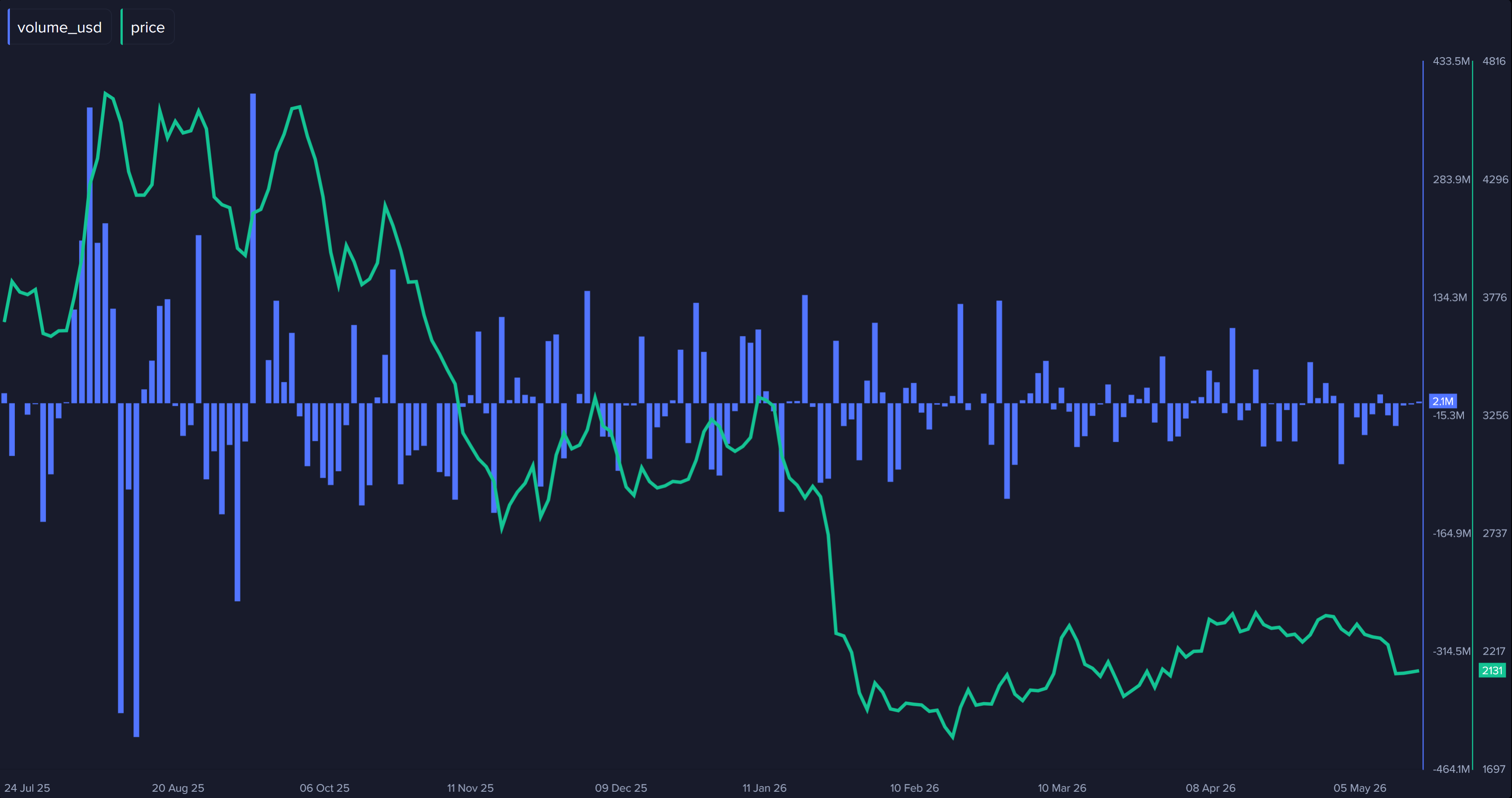
The ETF situation has only intensified these concerns. As shown below, several Ethereum ETF products have experienced persistent outflows throughout May, including particularly large exits from BlackRock-related funds. Though a +$50M net inflow day used to be very common among the total Ethereum ETF’s, we haven’t seen a day exceeding that amount in three weeks now. And even though ETF flows often lag sentiment rather than predict it, retail traders frequently interpret outflows as proof that institutions are abandoning the asset. That creates a psychological feedback loop where falling prices generate fear, fear causes outflows, and then those outflows generate even more fear. Ethereum’s bearish sentiment has increasingly reflected this cycle throughout the month.

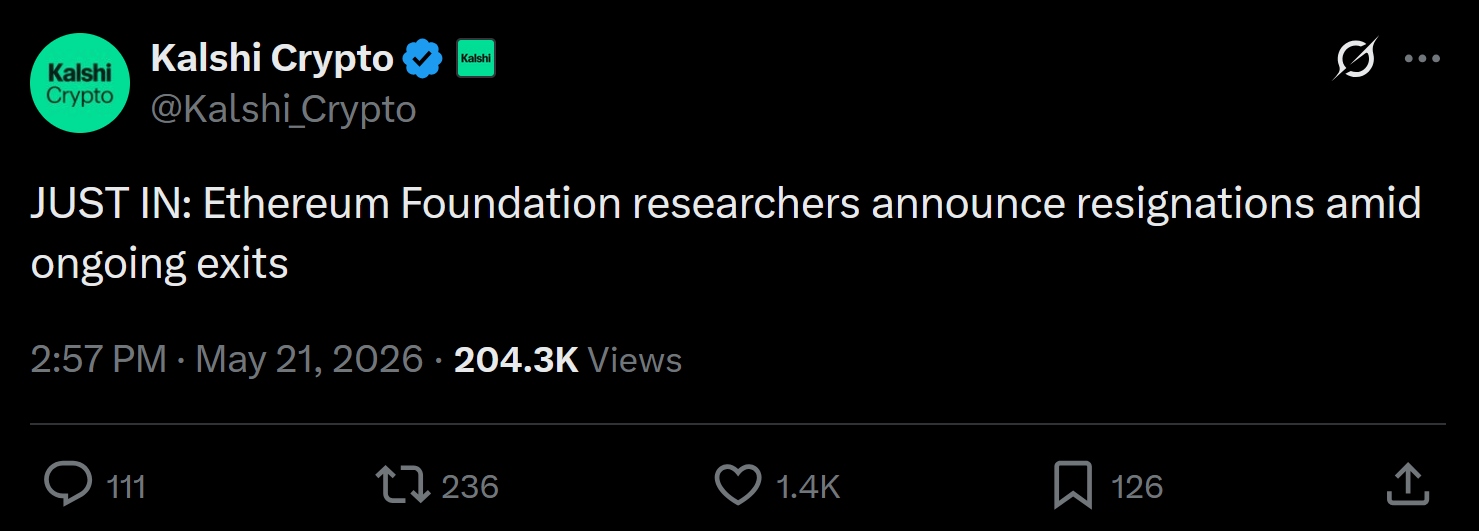
Another major source of negativity has been the growing number of reports involving Ethereum Foundation departures and prominent ETH advocates publicly distancing themselves from the ecosystem. Social media became flooded with headlines about researchers resigning amid ongoing exits, which many traders interpreted as a sign of internal instability. Whether these departures are actually damaging to Ethereum’s long-term future or not, perception matters heavily in crypto markets. Traders often react to narratives faster than they react to fundamentals.
Several influential personalities further amplified the bearish atmosphere. Rumors and viral posts surrounding major Ethereum figures allegedly reducing or fully exiting their ETH holdings, such as David Hoffman, spread rapidly across X throughout May. Even when some of these claims lacked complete context, they still reinforced the growing feeling that many longtime ETH supporters were losing conviction. In crypto, sentiment can deteriorate extremely quickly once traders begin believing that insiders are heading for the exits before everyone else.

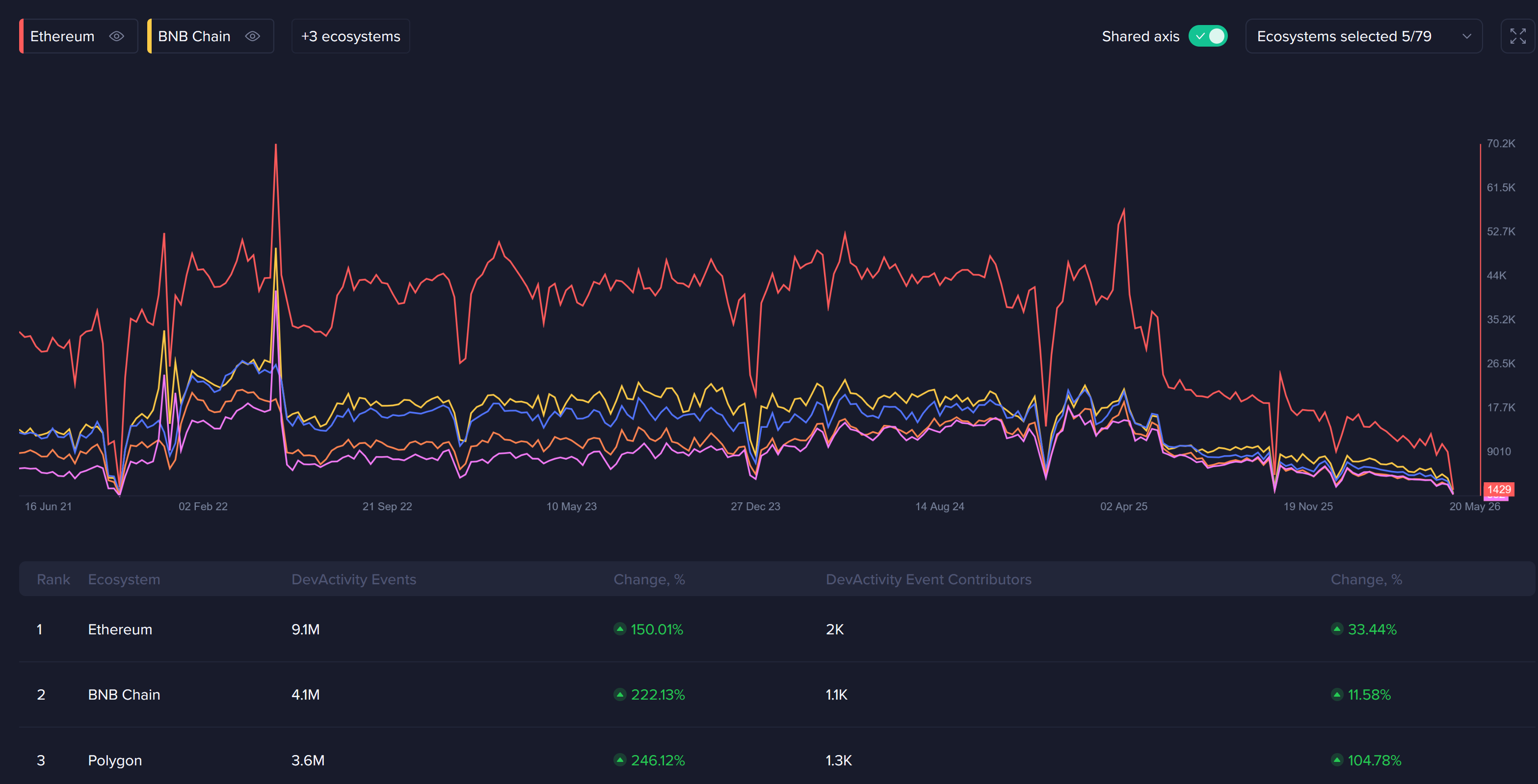
At the same time, Ethereum has also been facing criticism tied to competition from faster-growing ecosystems. One of the more overlooked trends visible in the ecosystem development chart above is that Ethereum still remains by far the leader in raw development activity. The network continues to generate millions of meaningful GitHub events and maintains one of the largest developer communities in crypto. However, retail traders have increasingly cared less about developer strength and more about short-term price acceleration. Competing ecosystems like BNB Chain, Solana, and others have continued attracting speculative enthusiasm, leaving Ethereum stuck in an awkward middle ground where it still dominates infrastructure but no longer dominates market excitement.
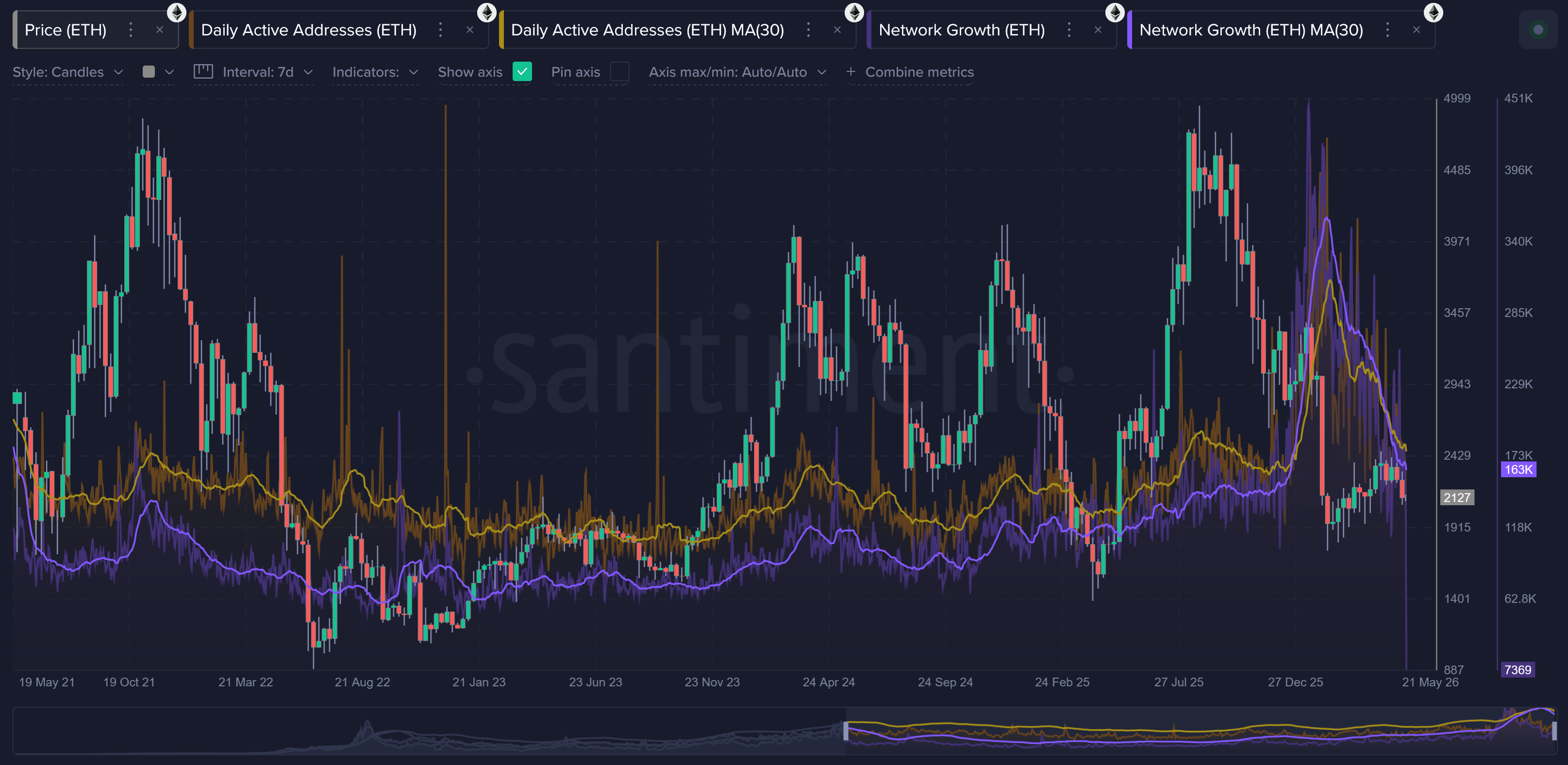
On-chain activity has also weakened noticeably compared to the highs seen during previous ETH rallies. The final chart above shows that both daily active addresses and network growth have cooled substantially from the explosive levels seen during Ethereum’s strongest periods in 2024 and 2025. Fewer new wallets are interacting with the network, and overall participation has slowed alongside price momentum. For traders watching these metrics, declining network growth often reinforces the belief that demand for ETH itself is weakening.
Ironically, some of Ethereum’s growing bearishness may eventually become constructive from a contrarian perspective. Historically, markets tend to punish the crowd when consensus becomes too one-sided. Ethereum is now reaching a point where social media discussion has become overwhelmingly focused on reasons to abandon the asset. Many traders who once viewed ETH as untouchable now openly question whether it can ever reclaim leadership again. From a behavioral standpoint, this type of crowd exhaustion is often what forms near major turning points.
Whether ETH is actually approaching one of those moments remains uncertain, but the emotional shift throughout May has unquestionably become one of the most dramatic sentiment reversals in crypto.
—–
Free two-week trials to Sanbase PRO (to access all mentioned Santiment data in this article, and plenty more) are AVAILABLE HERE!
—–
Disclaimer: The opinions expressed in the post are for general informational purposes only and are not intended to provide specific advice or recommendations for any individual or on any specific security or investment product.
Search
RECENT PRESS RELEASES
Related Post