Dolphins stay in Mississippi Sound despite environmental disasters, study finds
December 21, 2025
GULFPORT, Miss. (WLOX) – Scientists have answered a long-standing question about dolphin behavior in the Mississippi Sound. Why do the marine mammals stay put even when disasters strike?
A study from the Institute for Marine Mammal Studies found that roughly 700 dolphins are permanent residents of the Mississippi Sound who remain in the area throughout their entire lives, even when water quality deteriorates from events like the BP oil spill and Bonnet Carré Spillway openings.
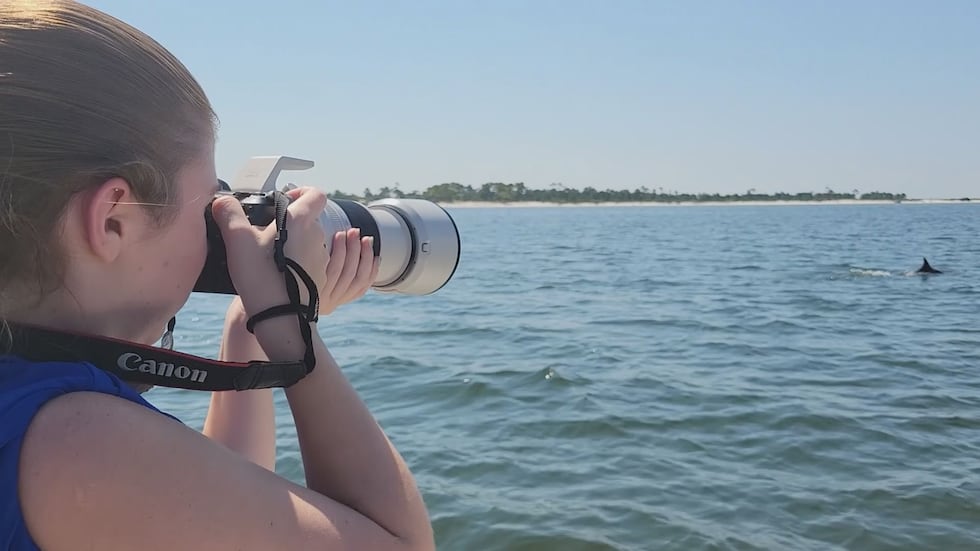
Tracking dolphins through dorsal fin identification
Research teams travel multiple survey routes each month, photographing dorsal fins that work like human fingerprints to track individual dolphins. The dorsal fin identification system allows scientists to determine which dolphins return and which ones stay in the area.
“It’s really important because the Mississippi Sound is highly impacted by anthropogenic effects, like the BP oil spill and the openings of the Bonnie Carrie spillway that negatively impact the water quality here,” said Kailey Pamperin, IMMS research technician. “So these resident animals that call the Mississippi Sound home, they’re not going to leave this area. They’re going to stay here throughout their entire lives. So even when their water quality absolutely tanks, they’re not going to leave.”
Researchers run thousands of fin photos through artificial intelligence to confirm repeat sightings. The data shows some dolphins have lived in the Mississippi Sound for over 20 years and are aging around 50 years old.
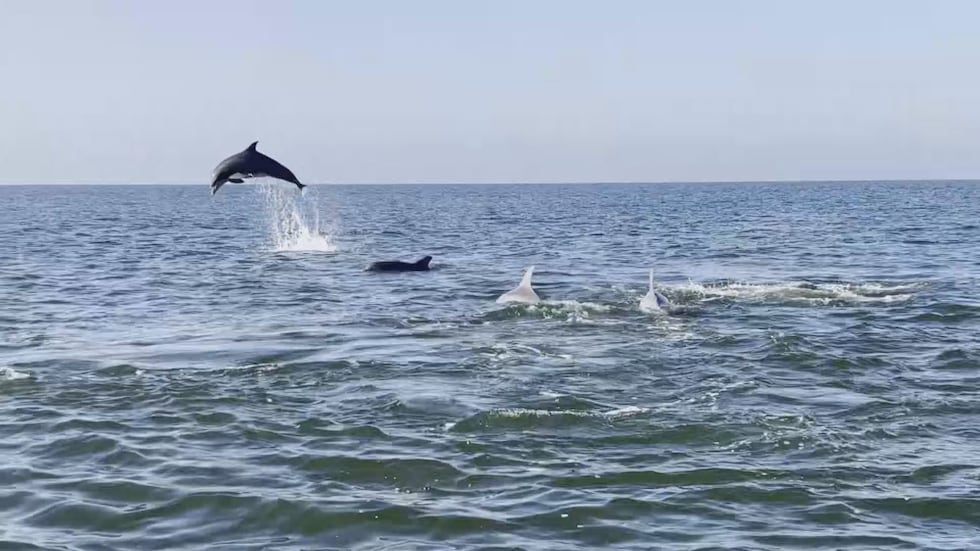
Mississippi Sound serves as nursery habitat
The Mississippi Sound supports one of the largest populations of bottlenose dolphins in the Gulf of Mexico. Its shallow, protected waters make it an ideal place to raise young and find food.
“We know the Mississippi Sound is a great nursery and it’s also a great feeding and foraging habitat for these dolphins,” said Dr. Forrest Collins, IMMS marine ecologist. “We’re seeing dolphins that have been here for over 20 or something years. And these dolphins are already aging over or around 50 years old.”
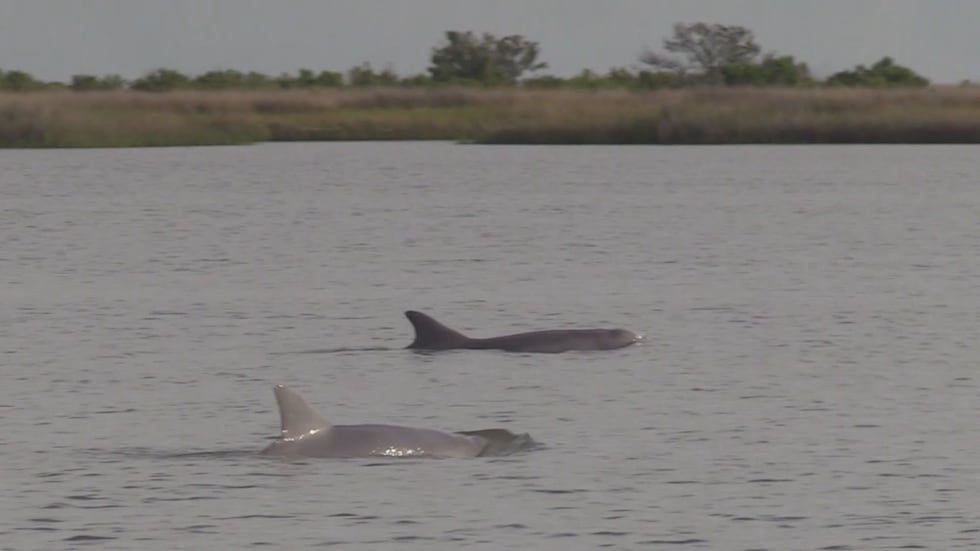
Dolphins as environmental indicators
Because dolphins sit at the top of the food chain, changes in their health can signal larger environmental problems that could affect both fisheries and human health.
“So dolphins are mammals, very similar to us, and so if anything’s affecting them, they’re more than likely is going to affect us,” Collins said. “With the Mississippi Sound, we have a vast variety of fish species that we use in a lot of our fisheries, and if the dolphins start disappearing, that means the food source is disappearing, which means we are probably going to be affected by that either economically or also just health-wise.”
IMMS’s dolphin catalog includes roughly 3,000 distinct dolphins, with about 700 confirmed residents of the Mississippi Sound. Researchers say the findings highlight how closely connected the health of the Mississippi Sound is from dolphins to fisheries to people.
See a spelling or grammar error in this story? Report it to our team HERE.
Copyright 2025 WLOX. All rights reserved.
Search
RECENT PRESS RELEASES