Drought to heat, Iran is facing environmental catastrophes — that is wrapped in its protes
January 17, 2026

.
James M. Gustafson is Associate Professor of History and Chair of International Studies at Indiana State University. Speaking with Srijana Mitra Das at Times Evoke , he discusses ecology, polity and history in Iran:What is the core of your research?■ The focus of my research is integrating environments and nonhuman actors into Iran’s history. My new book ‘The Lion and the Sun’ is the first work on Iran’s modern environmental history, looking at how human life has intertwined with environmental factors and non-human actants, like animals, plants, water, soil and climate, which people have reshaped to their own needs.
What are some defining features of Iran’s environment?■ Iran is remarkably diverse in terms of its landscapes. It has a very dry, arid interior, surrounded by two large mountain ranges, making this large rain shadow in the centre. Within that region, there has historically been a great dependence on irrigation systems, like the famous Qanat system of underground wells. Alongside, there are expanses of grasslands in many in-between places, populated by pastoralists and animal herders over long stretches of time.Then, across the Alborz range in the north, you have rainforests and lush foliage.
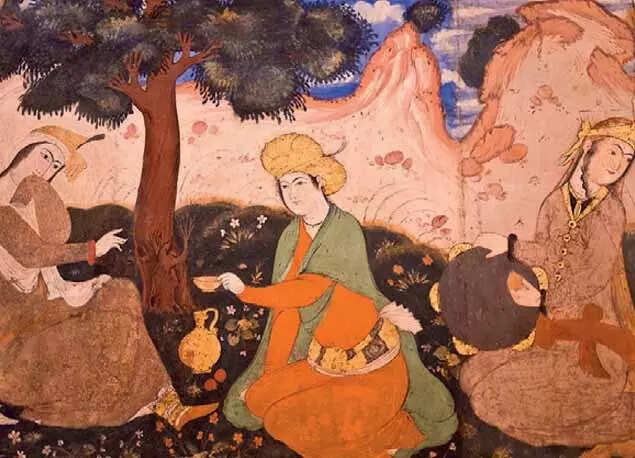
Your research finds a link between the ‘Little Ice Age’ of the 18th century and Iran’s decline — could you elaborate?■ It’s important to note climate change was a factor in reshuffling global power arrangements. Over the 17 th and 18 th centuries, agrarian land empires throughout the northern hemisphere were put under enormous pressure by changes in climate patterns — in some areas, that meant long droughts, in others, rain, flooding and erratic weather, as seen with global warming today.Remarkably, Iran rode out that crisis a bit longer than elsewhere in Eurasia, China or Northern Europe.The Safavid dynasty ruling Iran then were an advanced bureaucratic state — but the deeper problems driven by climate change caught up with them. Those included drought produced food shortages and huge epidemics, with the loss of a third to half the population. That undermined the system — the Safavids fell.

.
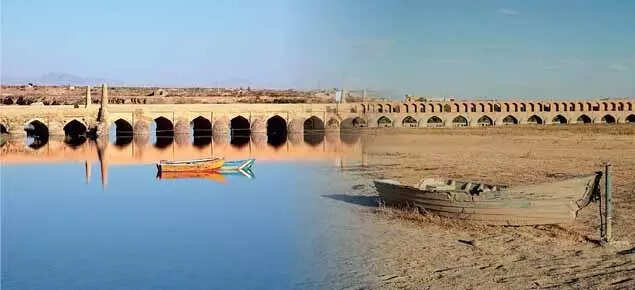
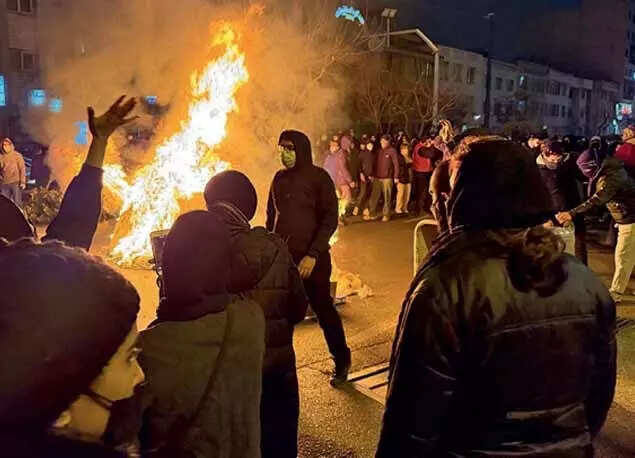
When we integrate a bigger picture, extending beyond people into environmental change, we understand how Iran went from being a major commercial and military power in the early modern period to a weakened, divided state by the time of British and Russian intrusions in the 19th century.The collapse of the Safavids was also followed by seven decades of warfare, with people like Nadir Shah building massive armies, hoarding grain and horses, driving the crisis even deeper.What role has oil played in Iran?■ Many have written about oil as a corrupting form of cash distorting the country’s politics — but that is only a small part of the picture. Oil is a fluid resource, located in enormous quantities in many places. As Tim Mitchell writes in ‘Carbon Democracy’, it needed business arrangements to limit production levels and create artificial scarcities to make this profitable — that was in conflict with the needs of states which were paid royalties based on domestic production levels.Oil industrialisation in Iran also required new forms of property rights to negotiate between the state’s claims about the Shah owning all natural resources which he could sell to foreign investors versus people having rights to the land above oil reserves. The industry also required building infrastructure and expertise in state agencies to manage it — oil further meant the creation of an industrial working class which became politically active in Iran since the mid-20th century.What are some contemporary Iranian experiences with water and air?■ Iran has been facing an environmental catastrophe in recent years. Part of this comes from a drive for self-sufficiency, which has led to unsustainable agricultural practices — over 90% of the water use in Iran goes to massive industrial agriculture on a level that lands and aquifers cannot sustain. Kaveh Madani has called this ‘water bankruptcy’.So, do water concerns drive political protests in Iran today?■ I won’t speak on behalf of Iranians who are standing up to claim their rights and have been met with enormous state violence.However, clearly, grievances against the Islamic Republic have brought together calls for political rights alongside environmental justice.In 2021, for instance, before the ‘Woman, Life, Freedom’ protests began, there were widespread environmental protests in Iran, most notably in Isfahan, where the Zayanderud ran dry from water being diverted to agricultural projects. Such concerns got wrapped into questions of other political rights.There is writing discussing how the Islamic Republic has moved water through big interbasin transfer systems away from marginalised communities to agriculture in the Central Plateau. That has placed a disproportionate burden on people who were already struggling — the urban poor living on the outskirts of Tehran face industrial pollution. They lack basic public services but confront shortages of water and energy with rampant inflation and unemployment.In recent years, a convergence of multiple grievances has occurred — which includes environmental issues.
What is climate change like in Iran?■ As in the past, climate change is a factor in the water crisis, straining already vulnerable systems. Yet, the bulk of the problem is decades of unchecked development that has treated water as if it is an infinitely renewable resource. Once aquifers are drained though, the earth tends to compress them and diminish their capacity.This has happened there and the situation is so dire, President Pezeshkian has actually stated the government intends to move the capital from Tehran to the Makran coast.We often talk about climate change as if it’s reshaping the world at will — but it’s just amplifying problems people have already created.What are the diverse sources your research draws upon?■ Environmental history allows you to use familiar sources in new ways. Historians once tended to focus on human systems, ideas and cultures to such an extent, we missed how interdependent we are with other elements of our environment.So, in ‘The Lion and the Sun’, I brought together sources as diverse as land grants and endowment deeds with the growth rings of juniper trees, Persian geographical writing, court chronicles and corporate archives.It is important to ask new questions and broaden our view of what constitutes ‘history’.What relationships do Iranians have with the world of animals, birds and plants, which is a significant part of Indian life?■ There has always been a very active sense of nature in Persian literature and Iranian cultures. This goes back as far as we can see. Zoroastrianism, for instance, has a very strong sense of nature. The New Year Nowruz celebration marks the rebirth of the year with spring and the arrival of the agricultural cycle as an annual renewal. That’s a key thing Iran lost in the modern period — this sense of human and non-human nature inhabiting the world together, rather than humans dominating nature.Coexistence is very deeply embedded in Iranian culture, with a sense of nature being an active force in our life.
Search
RECENT PRESS RELEASES
Related Post