Eastman Debuts at Auto China 2026, Redefining the Upper Limit of Automotive Glass
April 27, 2026
Gasgoo Munich- On April 24, 2026, the 19th Beijing International Automotive Exhibition kicked off under the theme “Leading the Era, Smart Future.” For the first time, the show links the China International Exhibition Center (Shunyi Hall) with the Capital International Convention and Exhibition Center (New China Exhibition Center Phase II). With a total exhibition area of 380,000 square meters, it serves as a core window for observing global automotive industry transformation trends.
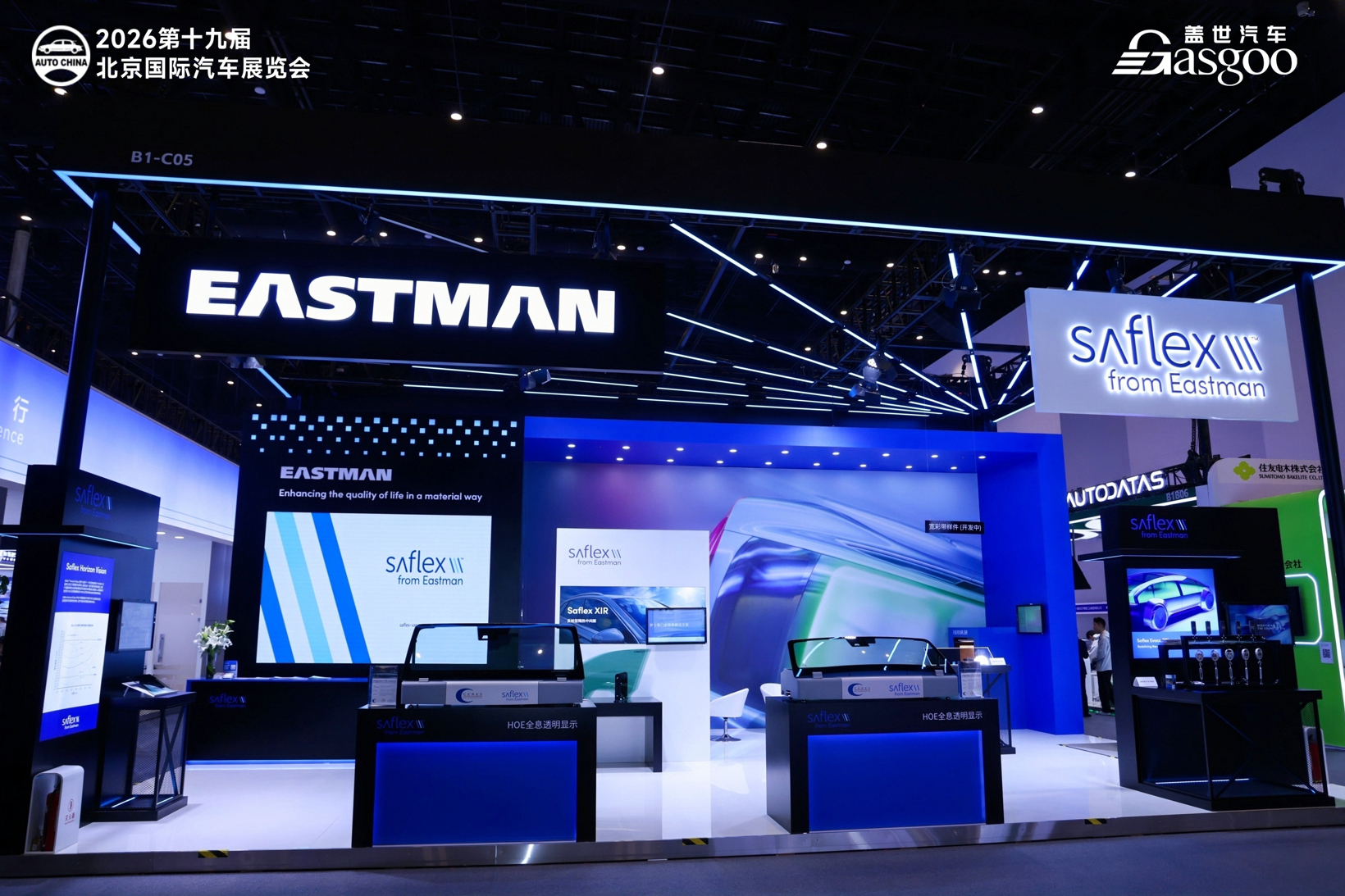
Photo caption: Eastman booth at the 2026 Beijing Auto Show
Notably, a global specialty materials giant—long renowned in automotive safety glass but operating mostly behind the scenes—has stepped into the spotlight as an independent exhibitor for the first time: Eastman. As the owner of the Saflex™ PVB interlayer brand, Eastman’s presence isn’t a simple product display. Instead, it’s a strategic declaration of its intent to participate deeply in the early definition stages for OEMs and drive smart cockpit innovation from the material level, all against the backdrop of a radically changing industry.
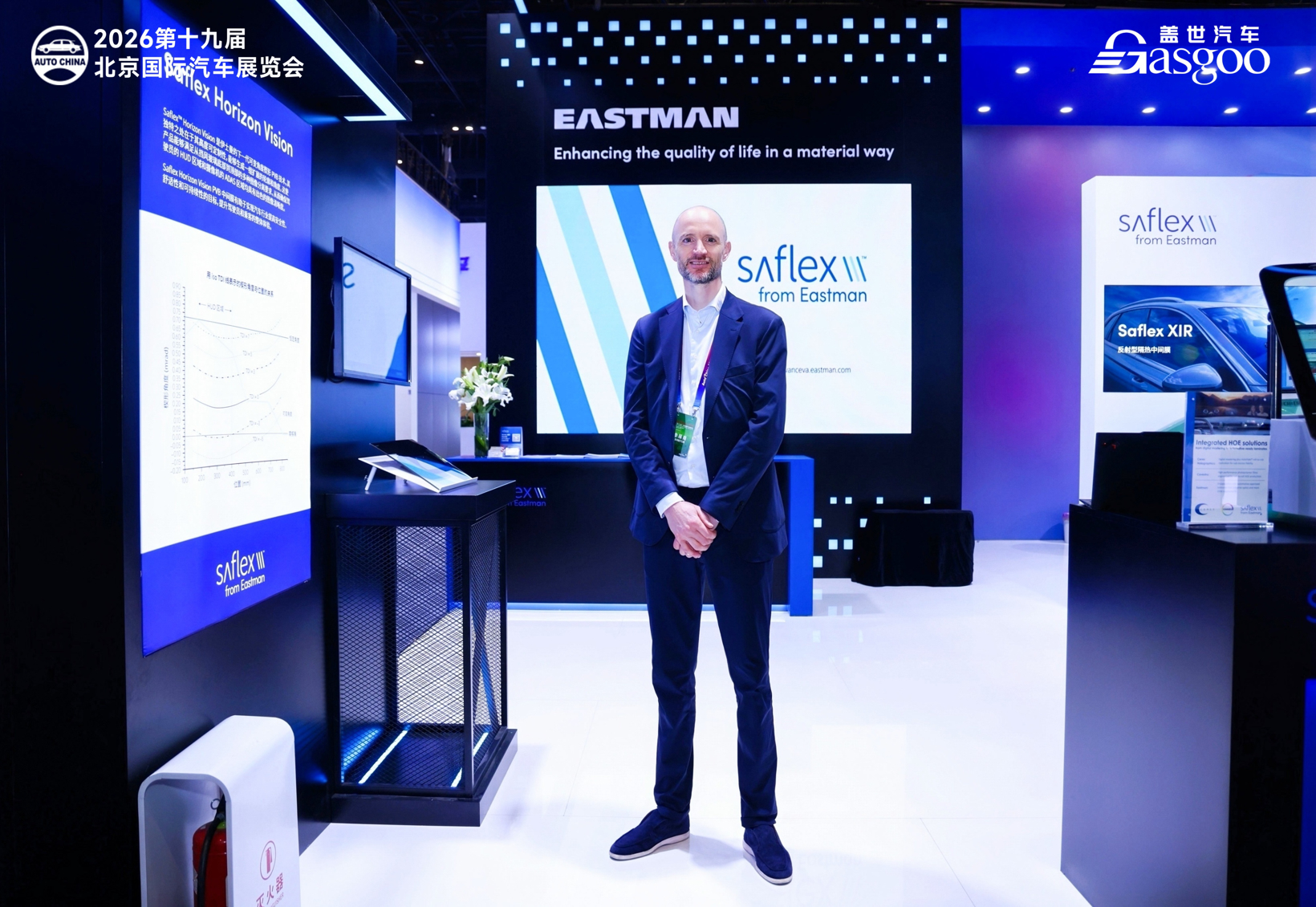
Photo caption: Mr. Oliver Osborne, Global Commercial Director, Automotive, Advanced Interlayers Division, Eastman
“In the past, our work focused largely on meeting regulations and basic performance requirements,” said Oliver Osborne, Global Commercial Director for Automotive at Eastman’s Advanced Interlayers division. “Today, cars are evolving into ‘mobile smart spaces.’ Glass is no longer just a barrier against wind and rain; it’s a multifunctional carrier for display, interaction, sound insulation, heat rejection, and visual perception. Participating in the Beijing Auto Show is a crucial step for us to define the next generation of smart cabins alongside OEMs and Tier 1 suppliers.”
Tackling Six Engineering Pain Points with Cutting-Edge Materials
At this year’s show, Eastman systematically presented six technologies targeting scenarios like holographic displays, ADAS, enhanced and high-rigidity sound insulation, and sunroof or door glass heat rejection. These innovations directly address the core challenges OEMs face in design and engineering implementation.
-
HOE Holographic Transparent Display Laminated Windshield: Imaging Without Obstruction
By integrating a HOE (Holographic Optical Element) transparent display film inside the windshield, Eastman has achieved holographic transparency. The solution allows the projector to be as small as 1 liter, with a customizable eyebox position—giving OEMs significant design freedom. More importantly, the technology has passed automotive safety glass regulation tests. While meeting transparency and haze requirements, it provides a new hardware carrier for intelligent driving and entertainment interaction. The two HOE holographic display laminated windshields on display feature single-screen and dual-screen setups, with a maximum Field of View (FOV) reaching 26 x 11°.
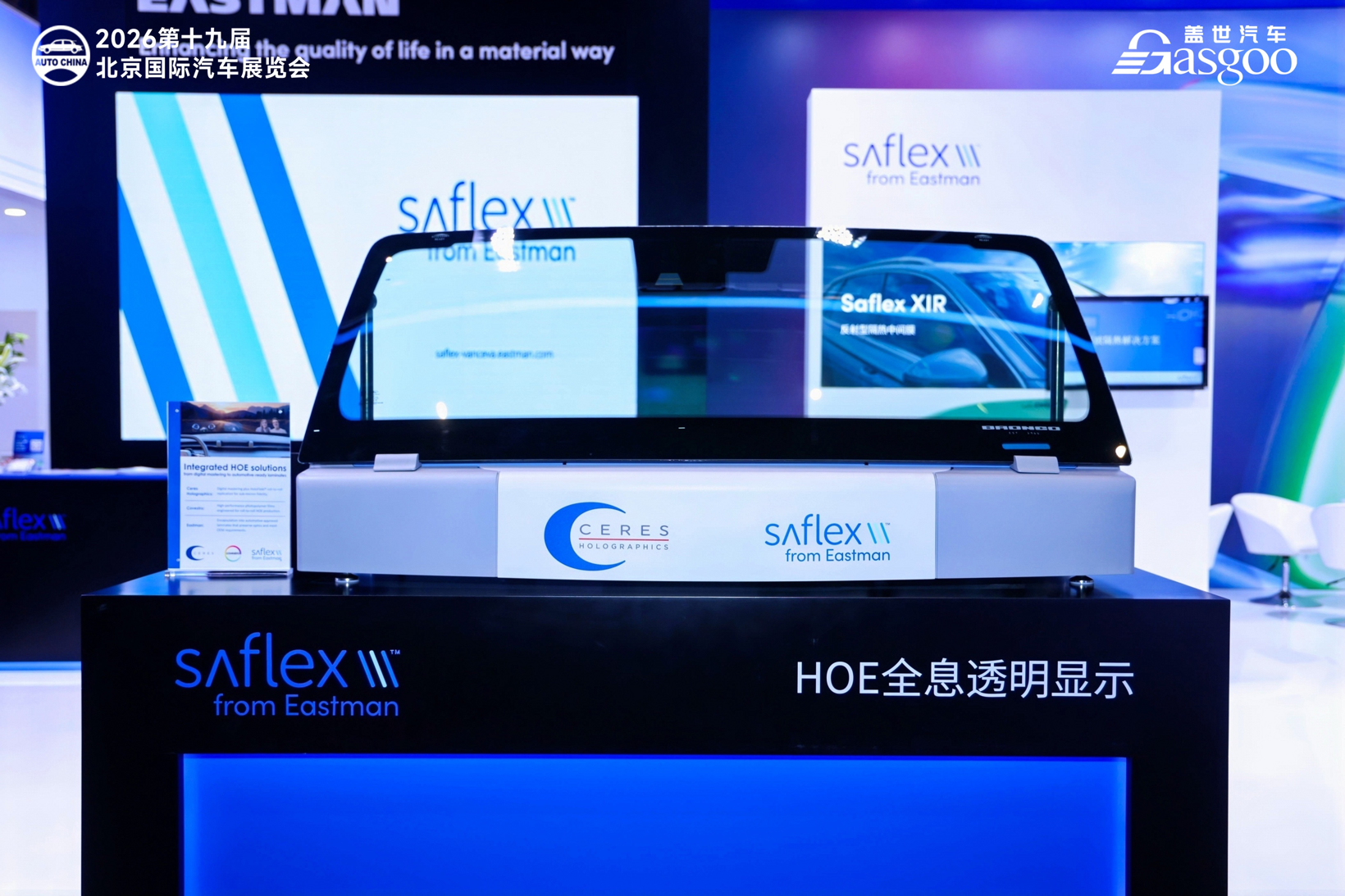
Photo caption: HOE Holographic Transparent Display Laminated Windshield
-
Saflex™ Evoca™ RSL: A Dual Solution of Rigidity and Sound Insulation for Frameless Doors
Addressing the conflict between stiffness and noise insulation brought on by the popularity of frameless doors and laminated door glass, Eastman introduced the three-layer Saflex Evoca RSL high-rigidity acoustic PVB interlayer. It delivers a stiffness improvement of 20% to 40% across different glass configurations.
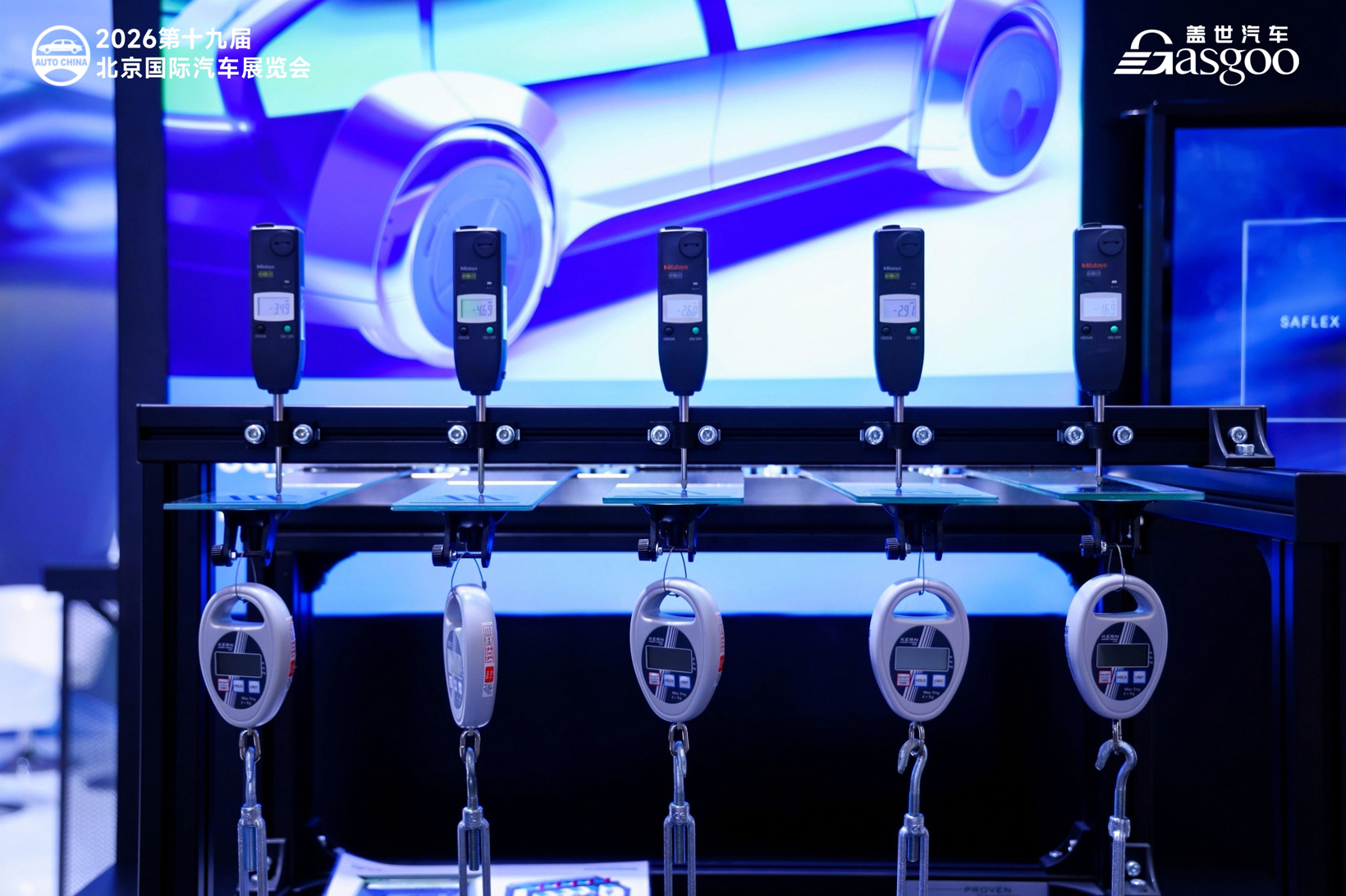
Photo caption: Saflex™ Evoca™ RSL
On-site bench comparison tests revealed that under identical external force, a standard configuration using 1.8mm glass deformed by 7mm, while the same setup using Evoca RSL deformed only 3.98mm. Meanwhile, its high-damping acoustic core effectively compensates for the acoustic loss caused by thinner glass, improving high-frequency noise damping by 2.5dB and significantly addressing the acoustic sensitivity of electric vehicle door glass areas. “Thinner without sacrificing performance, lightweight without losing quietness” serves as the technology’s tagline.
-
Horizon Vision: One Glass, Meeting Differential Optical Needs for HUD and ADAS
As higher-level HUDs move toward mass production, tolerance for ghost images is becoming increasingly strict, while ADAS front-facing cameras have ever more stringent requirements for Target Deviation Image (TDI). The Horizon Vision solution utilizes customizable variable-angle technology within the PVB film. By setting different wedge angles in different zones of a single windshield, it simultaneously meets the optical requirements for HUD near/far-field displays and ADAS cameras—clearing a critical material obstacle for the mass production of highly integrated windshields.
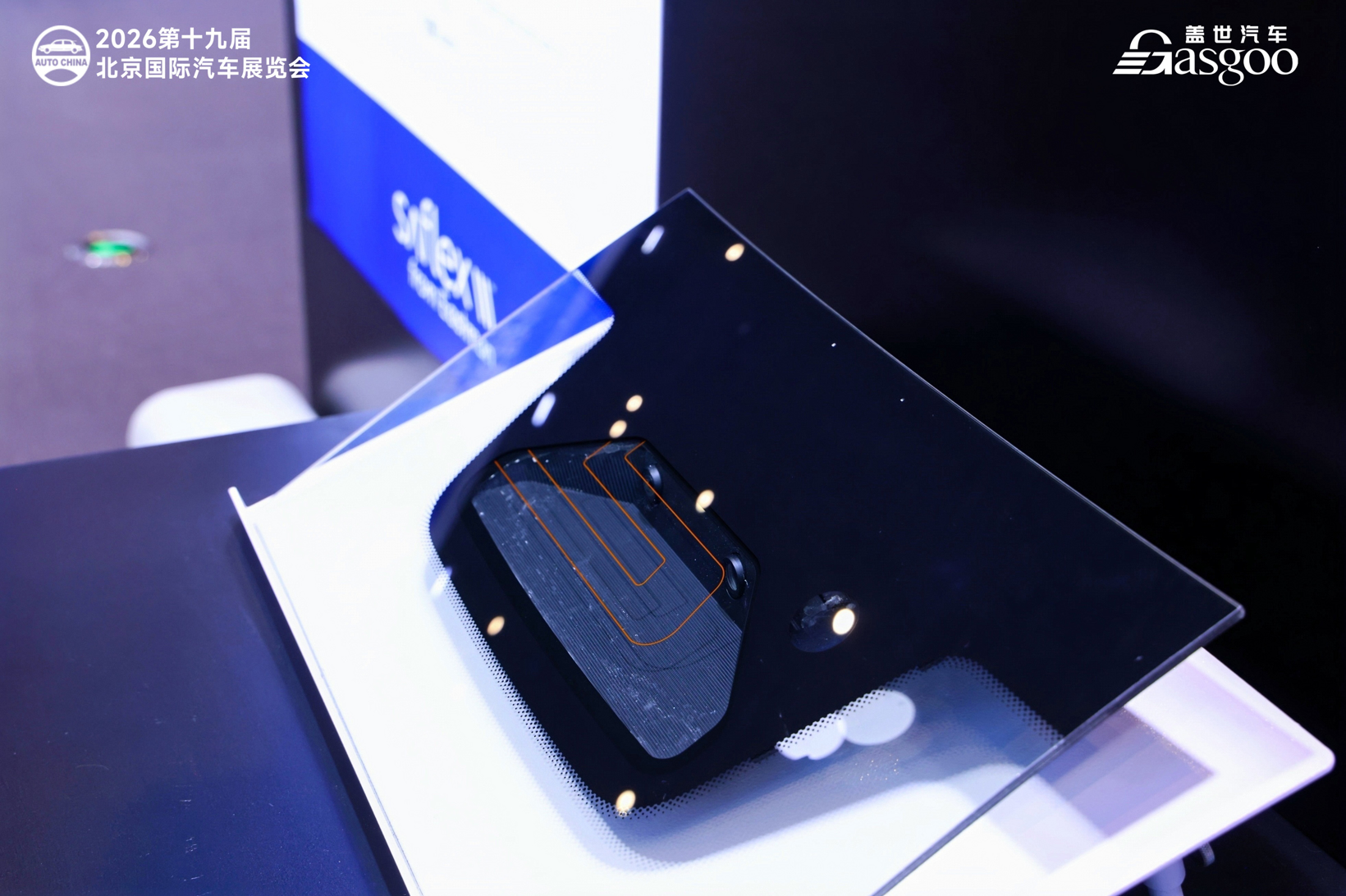
Photo caption: Horizon Vision for ADAS
-
XIR.SR Film: Solving Reflection Color Consistency for Large Curved Glass
Addressing the extreme pursuit of glass appearance consistency in high-end vehicles, Eastman launched the new XIR.SR film. By reflecting infrared rays, Evoca XIR.SR effectively reduces the Total Solar Transmittance (TTS) inside the cabin. Compared to the blue tones typical of traditional coated glass, XIR.SR achieves a consistent neutral gray across multiple viewing angles while maintaining high optical clarity—making it particularly suitable for large-area panoramic sunroof designs.
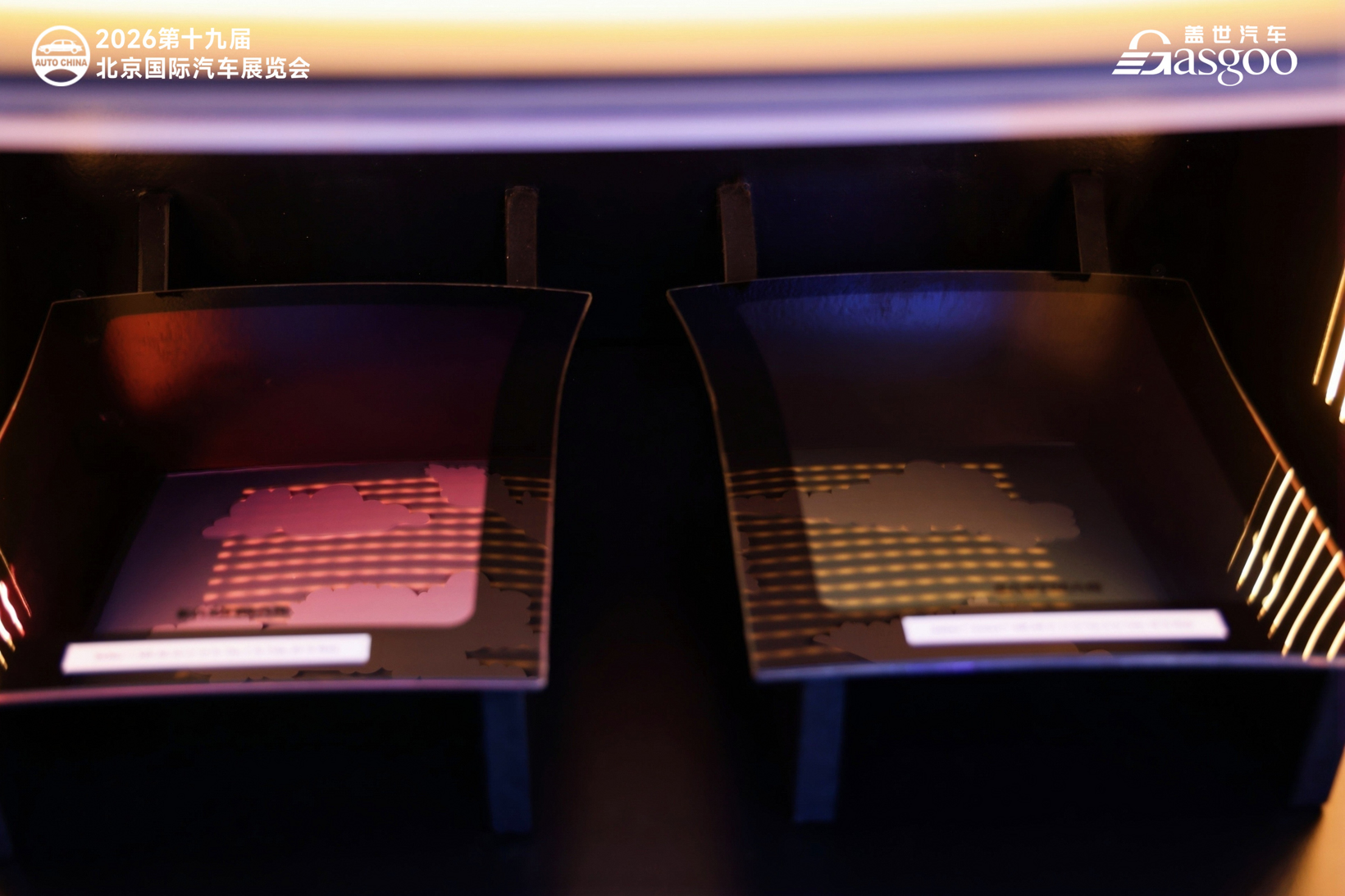
Photo caption: XIR.SR film
-
Door Glass Heat Insulation Matrix: Covering Absorption, Reflection, and UV Blocking
To address the increasingly prominent heat insulation needs of side door glass, Eastman offers a complete product matrix:
XIR.SL: A reflective heat insulation product that achieves Tts < 52% when combined with clear glass;
EM41: An absorptive heat insulation product that achieves Tts ~54% when combined with green glass;
EM4U: An absorptive heat insulation and ultra-UV blocking product with a UV rejection rate >99.9% @400nm;
The above solutions can all integrate enhanced sound insulation features, meeting the composite needs of OEMs regarding NVH and thermal comfort.
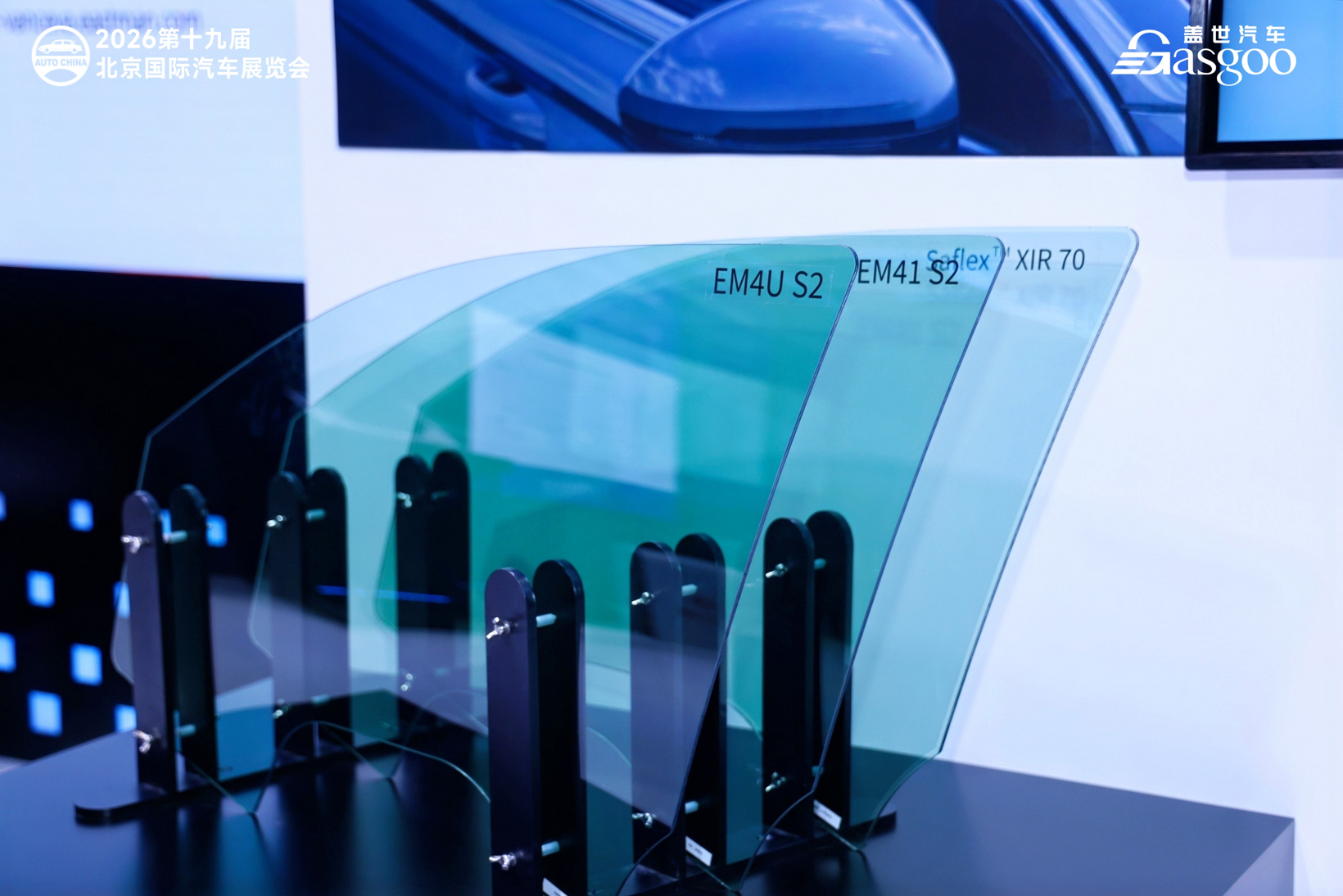
Photo caption: Door glass heat insulation solutions
-
WCB Gradient Film: Integrated Design Boosts Yield for Large Curvature Glass
To meet the trend of large curvature and ultra-wide band designs on front and rear windshields of electric models, Eastman introduced the WCB gradient film product. This expands the band width to over 80cm (compared to the traditional ≤25cm) and integrates features like sound insulation and HUD onto a single film. This significantly reduces lamination complexity while improving lamination yield and production efficiency.
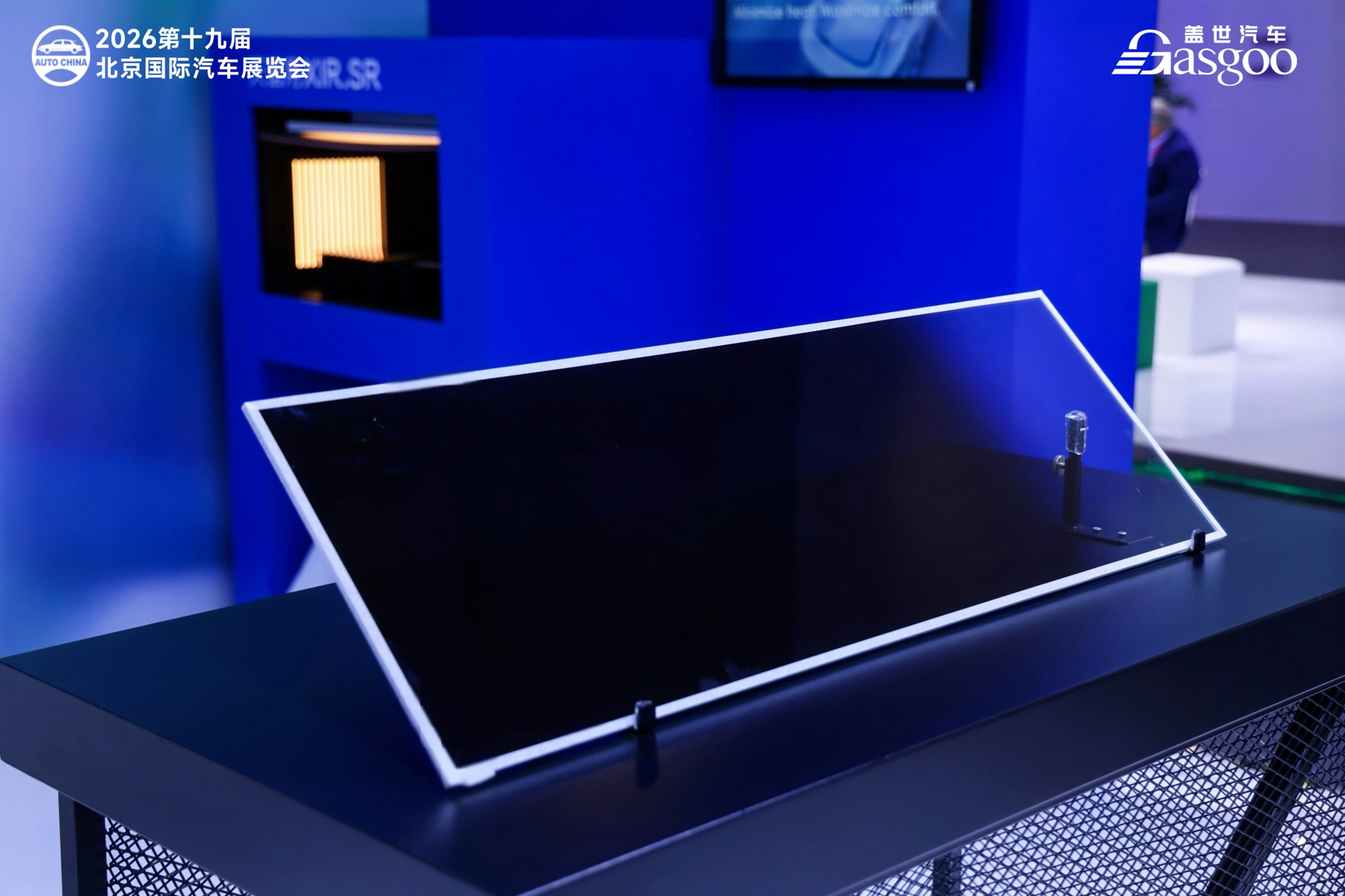
Photo caption: WCB Gradient Film
Materials Are Redefining the Boundaries of the Smart Car Cockpit
The technologies Eastman exhibited may appear to be simple additions of film to glass, but in substance, they represent a redefinition of the boundaries for multiple core systems in smart vehicles.
Both the HOE holographic transparent display and Horizon Vision point to a single trend: the front windshield is evolving from a “light-transmitting structural component” into an “interactive interface.” In the future, driving information, entertainment content, ADAS warnings, and AR navigation will be projected directly onto the glass—without obstructing the view or causing visual fatigue. Eastman’s ability to engineer a balance between display optics and safety glass has become the key pivot in this evolution.
At the same time, the quietness of electric vehicles amplifies the sound insulation shortcomings of traditional windows. The “high rigidity + high damping” combination of Evoca RSL not only resolves the mechanical defects of frameless doors and thin glass but also elevates in-cabin voice interaction, audio quality, and ride comfort to a new level. As an Eastman insider put it: “In the EV era, quiet is no longer a luxury; it’s a basic configuration. Our materials ensure that ‘quiet’ doesn’t come at the cost of design freedom.”
Another widespread industry contradiction lies in the fact that HUDs require large wedge angles to eliminate ghost images, while ADAS camera zones are extremely sensitive to wedge angles, easily causing target deviation. Through a localized variable-angle design, Horizon Vision achieves a “custom fit” for both on a single windshield for the first time—providing a feasible path for the coexistence of high-level intelligent driving and immersive displays.
On the manufacturing front, the WCB gradient film is a typical embodiment of material integration capability. Streamlined EV designs have a strong demand for wide bands, yet traditional multi-film lamination processes suffer from low yields and high costs. By integrating wide bands, sound insulation, and HUD into a single film, WCB directly lowers the engineering threshold for front and rear windshields.
As for the reflection color consistency issue solved by XIR.SR, this is often attributed by consumers to “overall vehicle quality.” As glass areas grow larger and tilt angles become more varied, color differences are easily detected. Eastman’s deep cultivation of this detail—while achieving a balance of TTS, Visible Light Transmittance, and haze—reflects a precise understanding of OEMs’ needs for brand texture.
Basic Materials Become a Front-End Variable for Differentiation
Electrification and digitization have imposed complex, high-precision requirements on glass functions, while consumer expectations for safety, quietness, comfort, and visual experience continue to rise. As one of the largest and most intuitive interfaces in the cabin, the material capability of glass will directly determine the upper limit of the smart cockpit.
By combining material innovation with system-level solution capabilities, Eastman is upgrading from a single interlayer supplier to a collaborative innovation partner for performance integration in automotive front windshields, side windows, rear windshields, and roof glass.
HOE holographic display technology hints at the possibility of the front windshield as a “transparent display screen”; Horizon Vision provides an engineering path for the coexistence of complex optical systems; Evoca RSL answers the dual thirst for quietness and lightweighting in the electric era. These technologies do not exist in isolation; they point to a collective trend: the automotive glass of the future will be an integrated carrier for five functions—safety, display, perception, acoustics, and thermal management. Eastman is positioning itself as one of the rule-makers for basic materials and system solutions in this field.
As Eastman emphasized at the show: “We are not simply providing a film; we are helping OEMs realize more possibilities on a single sheet of glass—quieter, clearer, smarter, and more beautiful.”
As EV platforms converge and intelligent computing power levels out, true differentiation will return to the micro-level of materials, craftsmanship, and user experience. With its debut as an exhibitor, Eastman is sending a clear signal to the industry: material technology is no longer just a “backend guarantee” for automotive engineering, but a “front-end variable” that defines product competitiveness.
From HOE holographic displays to high-rigidity sound insulation, and from variable-angle wedges to gradient film integrated design, Eastman is using sheet after sheet of “invisible film” to support the visible, audible, and tangible leaps of the next generation of smart vehicles. For more highlights, please visit the Eastman booth at B1C05, Capital International Convention and Exhibition Center.
Search
RECENT PRESS RELEASES
Related Post