Eddie Nachamie: Environmental advocate wins prestigious scholarship – UMaine News
December 17, 2025
Eddie Nachamie: Environmental advocate wins prestigious scholarship
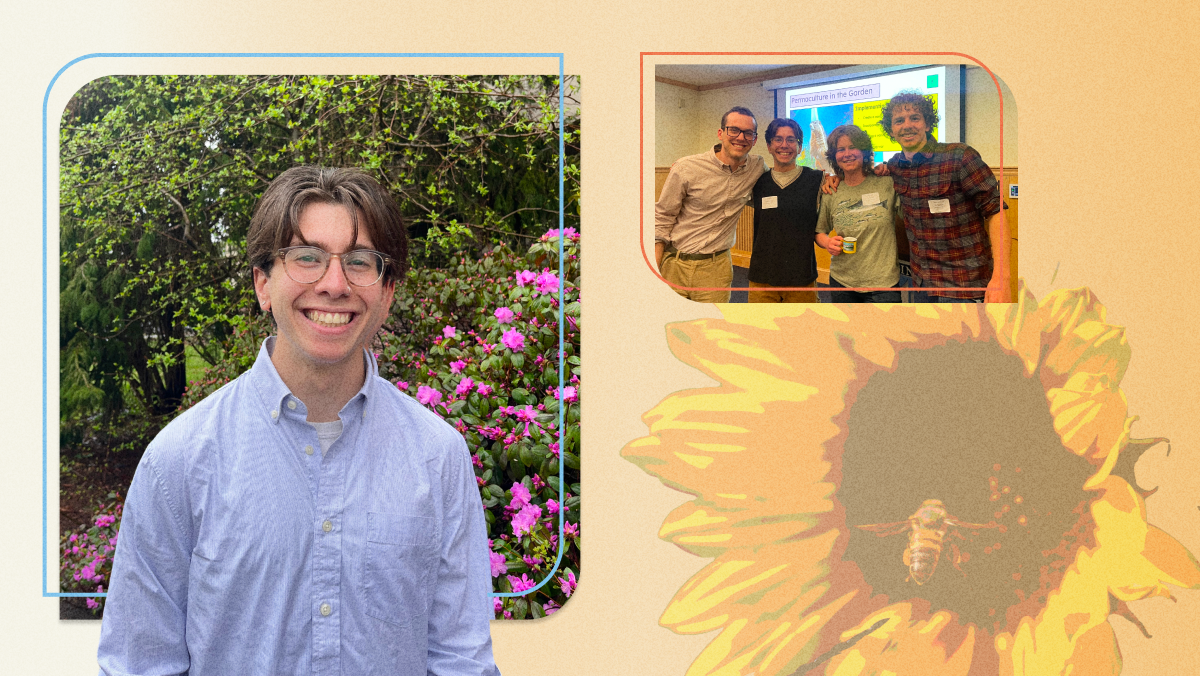
From the gardens to the farms and forests, Eddie Nachamie has dedicated his undergraduate career toward protecting the environment. At the University of Maine, he has worked on projects to reduce food waste, preserve wild blueberries and mitigate the spread of a group of chemicals known as PFAS.
As a result of his efforts, Nachamie of North Andover, Massachusetts received the 2025 Udall Scholarship, identifying his potential as a leader in environmental stewardship. He was one of just 55 recipients nationwide and is the first recipient from UMaine in over 15 years.
“I am incredibly grateful to have been awarded the Udall Scholarship,” said Nachamie, who received support for his application from the Office of Major Scholarships and by professor Darren Ranco, the faculty representative at UMaine for the scholarship. “We’re at a pivotal moment in history where our actions on environmental issues matter more than ever.”
Nachamie, a UMaine Honors College student majoring in ecology and environmental sciences, has been involved in research targeted at improving public health and the environment throughout his college career.
During his first year at UMaine, Nachamie worked on a study to reduce food waste in K-12 schools conducted by the Senator George J. Mitchell Center for Sustainability Solutions in collaboration with the Maine Department of Education, Maine Department of Environmental Protection and Governor’s Office of Policy Innovation and the Future. After implementing several measures, such as including school community fridges and educational programming, the four school districts that participated in the study were able to reduce their food waste by 20%.
In 2024, Nachamie drafted a policy review of PFAS legislation in Maine and the U.S. It details ways other states and local governments can mitigate people’s exposure to these toxic chemicals, which can lead to immune system disorders, thyroid hormone disruption, cancer and other adverse health outcomes. He worked on the review with associate professor of sustainable agriculture Rachel Schattman.
“I have been lucky to have the mentorship of Rachel Schattman from the School of Food and Agriculture to support me in my research about PFAS compounds in Maine and throughout the United States,” he said. “Dr. Schattman’s feedback on my policy review showed me what I was capable of from a research perspective.”
Nachamie previously worked as a research technician collecting data that supported wild blueberry research at UMaine’s Agroecology Lab overseen by Schattman. He has also worked as a forest technician for the Cooperative Forestry Research Unit and the University Forests, through which he learned about low impact forestry practices.
Outside of school and research, Nachamie serves as president of the Permaculture and Gardening Club at UMaine and as a resident steward at the Terrell House Permaculture Living & Learning Center. He hosts workshops and events focused on gardening, food preservation and other topics.
“UMaine has an extremely supportive and cooperative academic atmosphere,” Nachamie said. “Students are excited to help each other out, form study groups and work together to succeed in their classes. The academic atmosphere is rigorous but not competitive, and I’ve found that professors are always willing to help accommodate student situations and concerns.”
When he graduates, Nachamie plans to work in environmental education and advocacy with nonprofit organizations in Maine and Alaska. After a few years, he hopes to return to school and obtain his Juris Doctor and Masters of Law in Environmental Law.
UMaine undergraduate students interested in applying during the 2026 cycle of the Udall Scholarship must do so through the Office of Major Scholarships by Feb. 6 to meet the national deadline of March 4. Those interested in applying can reach Nives Dalbo-Wheeler at the Office of Major Scholarships by emailing nives.dalbowheeler@maine.edu, or Ranco, chair of UMaine’s Native American Programs, by emailing darren.ranco@maine.edu.
The Udall Foundation awards scholarships, fellowships and internships for study in fields related to the environment and to Indigenous communities in fields related to health care and tribal public policy. It also provides funding to the Udall Center for Studies in Public Policy and to the Native Nations Institute to conduct environmental policy research, research on American Indian and Alaska Native health care issues and tribal public policy issues and training. Additionally, it offers assessment, mediation, training and other related services through the John S. McCain III National Center for Environmental Conflict Resolution.
Contact: Marcus Wolf, 207.581.3721; marcus.wolf@maine.edu
Search
RECENT PRESS RELEASES
Related Post