Editorial: Renewables offer greatest hope for domestic energy security
May 2, 2026


With the average gas price in Virginia exceeding $4 a gallon due to the war in Iran, and power bills stretching family budgets to the brink, the need to transition away from fossil fuels and toward renewable energy solutions couldn’t be more self-evident. The United States should be the leader in green power innovation and, with investments in efficiency, could usher in a more sustainable and responsible era for domestic energy.
The Trump administration, with its relentless push for oil and gas, stands as the largest obstacle to those efforts, but Virginia is making strides regardless. As wind and solar expand across the nation, in spite of the White House efforts, Americans should demand a future powered by clean energy and favor leaders willing to enact that vision.
For the first time, in March 2025, renewable energy accounted for more than half of the total power usage nationwide. Wind, solar and other green fuels provided 50.8% of Americans’ energy needs that month compared to fossil fuels such as coal and oil at 49.2%, according to energy think tank Ember.
That achievement was a long time coming — Ember researchers noted that 10 years prior, fossil fuels accounted for 65% of U.S. electricity generation, with wind and solar generation providing only 5.7% — though it was fleeting.
Green energy sources provide more power than ever but still lag well behind other fuels used across the grid, especially natural gas, and the U.S. Department of Energy estimates that fossil fuels will still provide about 71% of domestic energy needs by 2050.
What’s changed? Begin with the overwhelming scientific consensus that fossil fuel combustion produces harmful emissions that are driving climate change and global warming. Atmospheric carbon dioxide stood at 331.56 parts per million 50 years ago; the latest figure from the National Oceanic and Atmospheric Administration, in May 2025, put that number at 425.93 ppm — and it’s still rising.
More CO2 in the atmosphere means more heat trapped and reflected toward the surface and into oceans, raising temperatures and sea levels. The effects of this are evident throughout Hampton Roads, which is one of the regions most threatened by sea-level rise in the nation.
Beyond that, the cost of building renewable generation and storing its power has plummeted. While natural gas remains cheaper per kilowatt hour, solar and wind are quickly closing the gap.
There is also the realization that the nation must secure its energy independence. The United States has repeatedly embroiled itself in foreign wars and international disputes due to its historical reliance on imported oil. A crisis in the Middle East, such as in the 1970s or now, brings pain to the pump as supply is disrupted and gas prices spike.
The United States is the third-largest exporter of crude oil, after Saudi Arabia and Russia, but still isn’t insulated from price shocks in the global market. Domestic oil consumption peaked in 2005 but has been generally static since, at about 20 million barrels a day.
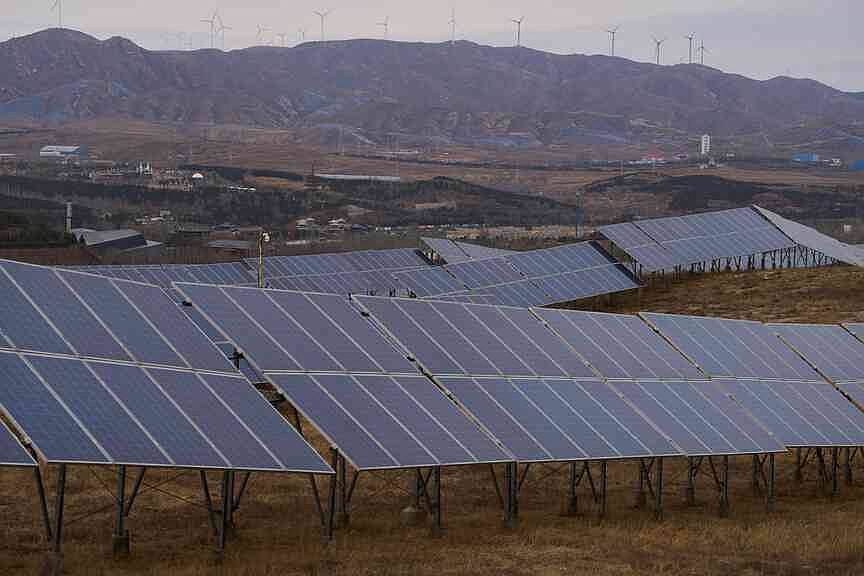
In that period, though, the nation has seen dramatic growth of wind, solar, hydroelectric, biomass and geothermal generation. The U.S. is making real, demonstrable progress, but there is no doubt the nation can do better. Virginia is working to show how.
From the Dominion Virginia Offshore Wind project now harnessing wind off the Virginia Beach coast to the proliferation of solar collection from here to the mountains, the commonwealth is embracing renewable energy to reduce its reliance on fossil fuels.
Among other measures passed this year, the General Assembly approved bills to facilitate the proliferation of solar and ease its connection to the grid, and set more ambitious goals for green energy generation linked to the Virginia Clean Economy Act.
Balancing those targets against the need for energy affordability is a real challenge, one not to be shrugged off, but it’s also clear that continued reliance on fossil fuels comes at a tremendous cost. America should lead the world in this area, and it needs public- and private-sector leaders eager to see it done.
More in Editorials


Search
RECENT PRESS RELEASES
Related Post