Energy experts agree: The governor’s plan to reduce energy costs is a short-term fix and long-term mistake
May 5, 2026
“…while it may save folks a little bit of money next year… over the life of the programs and into the future for Rhode Island, we’re going to be paying more for energy, not less.”
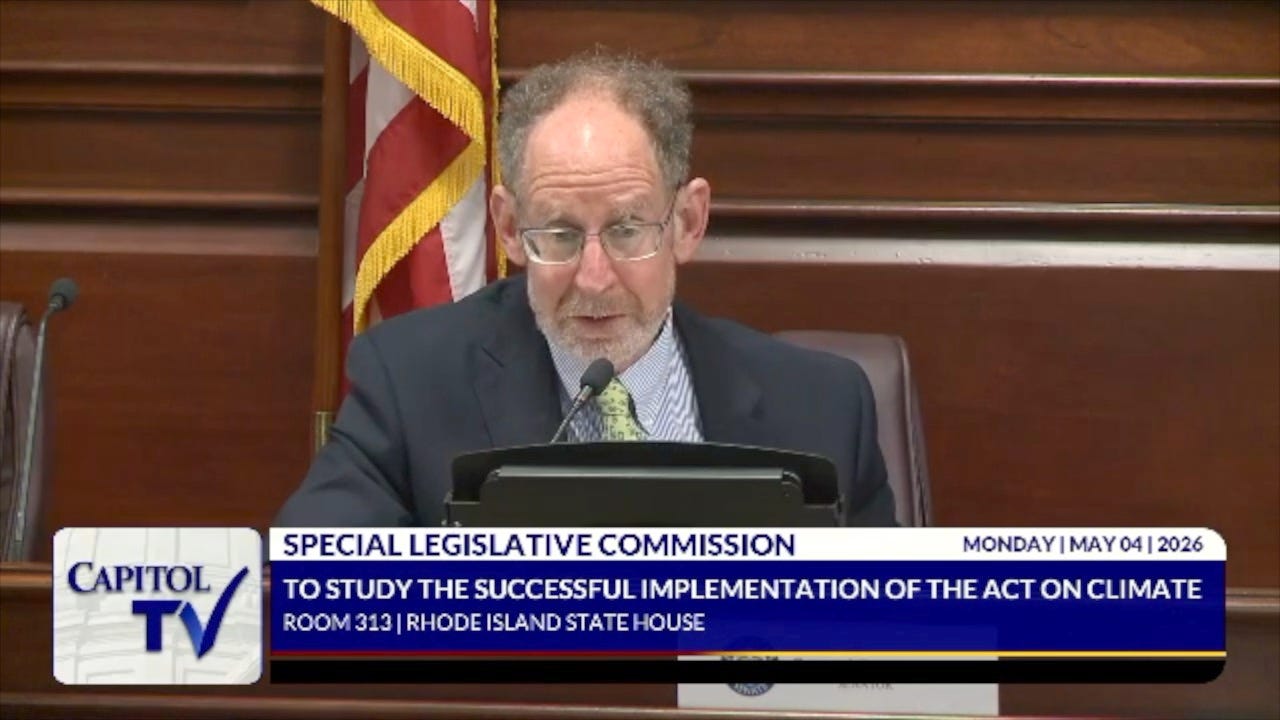
Rhode Island State Senator Samuel Zurier’s Commission to Study the Successful Implementation of the Act on Climate met on Monday and heard from two experts on energy policy who were critical of FY2027 Budget proposals that Governor Daniel McKee claims will save ratepayers money on energy costs. Nick Nybo of Revity Energy, a Rhode Island-based utility-scale solar developer, expressed skepticism about the governor’s projected savings from the proposal, estimating the savings were closer to $70 million over five years, not the claimed $259 million, and that the governor’s plan would make it harder, if not impossible, for the state to reach its 2021 Act on Climate goals.
Samuel Ross, a Director at Dunsky Energy and Climate Advisors, a consulting firm that works across the U.S. and Canada on topics across the clean energy industry, was similarly skeptical, noting that the governor’s proposal to weaken the state’s Renewable Energy Standard threatens compliance with the 2030 goals of the Act on Climate and will likely increase long-term energy costs, even if it manages some near term savings.
Here’s the video:
Revity Evaluation of the Governor’s Proposal
-
It has been reported that the governor’s proposal will save ratepayers $259M in the first 5 years. Revity’s analysis reflects $72M in savings over 5 years. And those savings will only materialize if all projects opt in to the optional tariff.
-
Cutting the capacity limit for future net-metering projects will hinder the state’s ability to meet Act on Climate goals, as well as to meet rising electricity demand and create jobs in the clean energy industry.
-
“You’re talking about tens of thousands of labor hours for skilled electricians that would not come to fruition,” noted Nybo.
-
$1.275 million in municipal taxes would be lost.
-
-
The governor’s plan targets renewable energy and energy efficiency programs and delays the renewable energy standard and the Act on Climate goals, accounting for 89% of the purported $1 billion in savings the governor is promising. 7.3% of the savings are coming from the utility company, Rhode Island Energy. If the governor’s plan is approved, the state’s clean energy goals will be demolished, while Rhode Island Energy’s profits will be slightly impacted.
Dunsky Evaluation of the Governor’s Proposal
FY2027 Budget Proposal Weakens the Renewable Energy Standard
-
Threatens compliance with the 2030 Act on Climate mandate
-
Pushing back the timeline for reaching 100% of electricity is particularly impactful
-
The renewable energy standard is a low-cost decarbonization tool; delays are likely to increase compliance costs.
-
Other changes to RES could risk compliance as well, depending on greenhouse gas inventory accounting
Reduces funding for energy efficiency programs
-
Likely increases long-term costs, undermining affordability
-
Making it harder for Rhode Islanders to take control of their energy costs
-
Climate Strategy compliance pathway assumed more, not less, energy efficiency.
-
“Energy efficiency brings down long-term costs of the energy system and is less than the cost of an alternative supply,” said Ross. “In my view, reducing energy efficiency programs, while it may save folks a little bit of money next year because we’re spending less on the budgets right then, over the life of the programs and into the future for Rhode Island, we’re going to be paying more for energy, not less.”
-

Search
RECENT PRESS RELEASES
Related Post